
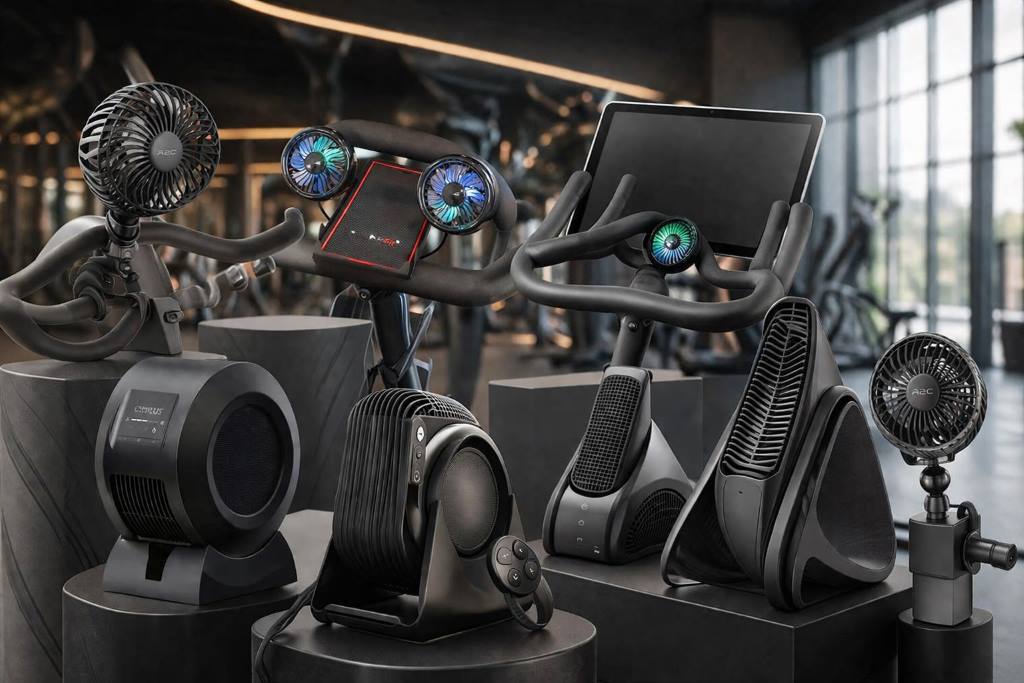
Indoor cycling in California comes with a unique challenge. Even in mild climates, body heat builds quickly during a structured workout. According to the American Council on Exercise, indoor cycling can raise core temperature by more than 1.5°C within 20 minutes. Without airflow, that heat lingers, affecting both performance and comfort.
A dedicated bike trainer fan solves this problem in a way that a regular room fan often cannot. It directs airflow precisely where you need it, adapts to your position, and maintains consistency through long sessions. Whether you train casually or follow structured programs, choosing the right fan can significantly change how sustainable your workouts feel.
A Quick Overview of The Best Bike Trainer Fan in California for Indoor Cycling Comfort
These fans stand out for their usability, airflow design, and compatibility with indoor cycling setups.
- A2C 4.7 Inch Big Cooling Fan
- TrubliFit Dual Bike Fans with Phone Tray
- Vornado FLY MAX High Velocity Fitness Floor Fan
- A2C Rechargeable Fan with Adjustable Strap
- TrubliFit Fan for Peloton Bike
- Wahoo Fitness KICKR HEADWIND
- CYCPLUS Smart Indoor Cycling Fan
- Xuenair Clip on Fan
Best Bike Trainer Fan in California for Indoor Cycling Comfort of 2026
Each option below reflects a different approach to airflow, from compact clip-on designs to smart controlled systems.
A2C 4.7 Inch Big Cooling Fan
Flexible arm personal airflow solution
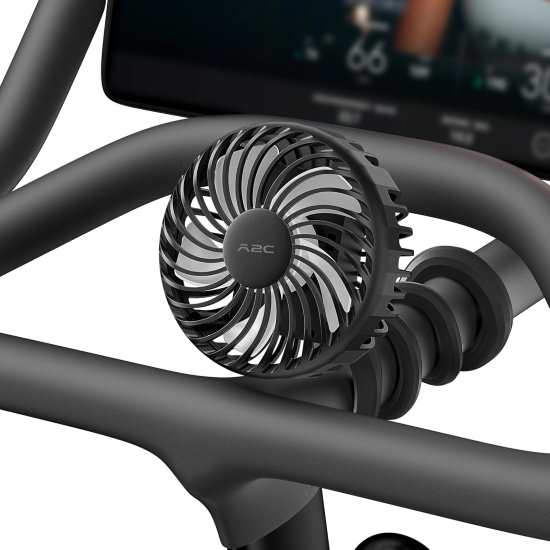
This fan feels tailored for riders who want airflow exactly where they need it. The long bendable arm allows you to position the fan toward your face or torso without adjusting your bike setup. In real use, the airflow feels focused rather than wide, which works well for solo riders.
The rechargeable battery holds up through multiple sessions, though you will need to keep an eye on charging cycles if you train daily. It suits apartment riders or anyone working with limited space. It performs best in moderate temperature environments rather than extreme heat.
Cleaning is simple since the fan head detaches easily. However, the arm can loosen slightly over time if constantly repositioned.
User Review
Jason M., San Diego
“I like how I can move it mid ride without stopping. The airflow hits exactly where I want, though I wish it pushed a bit more air during long climbs.”
Key Features
Flexible positioning arm allows precise airflow targeting but may loosen with heavy use.
Rechargeable battery system removes cable clutter yet requires regular charging discipline.
Three speed control offers usable variation though not extreme airflow levels.
Compact fan head size fits tight setups but limits coverage area.
360 degree rotation helps adjust angles mid ride without interrupting cadence.
Quiet motor operation keeps distractions low but slightly reduces power output.
Pros and Cons
| Pros | Cons |
| Flexible positioning during rides | Limited airflow coverage area |
| Rechargeable and portable design | Battery requires regular charging |
| Easy setup on handlebars | Arm may loosen over time |
TrubliFit Dual Bike Fans with Phone Tray
Dual airflow with integrated convenience
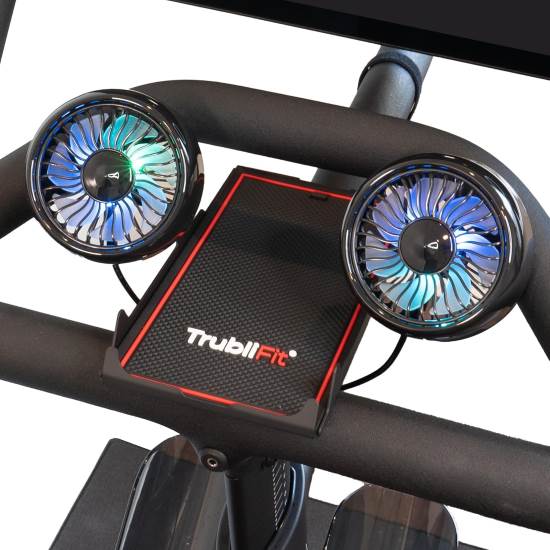
This setup feels more structured. Two fans create balanced airflow across your upper body, which makes a noticeable difference during longer sessions. The built-in phone tray adds practical value, especially for riders who follow workouts or entertainment.
Because it connects directly to the bike, you do not deal with charging or battery management. However, installation requires a bit more attention compared to clip-on models.
It works best for dedicated cycling setups where you do not frequently move equipment. Maintenance involves occasional dust cleaning around both fan heads.
User Review
Emily R., Los Angeles
“I like the dual airflow. It feels more even compared to single fans. The phone holder is surprisingly sturdy.”
Key Features
Dual fan configuration distributes airflow evenly though each fan is moderate in strength.
Integrated phone tray improves usability but adds bulk to the setup.
No battery requirement ensures continuous use yet limits portability.
All metal holder design increases durability but adds slight weight.
Direct bike mounting system stabilizes airflow but requires setup effort.
Balanced airflow coverage reduces hotspots during intense sessions.
Pros and Cons
| Pros | Cons |
| Balanced airflow across body | Slightly bulky mounting setup |
| No charging required operation | Not easily portable |
| Integrated phone holder design | Moderate airflow strength only |
Vornado FLY MAX High Velocity Fitness Floor Fan
High power floor based airflow
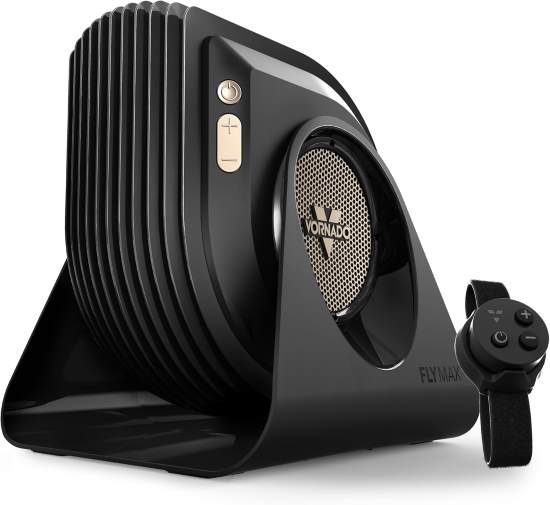
This fan delivers a noticeably stronger airflow than handlebar models. It sits on the floor and circulates air across the entire body rather than targeting a specific zone. During intense sessions, the difference is clear.
It suits riders who prioritize cooling performance over compact design. The adjustable tilt helps aim airflow upward, though it takes some trial to find the best angle.
Maintenance involves keeping vents clean to maintain airflow efficiency. It is not ideal for small spaces where floor placement is limited.
User Review
Mark T., Sacramento
“This one actually cools the whole room. It feels closer to riding outdoors compared to smaller fans.”
Key Features
High velocity airflow output improves cooling efficiency but increases noise slightly.
Omnidirectional circulation design spreads air widely though less targeted.
Adjustable tilt head allows angle control yet requires manual adjustment.
Four speed settings provide flexibility though lowest setting still strong.
Remote control function adds convenience during rides.
Stable floor base design ensures steady positioning but uses space.
Pros and Cons
| Pros | Cons |
| Strong airflow performance level | Requires floor space placement |
| Wide room circulation effect | Less targeted airflow direction |
| Remote control convenience | Slightly louder operation |
A2C Rechargeable Fan with Adjustable Strap
Portable and versatile airflow option
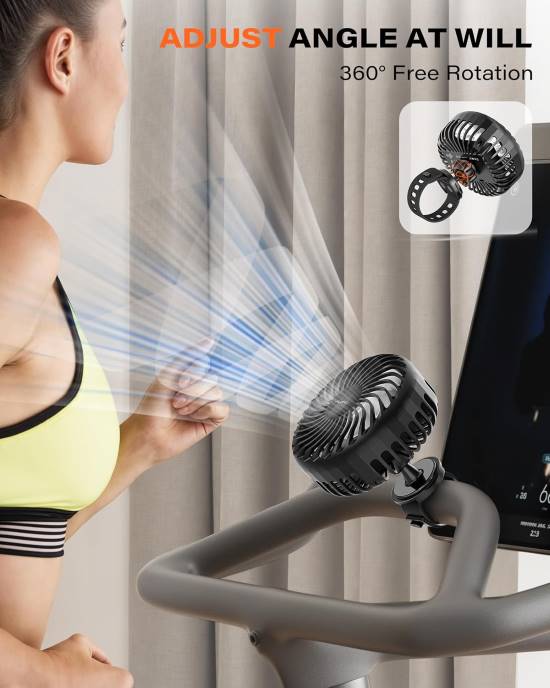
This model focuses on simplicity and portability. The strap system allows quick attachment to handlebars or other surfaces. In practice, it feels easy to reposition and use across different setups.
Airflow is modest but consistent. It works best for shorter sessions or moderate intensity rides rather than high heat environments.
Battery life is reliable for casual use, though frequent riders will recharge often. Maintenance is minimal, mainly keeping blades clean.
User Review
Sarah L., San Jose
“I use it on my bike and treadmill. It is not super powerful but does enough for casual workouts.”
Key Features
Adjustable strap mounting supports flexible placement but may shift slightly.
Rechargeable battery system enhances portability yet needs routine charging.
Three speed levels provide basic control without high intensity airflow.
360 degree rotation head helps adjust direction easily.
Lightweight build design improves portability but reduces stability.
Multi use compatibility works across different equipment setups.
Pros and Cons
| Pros | Cons |
| Lightweight and portable design | Lower airflow power output |
| Easy to attach anywhere | Requires frequent charging |
| Multi use functionality | Less stable during movement |
TrubliFit Fan for Peloton Bike
Simple and reliable fixed airflow
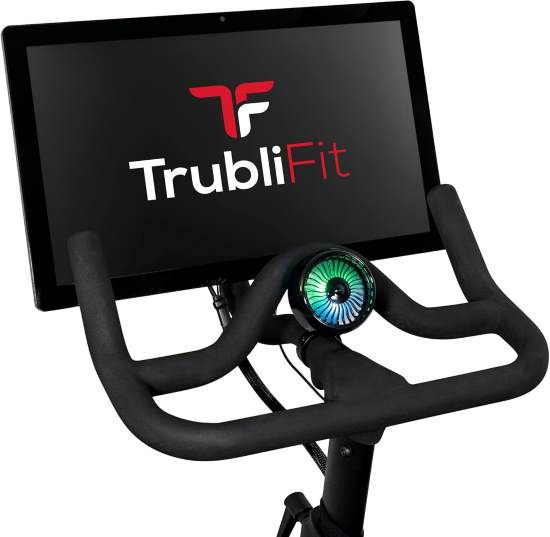
This fan prioritizes simplicity. It attaches directly to the bike and runs without batteries. In use, it provides steady airflow with minimal setup or adjustment.
It suits riders who want a consistent cooling solution without managing charging or repositioning. However, airflow is fixed and less customizable.
Maintenance is straightforward. It is not ideal for users who want directional flexibility.
User Review
Daniel K., Fresno
“It just works every time. Not fancy, but reliable for daily rides.”
Key Features
No battery operation ensures consistent use but limits flexibility.
Direct bike mounting design provides stability though fixed positioning.
Simple airflow output meets basic needs without advanced control.
Compact structure build fits easily into setups.
Low maintenance requirement reduces long term effort.
Consistent airflow delivery avoids fluctuations during rides.
Pros and Cons
| Pros | Cons |
| Reliable consistent airflow output | Limited adjustability options |
| No charging required ever | Basic airflow strength only |
| Easy installation process | Fixed airflow direction |
Wahoo Fitness KICKR HEADWIND
Smart controlled performance fan
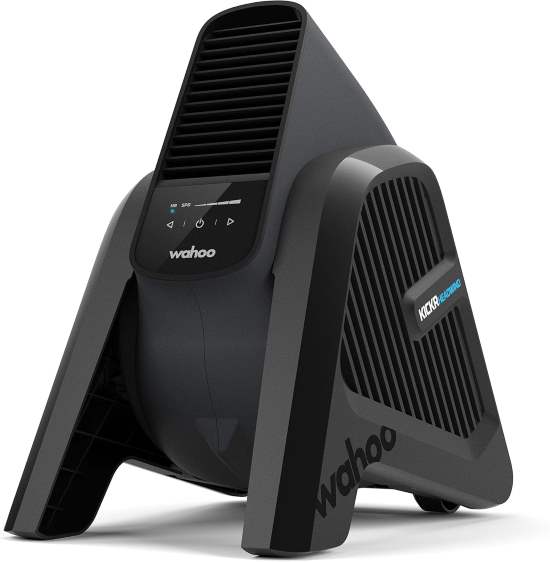
This fan feels engineered for serious training. It adjusts airflow based on heart rate or speed, creating a dynamic cooling experience. During intense intervals, airflow increases automatically.
It suits structured training plans and advanced users. Setup requires pairing with sensors, which may take time initially.
Maintenance is minimal, though electronic components require care. It is less ideal for casual users who prefer simple operation.
User Review
Chris B., Irvine
“The automatic airflow change is noticeable. It keeps me focused without adjusting anything mid ride.”
Key Features
Heart rate responsive airflow adapts automatically but requires compatible devices.
High velocity air output supports intense training conditions.
Multiple control modes provide flexibility though setup takes time.
Durable build quality supports long term use.
Wide airflow range coverage cools full body effectively.
Stable floor positioning ensures consistent operation.
Pros and Cons
| Pros | Cons |
| Smart adaptive airflow control | Requires sensor setup initially |
| Strong performance airflow output | Higher complexity for beginners |
| Durable build for heavy use | Less portable design overall |
CYCPLUS Smart Indoor Cycling Fan
App controlled modern airflow system
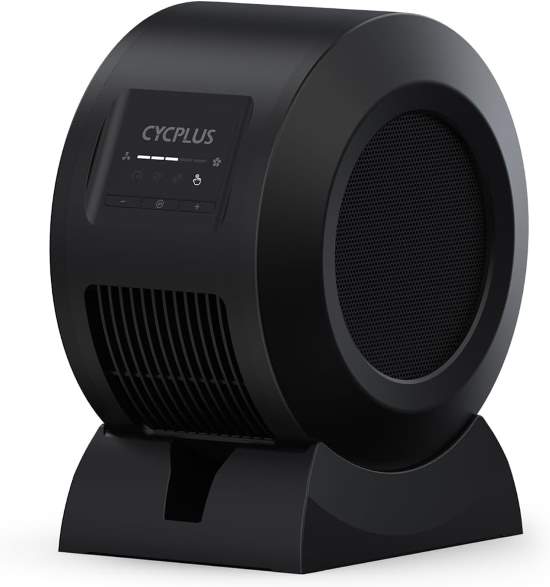
This fan blends smart control with quiet operation. The app allows detailed adjustments, which becomes useful for structured training sessions. The airflow feels smooth rather than aggressive.
It suits tech oriented riders who want customization. Setup takes some time, especially pairing with devices.
Maintenance is minimal, though software updates may occasionally be needed.
User Review
Kevin H., Oakland
“I like controlling everything from my phone. The airflow is smooth, not harsh.”
Key Features
App based control system allows customization but requires setup.
BLDC motor technology reduces noise while maintaining airflow.
Five speed modes provide flexible control options.
Remote control access adds convenience during rides.
Smart connectivity features enhance training integration.
Quiet operation design improves comfort in shared spaces.
Pros and Cons
| Pros | Cons |
| Quiet operation during sessions | App setup takes time |
| Customizable airflow control options | Less intuitive for beginners |
| Modern smart features included | Requires device compatibility |
Xuenair Clip on Fan
Compact and minimal airflow solution
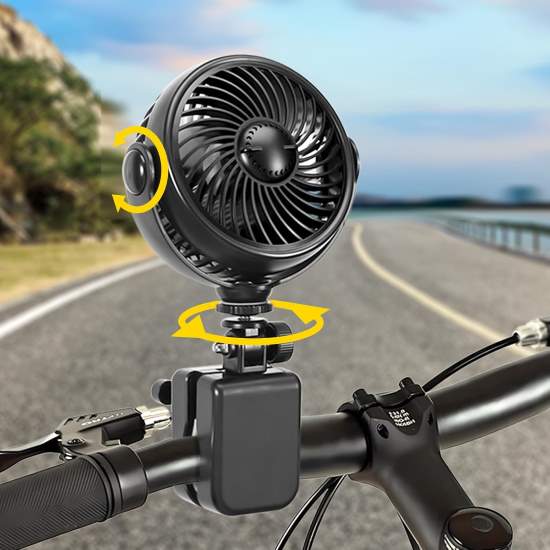
This fan focuses on portability above all else. It clips onto almost any surface and works well in tight spaces. In use, airflow feels light but steady.
It suits casual riders or those needing a backup cooling option. It is not designed for intense sessions or high heat conditions.
Battery performance is decent for short workouts. Maintenance is minimal.
User Review
Linda P., Santa Barbara
“I use it when space is tight. It is small but helps more than nothing.”
Key Features
Clip on mounting system supports flexible placement but less stability.
Rechargeable battery design offers portability yet limited runtime.
Compact size structure fits small spaces but reduces airflow.
Quiet operation performance avoids distractions.
Adjustable head direction allows basic positioning.
Lightweight build design improves portability.
Pros and Cons
| Pros | Cons |
| Extremely compact and portable | Low airflow output strength |
| Easy clip on setup | Limited coverage area |
| Quiet operation design | Not suitable for intense use |
Bike Trainer Fan Buying Guide
What Actually Matters Before Choosing Bike Trainer Fan
Core performance factors
Airflow strength and direction determine whether the fan actually cools you or just circulates air. Many buyers assume any fan will work, but indoor cycling creates concentrated heat zones. A fan must deliver targeted airflow or strong circulation to offset that.
Material quality and durability
Plastic housing with weak joints tends to loosen over time, especially with adjustable arms. Metal components or reinforced mounts last longer. Buyers often overlook this until the fan starts shifting mid ride.
Comfort and usability
Ease of adjustment matters more than raw power. If you cannot reposition airflow quickly, you lose focus during workouts. Many users underestimate how often they adjust airflow.
Maintenance demands
Dust buildup reduces airflow efficiency. Fans with accessible grills are easier to clean. Buyers rarely consider long term cleaning until performance drops.
Environmental compatibility
California homes vary widely in size and ventilation. A compact fan may work in coastal climates but struggle in inland heat. Matching airflow strength to your environment matters more than brand.
Safety considerations
Stable mounting prevents falls or shifting. Floor fans must sit securely, while clip models need strong grips. Buyers often overlook stability until equipment moves during use.
Related:
8 Best Indoor stationary bike Trainer Stand of 2026
The Best Bike Rollers for Indoor Cycling (Home Gym Or Studio)
Common Buyer Mistakes
Many assume bigger fans always perform better. In reality, positioning matters just as much as size.
Some buyers ignore mounting compatibility, leading to unstable setups that disrupt workouts.
Others focus only on power and overlook noise levels, which becomes frustrating during long sessions.
A common mistake is choosing battery powered fans without considering charging frequency. Daily users quickly feel this inconvenience.
Some expect smart features to be intuitive, but setup complexity can reduce usability.
Others underestimate airflow direction. Poorly aimed airflow feels ineffective even if the fan is powerful.
Many overlook space constraints. Floor fans need room that not all setups allow.
How to Match Products to Specific Needs
Casual users benefit from simple clip or strap fans. They require minimal setup and deliver enough airflow for moderate sessions.
Heavy daily users need stronger airflow systems. Floor fans or smart fans provide sustained cooling during long workouts.
Small space users should prioritize compact, adjustable fans. Flexibility matters more than power in tight setups.
Tech focused riders benefit from smart fans that integrate with training data. These improve consistency during structured workouts.
Those focused on long term use should prioritize durable materials and low maintenance designs.
Conclusion
Choosing the right bike trainer fan comes down to how you ride, where you ride, and how much control you want over airflow. Some riders need precise targeted cooling, while others benefit from full room circulation.
The best option is the one that matches your routine without adding friction. Focus on airflow delivery, ease of use, and long term reliability. That combination determines whether your indoor rides stay comfortable over time.
FAQs
Do I need a special fan for indoor cycling
Yes, targeted airflow improves cooling more effectively than standard room fans.
Are smart fans worth it
They help with structured training but are unnecessary for casual use.
How strong should airflow be
Strong enough to cool sweat zones without feeling overwhelming.
Can I use a regular desk fan
You can, but it often lacks proper positioning and airflow strength.
How often should I clean the fan
Clean it every few weeks to maintain airflow efficiency.

Welcome to outdoorxsports.com! I’m Russell, your guide to the awesome world of mountain biking. This blog is all about building a community of riders who love to share their passion for the sport. Expect inspiring stories, local trail recommendations, fun challenges, and tips for making the most of your time on two wheels.