
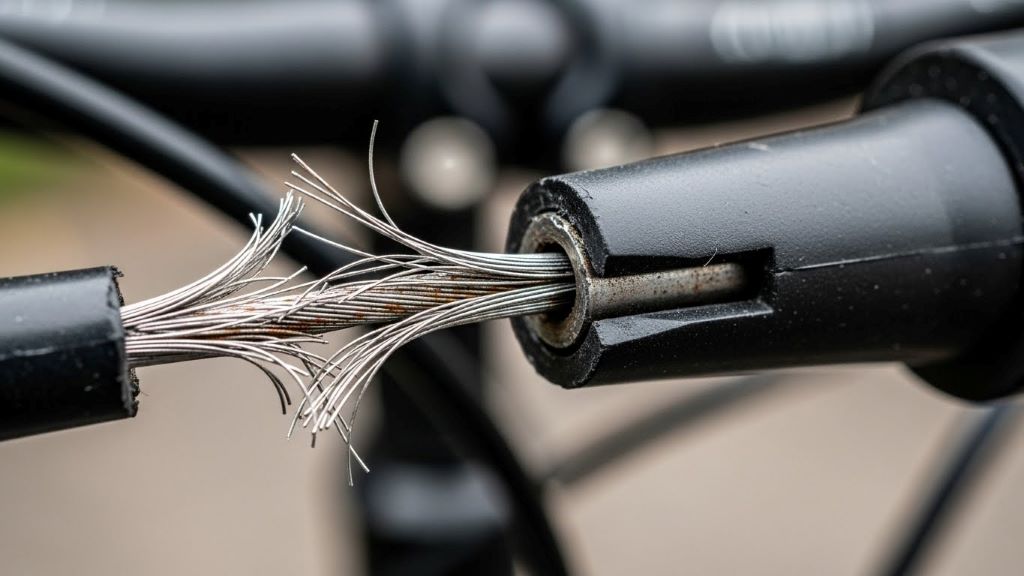
Internal brake cable fraying is one of the most dangerous yet overlooked issues that can affect your bicycle’s safety. Unlike external damage that you can easily spot, internal fraying happens inside the cable housing where it remains hidden from view. Understanding the warning signs can prevent brake failure and keep you safe on the road.
What Is Internal Brake Cable Fraying?
Internal fraying occurs when individual wire strands within your brake cable begin to break down and separate. This deterioration happens inside the protective housing, making it impossible to see without disassembling the cable system. The fraying typically results from repeated flexing, corrosion, or contamination that weakens the cable’s structure over time.
Most bicycle brake cables consist of multiple thin wire strands twisted together. When these strands start to fray internally, they create friction against each other and the housing. This friction gradually worsens the damage, eventually leading to complete cable failure if left unaddressed.
Early Warning Signs of Internal Fraying
Recognizing the early symptoms of internal cable fraying can save you from a dangerous brake failure. However, these signs often develop gradually, making them easy to miss during casual rides.
Increased Lever Resistance
One of the first indicators is a noticeable change in your brake lever feel. You might need to squeeze harder than usual to achieve the same braking power. This increased resistance occurs because frayed strands create additional friction inside the housing, preventing the cable from moving smoothly.
The resistance typically feels inconsistent rather than uniformly stiff. You may notice the lever catches or sticks at certain points during the pull. Additionally, the brake might feel spongy or less responsive than it should be.
Sluggish Brake Return
When you release the brake lever, it should snap back quickly to its original position. Internal fraying often causes delayed or incomplete return of the brake lever. The damaged cable strands catch on each other and the housing, preventing smooth movement in both directions.
Watch for brake pads that remain partially engaged even after releasing the lever. This symptom indicates severe internal friction that requires immediate attention. Furthermore, you might hear a faint grinding or scratching sound as the lever returns to position.
Inconsistent Braking Performance
Your brakes should provide predictable, consistent stopping power every time you engage them. Internal fraying disrupts this consistency, causing your braking performance to vary unpredictably. You might experience strong braking on one application and weak braking on the next.
This inconsistency becomes particularly noticeable during emergency stops. The cable may bind suddenly, causing either excessive or insufficient braking force. Therefore, any variation in your brake’s behavior should prompt immediate inspection.
Progressive Symptoms of Cable Deterioration
As internal fraying worsens, the symptoms become more pronounced and dangerous. These advanced warning signs indicate that cable failure could be imminent.
Sticky or Jerky Brake Action
Instead of smooth, linear braking, you’ll experience a jerky, on-off feeling. The brake might grab suddenly or release unexpectedly as you modulate the lever. This happens because individual wire strands are catching and releasing inside the housing.
The jerky action makes it nearly impossible to control your braking precisely. Consequently, you may find yourself either braking too hard or not hard enough in critical situations. This loss of control significantly increases your accident risk.
Audible Sounds During Braking
Internal fraying often produces distinctive sounds that alert you to cable problems. Listen for grinding, scraping, or popping noises when you apply or release the brakes. These sounds indicate that damaged wire strands are rubbing against the housing or each other.
The noises typically start quietly and become louder as the fraying progresses. You might also hear a pinging or snapping sound if individual wire strands break completely. According to Bicycling Magazine, any unusual brake sounds warrant immediate professional inspection.
Visible Housing Bulges or Deformities
Although the fraying itself remains hidden, it can cause visible changes to the cable housing. Look for small bulges, kinks, or deformed sections along the housing length. These deformities occur when broken wire strands bunch up inside the housing.
The bulges typically appear near cable bends or entry points where stress is highest. Additionally, you might notice the housing appears stretched or elongated in certain sections. These visual clues strongly suggest internal cable damage.
Critical Failure Indicators
When internal fraying reaches advanced stages, certain symptoms indicate imminent cable failure. Recognizing these critical signs demands immediate action to prevent accidents.
Sudden Brake Lock or Release
One of the most dangerous symptoms is unexpected brake engagement or disengagement. The cable might suddenly bind, causing the brake to lock without lever input. Alternatively, it could release entirely, leaving you with no braking power.
These sudden changes can cause loss of control and serious crashes. The unpredictability makes riding extremely hazardous. Therefore, experiencing this symptom means you should stop riding immediately and replace the cable.
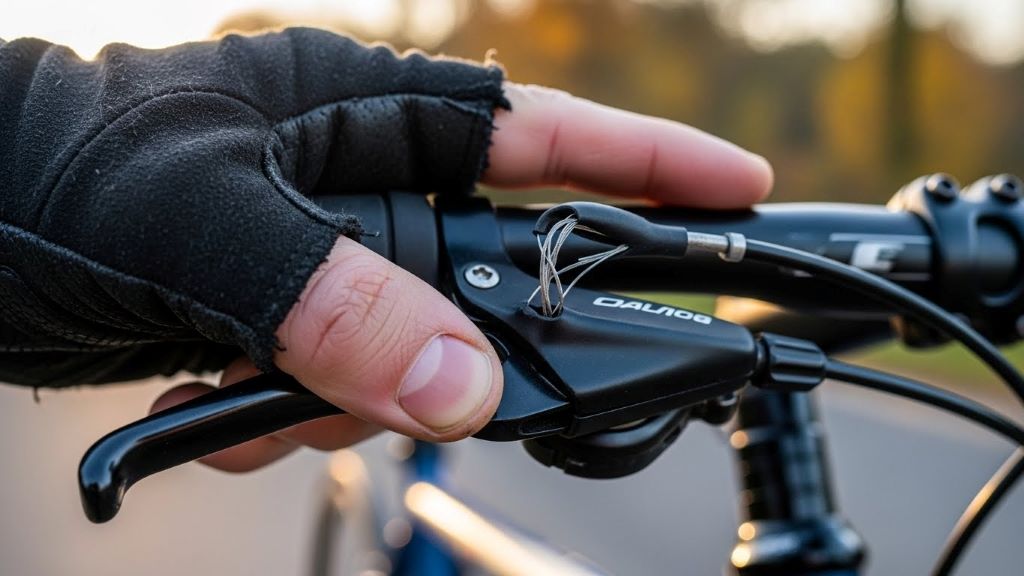
Visible Fraying at Cable Ends
While most fraying occurs internally, advanced deterioration eventually becomes visible at the cable ends. Check where the cable exits the housing near the brake lever and caliper. Look for separated or mushroomed wire strands at these termination points.
Even small amounts of visible fraying indicate extensive internal damage. The fraying you can see represents only a fraction of the total deterioration. Consequently, any visible fraying demands immediate cable replacement.
Complete Loss of Braking Power
The ultimate symptom of internal fraying is total brake failure. The cable separates completely, leaving you with no braking ability on that wheel. This can happen suddenly without warning, especially during hard braking.
Complete failure typically occurs after weeks or months of progressive symptoms. However, aggressive riding or emergency stops can accelerate the final break. Never ignore earlier warning signs, as they give you the opportunity to prevent catastrophic failure.
Factors That Accelerate Internal Fraying
Understanding what causes internal fraying helps you prevent it through proper maintenance and riding habits. Several factors contribute to premature cable deterioration.
Environmental Exposure
Moisture, salt, and dirt infiltrate cable housing and accelerate corrosion. Riding in wet conditions or storing your bike outdoors exposes cables to these damaging elements. The corrosion weakens wire strands and increases internal friction.
Coastal environments pose particular risks due to salt air. Winter riding with road salt similarly accelerates cable degradation. Additionally, failing to clean and lubricate your bike regularly allows contaminants to accumulate inside the housing.
Cable Routing and Housing Quality
Sharp cable bends create stress points where fraying initiates. Poor cable routing forces the cable to flex excessively, causing premature wear. Low-quality housing with rough inner surfaces also increases friction and accelerates strand breakage.
Kinked or damaged housing should be replaced immediately. Similarly, cables that rub against the frame or other components experience accelerated wear. Proper installation by a qualified mechanic ensures optimal cable routing and reduces fraying risk.
Age and Mileage
All brake cables have a finite lifespan regardless of riding conditions. As noted by REI Co-op, cables should be inspected regularly and replaced at least annually or every few thousand miles. High-mileage riders may need more frequent replacements.
Older cables become brittle and lose flexibility over time. The wire strands develop microscopic cracks that propagate into full breaks. Therefore, preventive replacement based on age and mileage prevents unexpected failures.
Prevention and Maintenance Strategies
Regular maintenance and timely replacement prevent internal fraying from compromising your safety. Implementing these strategies extends cable life and ensures reliable braking.
Regular Inspection Schedule
Inspect your brake cables at least monthly for early warning signs. Pull the brake lever slowly while observing the cable movement and listening for unusual sounds. Check the cable ends for visible fraying or corrosion.
Professional bike mechanics can perform more thorough inspections during routine tune-ups. They have specialized tools to test cable condition and identify problems early. Additionally, they can spot issues that casual riders might overlook.
Proper Lubrication Techniques
Lubricating cables reduces internal friction and prevents corrosion. Use appropriate cable lubricant applied through the housing using a cable lubrication tool. Avoid over-lubricating, as excess lubricant attracts dirt and accelerates wear.
Focus lubrication on cable entry points and sharp bends where friction is highest. Perform this maintenance every few months or more frequently in harsh conditions. However, severely degraded cables should be replaced rather than lubricated.
Timely Cable Replacement
Don’t wait for complete failure to replace brake cables. Follow manufacturer recommendations for replacement intervals. Replace cables immediately if you notice any symptoms of internal fraying.
Quality replacement cables cost relatively little compared to the safety risks of failure. Professional installation ensures proper tensioning and routing. Furthermore, replacing cables proactively provides peace of mind and reliable braking performance.
Conclusion
Internal brake cable fraying represents a serious safety hazard that develops gradually over time. The early symptoms include increased lever resistance, sluggish brake return, and inconsistent performance. As fraying progresses, you’ll notice jerky brake action, unusual sounds, and possibly visible housing deformities. Critical indicators like sudden brake engagement or complete loss of braking power demand immediate action.
Understanding these symptoms empowers you to identify problems early and take corrective action. Regular inspection, proper maintenance, and timely cable replacement prevent dangerous brake failures. Never ignore warning signs of internal fraying, as your safety depends on reliable braking performance. When in doubt, consult a professional bike mechanic who can thoroughly assess your brake system and recommend appropriate repairs.
Frequently Asked Questions
How often should I replace my bike brake cables?
Brake cables should typically be replaced every 12 to 18 months or every 2,000 to 3,000 miles, whichever comes first. However, riders in harsh conditions or those who ride frequently may need more frequent replacements. Always replace cables immediately if you notice any symptoms of fraying or damage.
Can I fix a frayed brake cable myself?
No, frayed brake cables cannot be repaired and must be replaced entirely. Attempting to use a damaged cable is extremely dangerous and can lead to brake failure. Cable replacement is relatively straightforward for experienced cyclists, but professional installation ensures proper tensioning and routing.
What’s the difference between internal and external cable fraying?
External fraying is visible damage to the cable’s outer strands, typically occurring where the cable exits the housing. Internal fraying happens inside the housing where it cannot be seen, making it more dangerous because it often goes undetected until symptoms appear or failure occurs.
Will regular lubrication prevent internal cable fraying?
Proper lubrication significantly reduces friction and corrosion, extending cable life and delaying fraying. However, lubrication cannot prevent fraying indefinitely. All cables eventually wear out regardless of maintenance, so periodic replacement remains necessary even with excellent care.
How quickly can internal fraying lead to complete cable failure?
The progression from early symptoms to complete failure varies widely depending on riding conditions, cable quality, and damage severity. Failure can occur within days of noticing symptoms during aggressive riding, or it may take weeks or months. Never continue riding once you identify fraying symptoms, as failure timing is unpredictable.
Related Topics:
Dialing In Your Ride: The Unseen Impact of Temperature on MTB Tire Pressure
Unlocking the Perfect Ride: How a Bike Size Calculator with Stack and Reach Finds Your Fit

Welcome to outdoorxsports.com! I’m Russell, your guide to the awesome world of mountain biking. This blog is all about building a community of riders who love to share their passion for the sport. Expect inspiring stories, local trail recommendations, fun challenges, and tips for making the most of your time on two wheels.