
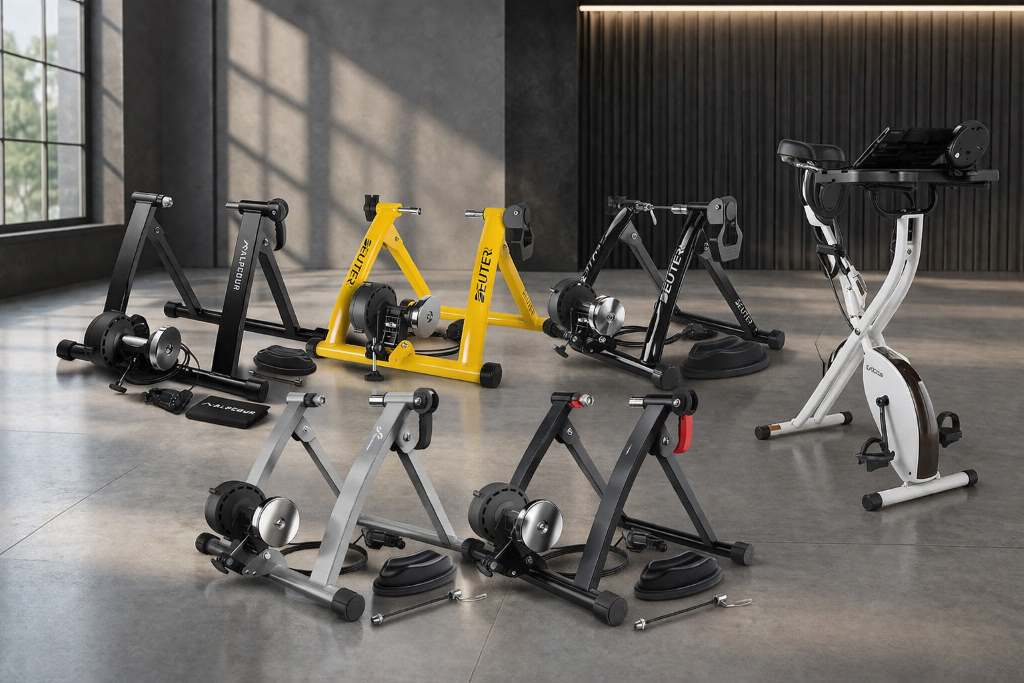
Indoor cycling has moved from a niche training method to a practical solution for urban riders, especially in dense cities like New York. According to the U.S. Department of Transportation, over 50 percent of urban cyclists report weather and traffic as key barriers to regular riding. A reliable bike trainer stand solves both problems by bringing cycling indoors without losing the feel of real riding.
If you live in a New York apartment, space, noise, and setup time matter just as much as performance. The right trainer stand should feel stable, quiet enough for shared walls, and easy to store when not in use. This guide breaks down the most practical options available right now and explains how they actually perform in everyday conditions.
A Quick Overview of The Best Bike Trainer Stand in New York
Here are the top options worth considering:
- Sportneer Bike Trainer Stand
- Deuter Stationary Magnetic Bike Trainer Stand
- Alpcour Bike Trainer Stand
- Sportneer Bike Trainer Stand Updated Model
- BalanceFrom Magnetic Bike Trainer Stand
- FitDesk Standing Exercise Bike Desk 3.0
Best Bike Trainer Stand in New York of 2026
New York riders need compact, low noise, and easy to set up solutions. The following models stand out for real world usability rather than just specs.
Sportneer Bike Trainer Stand
Reliable entry level indoor trainer
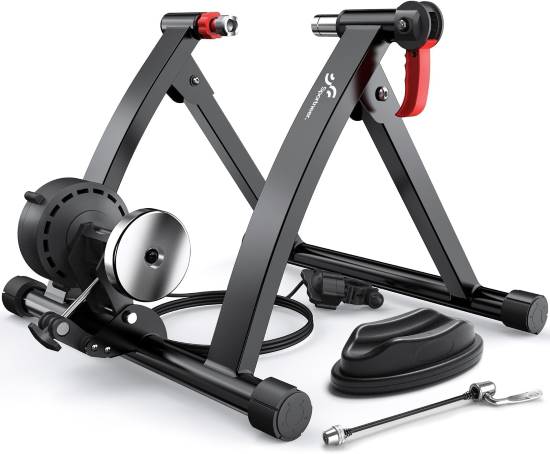
The Sportneer trainer feels stable right out of the box. Setup takes only a few minutes, and the quick release lever makes mounting and removing your bike straightforward. In a small apartment, that matters. The resistance system offers six levels, which is enough for casual workouts and moderate training.
It works best with standard road bikes and hybrid models. During use, the noise level stays manageable, though not silent. You will hear tire friction, especially at higher resistance levels. For evening workouts in shared buildings, a trainer mat helps.
Maintenance is simple. Occasional tightening and checking the roller alignment keeps it running smoothly. It may not suit advanced cyclists who want high resistance simulation or smart connectivity.
User Review
Jason M., Brooklyn, NY
I use this after work in my apartment. It folds away easily and does not take over the room. Noise is noticeable but not disruptive.
Key Features
Six level resistance system
Gives enough range for casual and moderate riders, though not intense training sessions.
Quick release mounting
Saves time when switching between indoor and outdoor rides.
Wide compatibility
Fits most common wheel sizes, reducing setup confusion.
Stable frame design
Feels secure during steady pedaling, though aggressive sprints can create slight movement.
Foldable structure
Useful for tight spaces, especially in apartments.
Front wheel riser block included
Helps maintain a natural riding position and reduces wrist strain.
Pros and Cons
| Pros | Cons |
| Easy quick setup | Moderate noise at high |
| Compact foldable design | Limited resistance intensity |
| Good beginner stability | No smart connectivity |
Deuter Stationary Magnetic Bike Trainer Stand
Quiet focused indoor cycling option
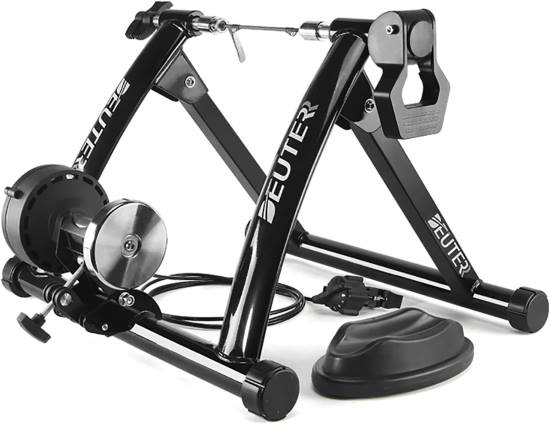
This model stands out for its noise reduction design. In practice, it runs smoother and quieter than many entry level trainers. That makes it better suited for late night sessions in shared housing.
The resistance feels consistent, though slightly less responsive when switching levels. It suits steady endurance rides rather than interval training. Build quality feels solid, with a sturdy base that reduces wobble.
Maintenance involves keeping the roller clean and ensuring proper tire pressure. It performs best with road tires rather than knobby mountain bike tires, which increase noise.
Not ideal for riders who want intense resistance or advanced training features.
User Review
Angela R., Queens, NY
I bought this mainly for quiet use, and it delivers. I can ride early mornings without worrying about neighbors.
Key Features
Noise reduction mechanism
Minimizes vibration and sound, ideal for apartment use.
Magnetic resistance control
Provides smooth transitions but lacks sharp intensity jumps.
Durable steel frame
Handles regular use without noticeable wear.
Wide base stability
Keeps the bike steady during longer sessions.
Compact footprint
Fits well in small living spaces.
Simple adjustment system
Easy to use but not highly precise.
Pros and Cons
| Pros | Cons |
| Quieter than most models | Resistance less dynamic |
| Stable during long rides | Not for sprint training |
| Solid build quality | Limited advanced features |
Alpcour Bike Trainer Stand
Portable and travel friendly trainer
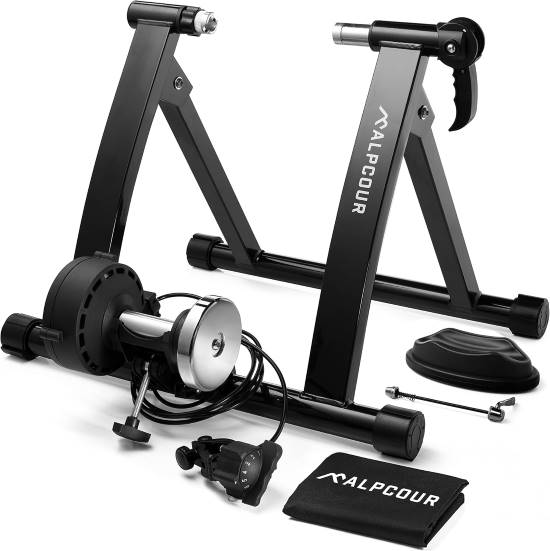
The Alpcour trainer balances portability with performance. It folds neatly and includes a carrying bag, which is rare in this category. For riders who move between spaces, that adds real value.
Resistance adjustment feels smooth and predictable. It supports both road and mountain bikes, though tire noise varies depending on tread type. Stability is solid for normal riding, but aggressive standing pedaling can create slight shifts.
It performs well for consistent workouts and light training. Maintenance mainly involves keeping the magnetic unit clean and ensuring tight bolts after frequent folding.
Not ideal for riders who need heavy resistance or a permanent setup.
User Review
Daniel K., Manhattan, NY
I carry this between my apartment and office. Setup is quick and it feels stable enough for daily use.
Key Features
Foldable portable design
Easy to store or transport, useful for flexible lifestyles.
Six resistance levels
Offers enough variation for general fitness.
Included carrying bag
Adds convenience for moving the trainer.
Strong frame construction
Supports regular use without bending or flex.
Noise control system
Keeps sound moderate, though tire choice matters.
Wide bike compatibility
Works with most common bike types.
Pros and Cons
| Pros | Cons |
| Highly portable design | Slight movement during sprints |
| Comes with carry bag | Noise depends on tire |
| Easy setup process | Not heavy resistance capable |
Sportneer Bike Trainer Stand Updated Model
Refined version with improved stability
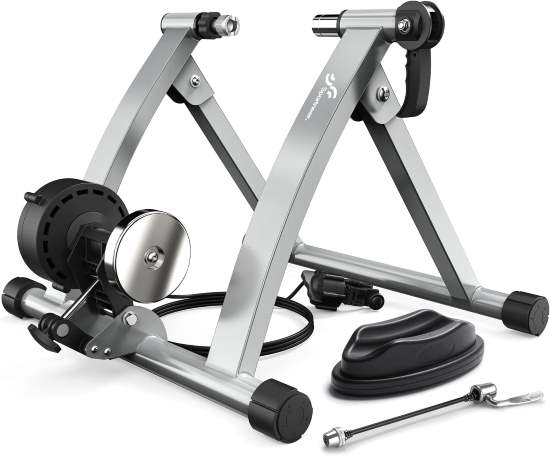
This updated version improves on the original with better stability and slightly reduced vibration. The frame feels more secure, especially during longer sessions.
Resistance levels remain similar, but transitions feel smoother. It works well for riders who want a reliable indoor setup without complexity. Noise levels are slightly improved, though still present at higher speeds.
Maintenance is minimal, mainly checking bolts and alignment. It fits standard bikes easily and stores without hassle.
Not suited for advanced cyclists seeking data tracking or smart features.
User Review
Chris L., Bronx, NY
This feels more stable than older models I tried. I use it almost daily without issues.
Key Features
Improved frame stability
Reduces wobble and enhances confidence during use.
Refined resistance system
Smoother transitions between levels.
Quick release mechanism
Keeps setup fast and practical.
Compact foldable build
Easy to store in small apartments.
Better vibration control
Helps reduce floor noise slightly.
Broad wheel compatibility
Works with common bike sizes.
Pros and Cons
| Pros | Cons |
| More stable than original | Still some noise present |
| Smooth resistance changes | No smart features |
| Easy daily usability | Limited high intensity |
BalanceFrom Magnetic Stationary Bike Trainer Stand
Budget friendly and straightforward
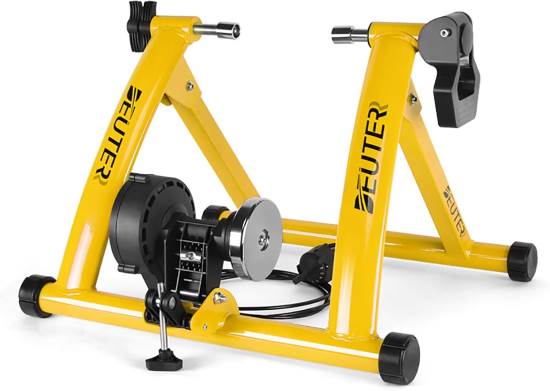
This trainer focuses on simplicity. It is easy to assemble and works reliably for basic indoor cycling. The resistance system feels adequate for beginners but lacks depth for serious training.
Stability is decent for seated riding. Standing efforts can feel less secure. Noise levels are moderate and depend heavily on tire type.
Maintenance is minimal, making it a good low effort option. However, long term durability may not match higher end models.
Best suited for occasional riders or those starting indoor cycling.
User Review
Maria S., Staten Island, NY
I use this a few times a week. It does the job without complications.
Key Features
Simple magnetic resistance
Easy to use but limited in range.
Lightweight frame design
Easy to move and reposition.
Quick assembly process
Minimal setup effort required.
Compact storage size
Fits easily in small spaces.
Front wheel riser included
Improves riding posture.
Basic stability support
Works best for moderate use.
Pros and Cons
| Pros | Cons |
| Easy beginner setup | Lower overall durability |
| Lightweight and portable | Less stable standing rides |
| Affordable entry option | Limited resistance range |
FitDesk Standing Exercise Bike Desk 3.0
Hybrid workstation cycling solution
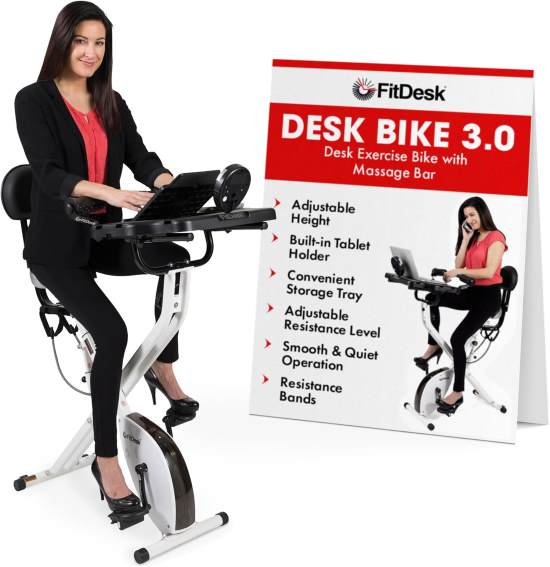
This is not a traditional trainer stand. It combines cycling with a standing desk setup. The experience focuses more on light movement than intense workouts.
It feels stable and comfortable for extended sessions, especially for remote work. The adjustable height and built in desk surface make it practical for multitasking.
Resistance is mild, so it suits low intensity activity rather than training. Maintenance is minimal due to its enclosed design.
Not suitable for cyclists seeking performance training. It works best for productivity focused users.
User Review
Kevin D., Manhattan, NY
I use this while working from home. It keeps me moving without distracting from tasks.
Key Features
Integrated desk surface
Allows working while cycling.
Adjustable height system
Fits different user preferences.
Low noise operation
Suitable for calls and meetings.
Foldable design
Easy to store when not in use.
Comfort focused build
Supports long sessions without strain.
Light resistance system
Designed for movement, not training.
Pros and Cons
| Pros | Cons |
| Great for multitasking use | Not for serious cycling |
| Quiet operation design | Limited resistance strength |
| Comfortable long sessions | Larger than standard trainers |
Bike Trainer Stand in New York Buying Guide
Choosing a trainer in New York requires a different mindset than suburban setups. Space, noise, and convenience dominate the decision.
What Actually Matters Before Choosing Bike Trainer Stand
Core performance factors
Resistance type and stability shape the entire riding experience. Many buyers assume all trainers feel similar, but lower quality units often feel jerky or unstable. Over time, that reduces motivation to use them.
Material quality and durability
Steel frames last longer and resist flex. Lightweight builds feel convenient at first but may degrade faster. Buyers often underestimate how repeated use stresses joints and bolts.
Comfort and usability
Ease of setup matters more than expected. If mounting your bike feels tedious, you will use the trainer less. Comfort also depends on posture support and smooth resistance.
Maintenance demands
Magnetic trainers require occasional cleaning and alignment checks. Many users ignore this and experience noise or uneven resistance later. Low maintenance models improve long term satisfaction.
Environmental compatibility
Apartment living introduces noise and vibration concerns. A louder trainer can create friction with neighbors. Buyers often overlook flooring type and sound insulation.
Safety considerations
A stable base prevents tipping during use. Skipping this leads to unsafe riding, especially during faster pedaling. Safety becomes more important in confined indoor spaces.
Common Buyer Mistakes
Many buyers assume higher resistance always means better workouts. In reality, consistency and smoothness matter more for regular use.
Some choose trainers without considering noise levels. What sounds acceptable in a showroom may feel disruptive at home.
Others ignore compatibility with their bike type. Tire size and tread significantly affect performance and noise.
A frequent mistake is prioritizing portability over stability. While compact models are convenient, they can feel less secure during use.
Buyers often overlook setup complexity. Complicated systems reduce long term usage because they feel like a chore.
Another mistake involves ignoring maintenance. Even simple trainers need occasional checks to stay functional.
Finally, many expect gym level performance from entry models. That mismatch leads to disappointment rather than realistic use.
Related:
Unisky Bike Trainer Stand: A Comprehensive Overview
8 Best Indoor stationary bike Trainer Stand of 2026
How to Match Products to Specific Needs
Casual users benefit from simple, low resistance trainers that are easy to set up and store. They do not need advanced features.
Daily users should prioritize durability and stability. A stronger frame and smoother resistance improve consistency.
For small apartments, foldable designs with lower noise output work best. Compact storage becomes essential.
Budget conscious buyers should focus on reliability rather than features. A simple trainer that lasts longer offers better value.
Advanced users need higher resistance and stability. Entry level trainers may not meet their expectations.
Work from home users may prefer hybrid options like desk bikes. These support movement without interrupting productivity.
Conclusion
A good bike trainer stand makes indoor cycling practical, especially in a city like New York where outdoor riding is not always convenient. The right choice depends less on features and more on how well the trainer fits your space, routine, and expectations.
If you want simplicity, entry level models work well. If you value quiet operation, noise reduction becomes critical. And if you plan to use it daily, durability should guide your decision.
Focus on how you will actually use the trainer, not just what it offers on paper.
FAQs
Is a bike trainer stand noisy in apartments
Most produce some noise, but magnetic trainers are generally quieter.
Can I use a mountain bike on these trainers
Yes, but tire tread can increase noise and vibration.
Do I need special tires for indoor trainers
Trainer specific tires reduce noise and wear but are not mandatory.
How much space does a trainer require
Most fit within a small corner and fold when not in use.
Are these suitable for intense cycling workouts
Entry models support moderate workouts, not high intensity training.

Welcome to outdoorxsports.com! I’m Russell, your guide to the awesome world of mountain biking. This blog is all about building a community of riders who love to share their passion for the sport. Expect inspiring stories, local trail recommendations, fun challenges, and tips for making the most of your time on two wheels.