
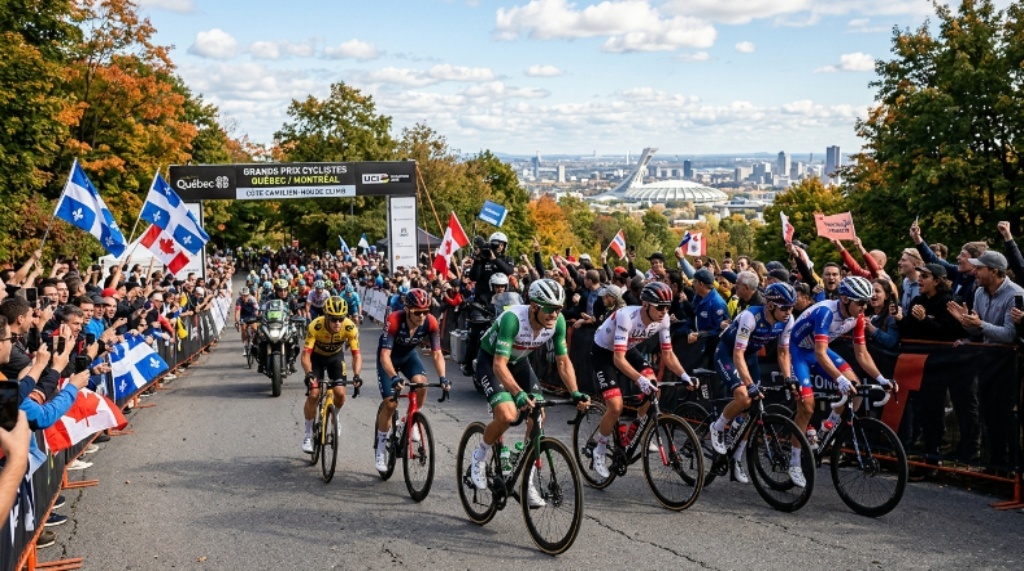
Picture the world’s best cyclists tackling steep Montreal streets, the crowd roaring as the peloton surges up the legendary Côte Camilien-Houde for the fifteenth time. That is exactly what awaits on Sunday, September 13, 2026, when the Grand Prix Cycliste de Montréal returns for its 15th edition. As one of only two UCI WorldTour races on North American soil, this event carries extraordinary weight in the global cycling calendar. Furthermore, 2026 is no ordinary year. With the UCI Road World Championships arriving in Montreal just one week later, the GP Montréal becomes the most strategically loaded one-day race on the continent. Riders, teams, and fans all have far more riding on this race than the result alone.
What Is the Grand Prix Cycliste de Montréal?
The Grand Prix Cycliste de Montréal is a one-day professional road cycling race held annually in Montreal, Quebec, Canada. Together with its sister event, the Grand Prix Cycliste de Québec, it forms the only pair of UCI WorldTour races in all of North America. Événements GPCQM has organized both races since their debut in 2010, and both events have grown steadily in prestige and global viewership over the past decade and a half.
The race is widely regarded as one of the harder one-day events on the WorldTour calendar, not because of its total distance alone, but because of its relentless climbing circuit. Riders do not simply roll through flat roads and sprint at the finish. Instead, they tackle a punishing circuit around Mont Royal, repeating brutal climbs lap after lap until only the strongest remain standing. That format naturally favors attackers, climbers, and explosive riders who can accelerate sharply on short, steep grades.
Because of its late-season timing in September, the Montreal race also serves as a key form indicator ahead of the autumn classics and the World Championships. Teams use it strategically. Some send their top leaders aiming for a WorldTour victory. Others use it as preparation for the Worlds circuit, which in 2026 runs on virtually the same roads just days later.
2026 Edition: Race Date, Format, and Key Facts
The 2026 Grand Prix Cycliste de Montréal takes place on Sunday, September 13, 2026. It comes two days after the Grand Prix Cycliste de Québec, which is scheduled for September 11. Together, the two races form a Canadian double-header that demands outstanding form, recovery ability, and versatility.
Here are the key facts about the 2026 edition:
- Edition: 15th
- Date: Sunday, September 13, 2026
- Location: Montreal, Quebec, Canada
- Circuit: Mont Royal, 12.3 km per lap
- Expected Distance: Approximately 209 to 220 kilometres
- Elevation Gain: Approximately 4,700 to 4,800 metres total
- Organizer: Événements GPCQM
- UCI Category: WorldTour (1.UWT)
The race typically uses 17 to 18 laps of the 12.3-kilometre Mont Royal circuit. Every single lap includes the signature Côte Camilien-Houde climb, which measures 1.8 km at an average 8% gradient. Riders cross this climb repeatedly throughout the day, and it acts as the decisive selection point on nearly every lap. By the final laps, only the genuinely elite climbers and punchy riders survive at the front of the race.
The Course: Why Montreal Is One of Cycling’s Hardest One-Day Races
The Mont Royal circuit is deceptively brutal. On paper, a 12.3-kilometre loop sounds manageable. In practice, 17 to 18 repetitions of it over the course of five-plus hours produces a total climbing profile comparable to a mountain stage in the Tour de France, though at lower altitude.
The Côte Camilien-Houde
The main climb, Côte Camilien-Houde, sits at the heart of the race. It rises 1.8 kilometres at an average gradient of 8%, with sections that kick harder. Every single lap, riders must attack this ascent. During the early stages of the race, the peloton navigates it together. As the race progresses, the pace intensifies, and the climb begins to fracture the group. By the final three laps, this is where the race is won and lost.
The Polytechnique Climb
Beyond Camilien-Houde, the circuit also features the Polytechnique climb, which includes sections exceeding 11% gradient. This second wall ensures that riders who survive the main climb cannot simply recover. The Polytechnique punishes any weakness in a rider’s legs, and it makes the circuit as hard as many of the European ardennes classics.
The Avenue du Parc Finish
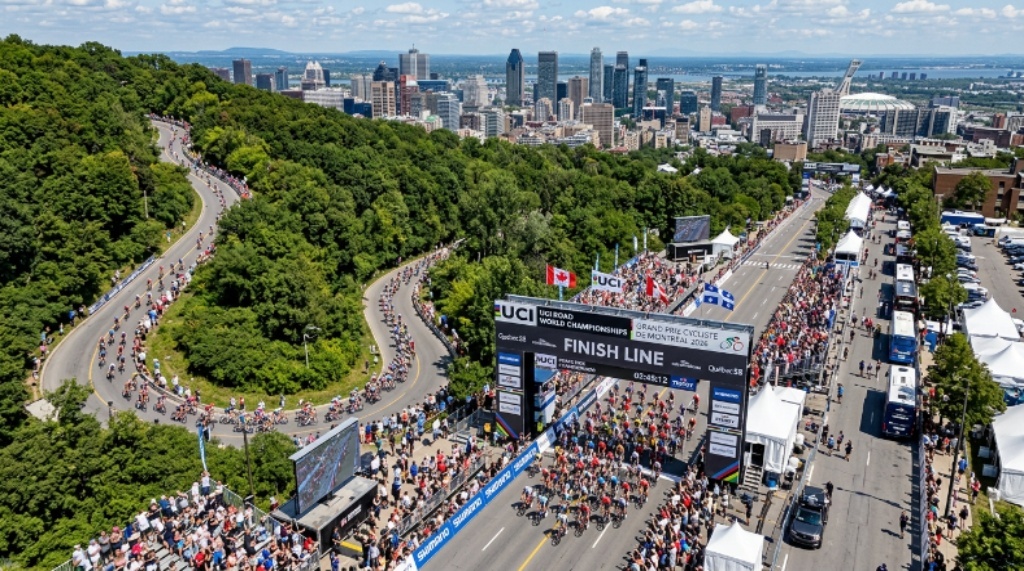
After the climbs, the circuit concludes with a false flat rising stretch along Avenue du Parc. This finish does not favor the pure sprinters. It rewards riders with stamina and a strong engine even after hours of racing. The finish on Avenue du Parc mirrors the finish that will also be used for the 2026 UCI Road World Championships, making it essential for World Championship contenders to experience it firsthand.
Total Elevation in Context
With approximately 4,740 to 4,842 metres of cumulative climbing over the full race distance, the Grand Prix Cycliste de Montréal sits in genuinely elite territory for one-day races. As a point of comparison, that climbing volume is indeed similar to what riders face in a challenging Tour de France mountain stage, as Wikipedia’s race records confirm.
Historical Winners: A Race That Crowns Champions
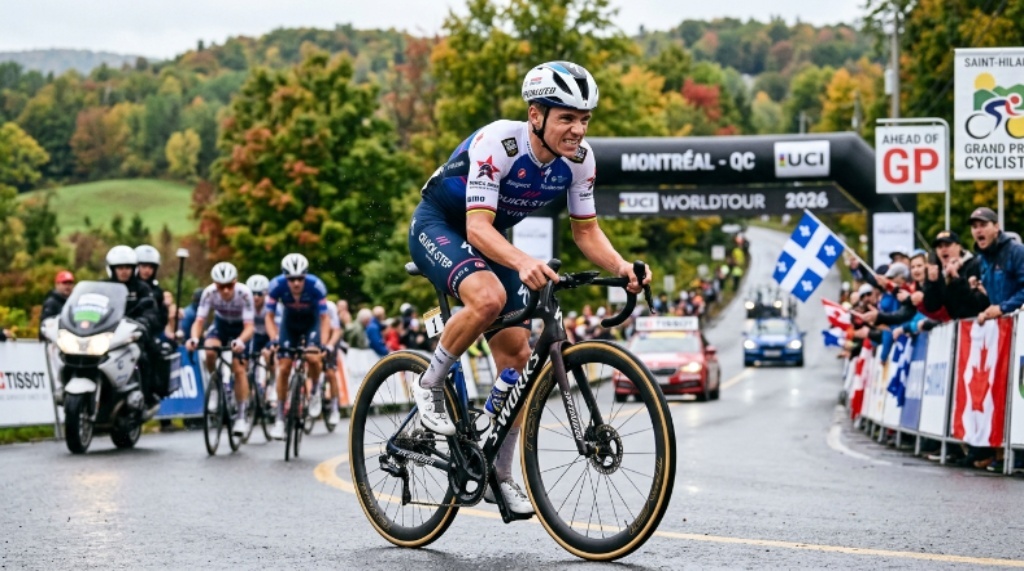
Looking back at the recent winners of the Grand Prix Cycliste de Montréal reveals a clear pattern. This race consistently attracts and crowns the sport’s absolute best. The results table from 2022 to 2025 tells the story vividly.
| Year | Winner | Team | Runner-Up |
| 2022 | Tadej Pogačar (SLO) | UAE Team Emirates | Wout van Aert (BEL) |
| 2023 | Adam Yates (GBR) | UAE Team Emirates | Pavel Sivakov (FRA) |
| 2024 | Tadej Pogačar (SLO) | UAE Team Emirates | Pello Bilbao (ESP) |
| 2025 | Brandon McNulty (USA) | UAE Team Emirates XRG | Tadej Pogačar (SLO) |
UAE Team Emirates has dominated this race in the modern era. Remarkably, the team has claimed victory every single year from 2022 to 2025. Pogačar won in 2022 with a perfectly timed sprint after a breakaway, then came back in 2024 with a devastating solo attack on the penultimate lap. In 2025, his teammate Brandon McNulty crossed the line first, with Pogačar a close second in a commanding UAE one-two finish.
Adam Yates added a third UAE win in between in 2023, edging Pavel Sivakov by just two seconds in a thriller of a finish. That 2023 result reminded the peloton that this race can equally be decided by sharp, surgical attacks on the final lap rather than a sustained explosion of pace.
The 2026 Edition in a Special Context: WorldTour Meets World Championships
The 2026 Grand Prix Cycliste de Montréal is unlike any previous edition in one critical way. The UCI Road World Championships arrive in Montreal on September 20 to 27, just one week after the GP race. This timing creates an unusually high stakes scenario for every rider who plans to target the rainbow jersey.
Événements GPCQM, which organizes both the GP races and the World Championships, has deliberately designed this calendar to build momentum. The two GP races in Quebec and Montreal serve as an immersive lead-up to the Worlds. Riders get to race on the same roads, understand the Mont Royal circuit’s demands, and fine-tune their form on the very climbs that will decide who becomes World Champion.
This is not an abstract strategic benefit. Familiarity with a circuit genuinely matters in one-day racing. Riders who have navigated Camilien-Houde seventeen times in a race two weeks before the Worlds will know precisely where to attack, where to conserve, and how to pace themselves through the punchy final laps. In that sense, the Grand Prix Cycliste de Montréal 2026 doubles as a full-dress rehearsal for the biggest prize in road cycling.
Additionally, Montreal staged the very first UCI Road World Championships held outside Europe, way back in 1974, when Eddy Merckx triumphed on the same continent. Now, 52 years later, the city reclaims that honour. The GP race is therefore part of a much larger civic and sporting celebration.
Key Contenders for the 2026 Race
With such an enormous backdrop, the 2026 startlist naturally draws the sport’s elite names. According to ProCyclingStats, the top competitors listed for the race include Remco Evenepoel, Tom Pidcock, and young French phenom Paul Seixas. Other teams competing include Bahrain Victorious, Team Picnic PostNL, Lidl-Trek, Uno-X Mobility, Soudal Quick-Step, and Tudor Pro Cycling Team.
Remco Evenepoel
Remco Evenepoel heads into September 2026 as one of the most compelling names in the race. The Belgian double Olympic champion races for Red Bull-Bora and has had an impressive 2026 season. He won multiple races in the early season, took the Amstel Gold Race, and showed he can compete on punchy, hilly circuits that suit the Montreal profile. His explosive attacking ability and strong engine on false flats make him a genuine threat on the Avenue du Parc finish.
Tom Pidcock
Tom Pidcock, now riding for Pinarello Q36.5, is another fascinating name for the GP Montreal and the wider Canadian cycling week. His explosive short-climb ability has always suited punchy circuits. Pidcock’s form heading into September will largely determine how dangerous he is, but on his best days, few riders can match his acceleration on steep gradients.
Paul Seixas
Paul Seixas is the young French rider who has become one of the most talked-about names in cycling through 2026. His victory at La Flèche Wallonne earlier in the season announced him as a genuine classics threat at just 19 years old. Montreal’s circuit, with its repeated punchy climbs and tactical racing, could suit Seixas’s aggressive style perfectly.
The UAE Team Emirates Question
While no official confirmation of a Tadej Pogačar start has been confirmed at this writing, the Slovenian world champion’s presence on the circuit he has dominated in recent years would reshape the race entirely. UAE Team Emirates has also demonstrated that even without Pogačar, the team is strong enough to control and win the race, as the 2025 McNulty result proved.
Dark Horses Worth Watching
Beyond the headline names, several other riders have the profile to challenge on the Montreal circuit:
- Michael Woods (Canada): The Canadian climber has deep motivation racing on home roads.
- Biniam Girmay: The Eritrean star’s power and explosiveness make him a wildcard on any punchy circuit.
- Mathieu van der Poel: With Montreal on the World Championships radar, the Dutch classics specialist could target the GP as part of his Worlds buildup.
- Wout van Aert: Similarly, van Aert, who finished second in 2022, has strong reasons to target Montreal in a World Championships year.
Why This Race Matters Beyond the Result
The Grand Prix Cycliste de Montréal occupies a genuinely unique space in professional cycling. As one of only two WorldTour events in North America, it carries enormous symbolic importance for the sport’s growth on the continent. Both the Quebec and Montreal races demonstrate that world-class cycling can thrive outside Europe, drawing passionate crowds to the streets of a Canadian city every September.
From a fan perspective, the Montreal race is accessible in a way that European classics often are not. Spectators can position themselves on Camilien-Houde and see the peloton pass seventeen or eighteen times in a single afternoon. That kind of repeated viewing is genuinely rare in cycling and makes for an extraordinary atmosphere. The crowds who line the Mont Royal circuit experience the race with an intensity that rivals the finest European cycling cities.
From a television and media perspective, the race offers compelling storytelling because the same climb deciding the race lap after lap builds natural tension. Each crossing of Camilien-Houde raises the stakes slightly, until the final laps produce the decisive attacks that define the winner.
In 2026 specifically, the race also carries a tourism and economic dimension. Thousands of cycling fans are travelling to Montreal for the UCI Road World Championships from September 20 to 27. Many of them will arrive early to witness the GP races. This creates an extended cycling festival atmosphere in the city that benefits local businesses, hotels, and the sport’s North American profile overall.
The Grand Prix Cycliste de Montréal vs the World Championships Circuit
One of the most fascinating aspects of 2026 is how closely the GP Montreal circuit mirrors the World Championships course. According to the UCI’s official course confirmation, the Mont Royal circuit used for the Worlds features the same Camilien-Houde climb, the same Polytechnique ascent with gradients exceeding 11%, and the same Avenue du Parc finish that serves the GP race.
For Worlds preparation, experiencing this circuit competitively matters enormously. The GP race therefore offers every World Championships contender an irreplaceable final exam before the real test. Riders who race smartly in the GP can gain tactical knowledge, test their climbing legs under race pace, and arrive at the Worlds start line knowing exactly how their bodies respond to the Montreal circuit’s demands.
This overlap also means that some riders may approach the GP race with one eye on the Worlds, choosing to finish among the front group rather than exhaust everything in pursuit of victory. Others may use the GP as a full-out effort, treating it as the race goal itself. That tactical tension between GP ambition and Worlds strategy adds another fascinating layer to watching the 2026 edition.
How to Watch the Grand Prix Cycliste de Montréal 2026
The race takes place on Sunday, September 13, 2026. Coverage options vary by region, but the WorldTour events typically receive strong broadcast support from:
- FloBikes for viewers in North America
- Eurosport and GCN+ for European audiences
- Various national broadcasters depending on local rights
The official GPCQM website at gpcqm.ca provides the latest updates on broadcast partners, event schedules, and hospitality options for fans attending in person.
For those attending live, positioning on Camilien-Houde is the classic spectator spot. Arrive early, bring sunscreen for a September afternoon, and prepare to watch the world’s best riders pass repeatedly just metres from where you stand. It is one of cycling’s genuinely spectacular live experiences.
Conclusion
The Grand Prix Cycliste de Montréal 2026 arrives at the most significant moment in the race’s fifteen-year history. It is the 15th edition of a race that has grown from a promising addition to the WorldTour calendar into a genuinely unmissable one-day classic. Set on September 13 on the punishing Mont Royal circuit, it precedes the UCI Road World Championships by just one week, making it simultaneously a race for the record books and a tactical exercise for the rainbow jersey battle ahead.
With compelling names like Remco Evenepoel, Tom Pidcock, Paul Seixas, and potentially others converging on the Côte Camilien-Houde, the race promises the kind of high-octane, climbing-fuelled drama that has defined this event since its inception. Whether you are watching from the roadside in Montreal, streaming from across the world, or simply following the results, this is one race you cannot afford to miss in 2026.
Mark September 13 in your calendar, tune in, and watch as the WorldTour battle returns to Canada in spectacular fashion.
Frequently Asked Questions
When is the Grand Prix Cycliste de Montréal 2026?
The Grand Prix Cycliste de Montréal 2026 takes place on Sunday, September 13, 2026. It is held two days after the Grand Prix Cycliste de Québec, which runs on September 11. Together, these two events form the Canadian WorldTour double-header before the UCI Road World Championships arrive in Montreal on September 20.
How long is the Grand Prix Cycliste de Montréal course?
The race uses a 12.3-kilometre circuit around Mont Royal that the riders complete approximately 17 to 18 times. The total race distance is typically around 209 to 220 kilometres, with roughly 4,700 to 4,800 metres of total elevation gain throughout the day. This makes it one of the more climbing-intensive one-day events on the entire WorldTour calendar.
What makes the Grand Prix Cycliste de Montréal so difficult?
The race’s difficulty comes from the repeated climbing. Every single lap includes the Côte Camilien-Houde, a 1.8 km climb averaging 8%, as well as the Polytechnique ascent with sections above 11%. By the final laps, riders have climbed thousands of metres and the punchy terrain leaves no room to recover, rewarding explosive climbers and punchy attackers above all.
Why is the 2026 Grand Prix Cycliste de Montréal especially important?
The 2026 edition holds special significance because the UCI Road World Championships take place in Montreal just one week later, from September 20 to 27. The GP race and the Worlds share essentially the same circuit, meaning the GP doubles as a key preparation race for every rider targeting the rainbow jersey. This makes the 2026 edition arguably the highest-stakes edition in the race’s history.
Who are the favourites for the Grand Prix Cycliste de Montréal 2026?
The leading names on the 2026 startlist include Remco Evenepoel, Tom Pidcock, and Paul Seixas. UAE Team Emirates, which has won the race every year from 2022 to 2025, is also expected to field a competitive team. Riders like Michael Woods, Biniam Girmay, Mathieu van der Poel, and Wout van Aert could additionally target the race given its significance as a World Championships buildup event.
Explore this location via Google Maps:
Welcome to outdoorxsports.com! I’m Russell, your guide to the awesome world of mountain biking. This blog is all about building a community of riders who love to share their passion for the sport. Expect inspiring stories, local trail recommendations, fun challenges, and tips for making the most of your time on two wheels.