
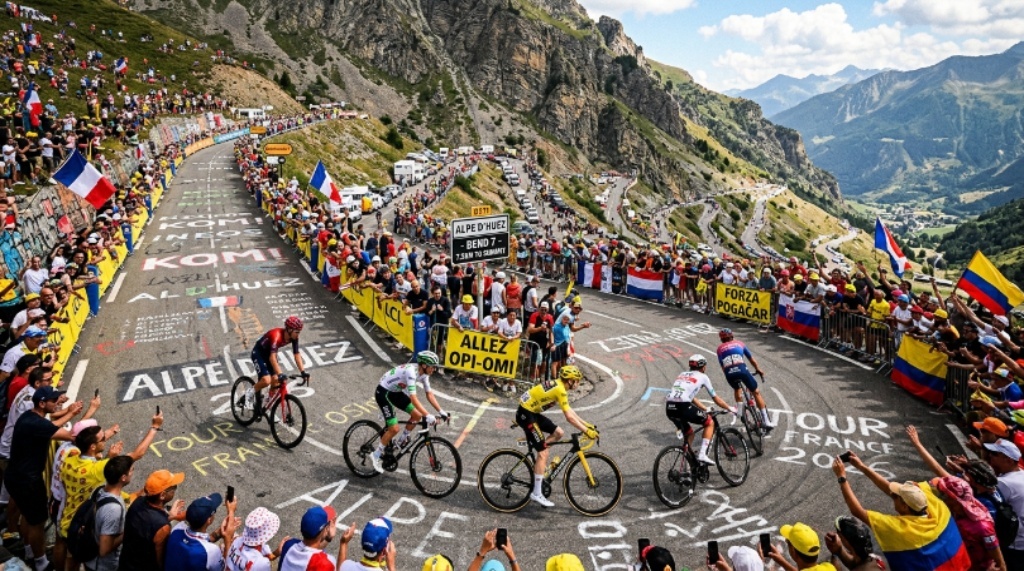
One of the most anticipated sporting events of the year is almost here. The Tour de France 2026 promises to be a breathtaking edition of cycling’s grandest race. From a spectacular start in Spain to a dramatic Alpine finale in France, this year’s race has everything. New venues, iconic climbs, and a fierce battle for the yellow jersey all await. Whether you are a seasoned cycling fan or a first-time viewer, here is everything you need to know.
When Does the Tour de France 2026 Take Place?
The race runs from July 4 to July 26, 2026. That gives fans 23 days of racing spread across 21 stages. There are two rest days built into the schedule, falling on July 13 and July 20. These breaks give riders a chance to recover before the race’s most punishing sections. Therefore, both weeks following the rest days are expected to be especially intense.
This is the 113th edition of the race. It is organised, as always, by the Amaury Sport Organisation, widely known as ASO. The full route was officially announced on October 23, 2025, at the Palais des Congrès in Paris.
Where Does the Race Start and Finish?
For the first time in over three decades, the Tour begins outside of France. Barcelona, Spain, serves as the Grand Départ host city. This marks only the third time in history that the race has started on Spanish soil. The previous occasions were San Sebastián in 1992 and Bilbao in 2023.
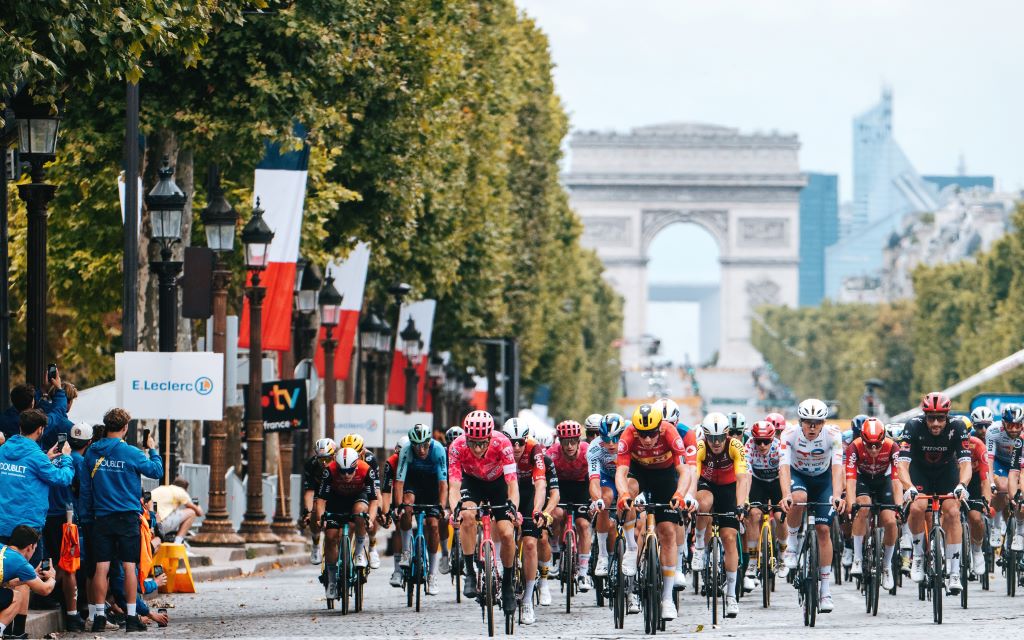
The race finishes in Paris, as tradition demands. However, 2026 brings a special twist to the finale. Riders will pass through the iconic streets of Montmartre before crossing the finish line on the Champs-Élysées. This addition follows the enormous success of the Montmartre finish at the 2025 edition, which drew massive crowds and record television viewership.
The Full Route: A Journey Through Mountains and History
The 2026 route covers 3,333 kilometres in total. It features a staggering 54,450 metres of cumulative climbing. That makes it one of the toughest routes in recent memory.
The race begins in Barcelona before quickly heading into the mountains. After the opening stages in Spain, the peloton crosses into France through the Pyrenees. From there, it travels through the Massif Central, the Jura, the Vosges, and finally the Alps. Riders will therefore pass through five major mountain ranges over the course of the race.
Here are some key route highlights:
- Stage 1 is a 19.7-kilometre team time trial in Barcelona, the first of its kind at the Tour since 1971.
- Stage 2 ends with a circuit around Montjuïc, Barcelona’s famous Olympic hill.
- Stage 3 crosses the Pyrenees and ends with an uphill finish at Les Angles.
- Stage 9 features the Col du Tourmalet and ends at the stunning Gavarnie-Gèdre, a UNESCO-listed cirque.
- Stage 10 on Bastille Day, July 14, tackles the Puy Mary and finishes at Le Lioran.
- Stage 16 is the lone individual time trial, a 26-kilometre test along the shores of Lake Geneva.
- Stages 19 and 20 both finish on the iconic Alpe d’Huez, a back-to-back double that has never happened before in Tour history.
- Stage 21 ends with the traditional finish on the Champs-Élysées in Paris.
The route has been widely praised for its aggressive design. There are eight mountain stages, five summit finishes, and very little time trialling. Additionally, organisers have included multiple intermediate sprint opportunities for the first time since 2010, rewarding the fastest riders at several points along the way.
The Key Climbs to Watch
No Tour is complete without its legendary ascents. The 2026 edition delivers some of the most famous climbs in cycling, alongside some exciting new ones.
Alpe d’Huez is the centrepiece. The mountain, with its 21 famous hairpin bends, has not featured at the Tour since 2022. Its return alone makes this edition special. The fact that it hosts two consecutive summit finishes on Stages 19 and 20 raises the stakes even further.
The Col du Galibier also features, adding to the difficulty of Stage 20. That stage, starting in Le Bourg-d’Oisans, includes the Col de la Croix de Fer, the Col du Télégraphe, and the Galibier before a brutal finish on the Alpe d’Huez. With over 5,600 metres of climbing in a single stage, it is expected to be the queen stage of the race.
Additionally, Stage 15 introduces Plateau de Solaison, a climb making its Tour debut. It averages 9.3% over its final 9 kilometres. Riders and analysts alike expect this to be a decisive moment before the second rest day.
The Riders to Watch
The competition for the yellow jersey is shaping up to be one of the most thrilling in years. Several elite riders will battle for the overall title.
Tadej Pogačar enters the race as the clear favourite. The Slovenian superstar has been almost unbeatable through the spring season. He claimed a record fourth victory at Strade Bianche and won Liège-Bastogne-Liège ahead of a strong field. His ability to excel in time trials, climbs, and tactical racing makes him exceptionally dangerous on this route.
Jonas Vingegaard is Pogačar’s most dangerous rival. The Danish rider has taken an unusual approach to 2026 by racing the Giro d’Italia before the Tour. He won Paris-Nice with the widest margin seen in 87 years. However, how he recovers from the Giro effort before July remains the key question.
Remco Evenepoel is a third serious threat. Racing for his new team, Red Bull-BORA-hansgrohe, the Belgian is targeting the individual time trial on Stage 16 as a key moment in his Tour challenge. He is an exceptional rider against the clock and a strong climber.
Additionally, young riders like Paul Seixas and Florian Lipowitz have made strong cases for themselves in 2026. Seixas, just 19 years old, has already won Flèche Wallonne and the Itzulia Basque Country. He is widely considered one of the most exciting talents in the sport.
What Makes the 2026 Tour Different?
Several elements make this edition stand out from recent years.
First, the Grand Départ in Barcelona is a historic moment. The city’s urban stages, passing landmarks like the Sagrada Família and the Montjuïc Olympic Stadium, will be visually spectacular.
Second, the team time trial format on Stage 1 is completely new. Rather than taking the time of the fourth or fifth rider, each rider’s individual time is recorded. This adds a layer of tactical complexity from the very first kilometre.
Third, the double Alpe d’Huez finish has never been done before. Two consecutive summit finishes at one of cycling’s most sacred locations is a bold and exciting choice. It virtually guarantees that the general classification battle will remain alive until the very final mountain day.
Finally, the Montmartre finale in Paris adds an emotional and dramatic cap to a thrilling race. After 21 stages and over 3,300 kilometres, riders will climb the famous Rue Lepic three times before completing the ceremonial finish on the Champs-Élysées.
How to Follow the Tour de France 2026
Cycling fans around the world have many options to watch and follow the race. Broadcasters vary by country, but major networks and streaming platforms typically carry full live coverage. Additionally, the official Tour de France website and app offer live tracking, stage results, and rider standings updated in real time.
For those who want to watch in person, attending a mountain stage is a unique experience. The Alpe d’Huez stages on July 24 and 25 will likely draw some of the largest roadside crowds of the entire race. However, fans planning to attend should book accommodation and travel well in advance, as these locations sell out quickly.
Social media is also a great way to stay updated. Official accounts for the Tour, cycling teams, and broadcasters post regular highlights, rider interviews, and behind-the-scenes content throughout the event.
Conclusion
The Tour de France 2026 is set to be an extraordinary race. It starts in the vibrant streets of Barcelona and ends with a dramatic double finish on Alpe d’Huez before the ceremonial conclusion in Paris. The route is tough, the climbs are legendary, and the field of riders is stacked with talent. Tadej Pogačar leads the favorites list, but Jonas Vingegaard, Remco Evenepoel, and emerging stars could turn the race upside down. Additionally, the unique features of this edition, including the team time trial opening, the double Alpe d’Huez finish, and the Montmartre addition to the Paris finale, make it a must-watch event. Mark your calendar for July 4, and get ready for three unforgettable weeks of cycling.
Frequently Asked Questions
- When does the Tour de France 2026 start and end?
The race begins on July 4, 2026, with a team time trial in Barcelona, Spain. It concludes on July 26, 2026, with the traditional stage on the Champs-Élysées in Paris. The full race covers 21 stages over 23 days, including two rest days.
- Where does the Tour de France 2026 start?
The 2026 race starts in Barcelona, Spain. This is called the Grand Départ. It is only the third time in the race’s history that the event has started on Spanish soil, following editions that began in San Sebastián in 1992 and Bilbao in 2023.
- How long is the 2026 Tour de France route?
The total route distance is 3,333 kilometres. The race passes through five mountain ranges, including the Pyrenees, the Massif Central, the Jura, the Vosges, and the Alps. Total climbing across all stages reaches approximately 54,450 metres.
- Who are the main favorites to win the 2026 Tour de France?
Tadej Pogačar is considered the overwhelming favorite based on his dominant 2026 spring season. Jonas Vingegaard is his closest rival after winning Paris-Nice in commanding fashion. Remco Evenepoel is also a strong contender, particularly due to his abilities in time trials and climbing.
- What makes Alpe d’Huez special in the 2026 Tour?
Alpe d’Huez is one of the most celebrated climbs in cycling, known for its 21 dramatic hairpin bends. In 2026, the summit finishes on two consecutive days, Stages 19 and 20. This back-to-back double has never happened before in Tour history, making it a unique and unmissable highlight.
Explore the location on Google Maps:
Welcome to outdoorxsports.com! I’m Russell, your guide to the awesome world of mountain biking. This blog is all about building a community of riders who love to share their passion for the sport. Expect inspiring stories, local trail recommendations, fun challenges, and tips for making the most of your time on two wheels.