
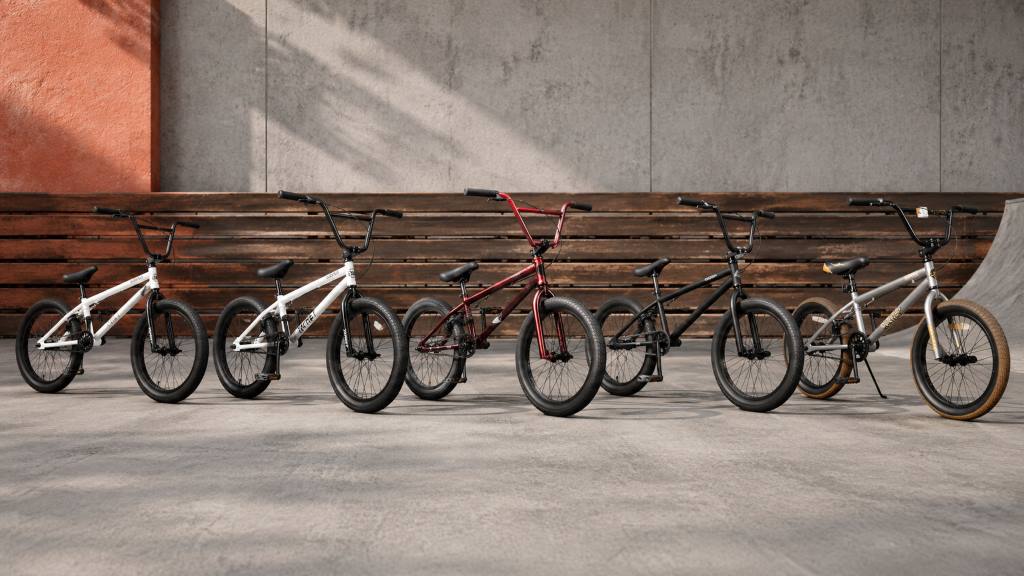
If you live anywhere in California, you already know how serious the riding culture gets. From the concrete bowls of Venice Beach to the makeshift street spots in Sacramento backyards, BMX has never really gone underground here. It just keeps evolving. Parents buying their kid a first bike, teens stepping up to something more capable, adults who never quit riding and want a solid machine that keeps up. All these groups end up facing the same question: which BMX bike is actually worth it right now? The global BMX bike market was estimated at $374 million in 2024 and is projected to grow at a 6.12% compound annual growth rate through 2035, driven largely by rising youth participation and urban cycling trends. That kind of growth reflects something real, and California riders sit right at the heart of it.
This article covers five specific BMX bikes available on Amazon in 2026, each reviewed in depth so you can make a confident, informed decision.
A Quick Overview of The Best Top Professional BMX Bike 2026 in California, CA
These five bikes cover a wide range of rider ages, skill levels, and riding styles, from a compact 18-inch starter to a full-size 20-inch adult-capable machine. Here is a quick look at what we are covering:
- Cubsala Freestyle BMX Bike, 20 Inch Yaphet (Teen Beginner and Adult Riders, Hi-Ten Steel Frame)
- Vollsch Freestyle BMX Bikes, 18 Inch Ruckus (Kids 6 to 12 Years, Black with Green Tires)
- Mongoose Freestyle BMX Bike, 20 Inch Legion (Beginner to Advanced Level, Kids and Teens)
- Retrospec Sesh BMX Bike for Kids, 20 Inch Freestyle (Pro-Level Features, Removable Axle Pegs and U-Brake)
- Cubsala Freestyle BMX Bike, 20 Inch Crossea (Kids 7 to 13 Years, Hi-Ten Steel Frame)
Best Top Professional BMX Bike 2026 in California
There is no single best BMX bike for everyone in CA. What matters is matching the right bike to the rider using it, whether that is a 9-year-old trying their first bunny hop or a 17-year-old grinding rails at a local park. Below are in-depth reviews of each bike so you can see exactly what you are dealing with.
Cubsala Freestyle BMX Bike, 20 Inch Yaphet: Best for Teen and Adult Beginner Riders
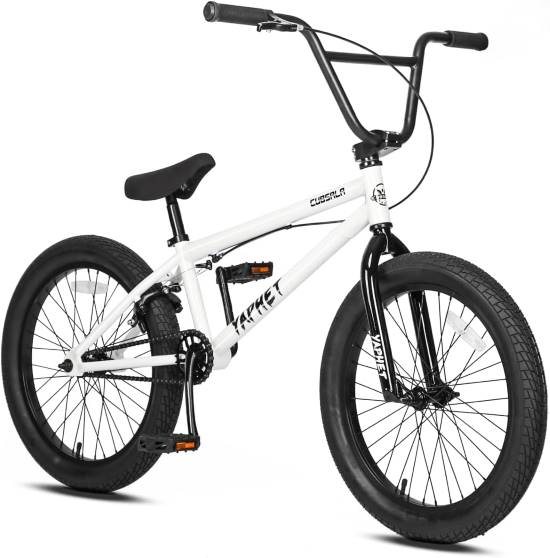
The cubsala Yaphet is the brand’s flagship entry in the 20-inch adult-capable category, built for riders standing between 4’8″ and 6’2″. That range makes it genuinely useful beyond the early teen years, and plenty of adult riders in CA who are just getting into BMX or coming back after a break find it to be a solid and honest machine.
The frame is Hi-Ten steel, which brings real weight to the build, but that heft actually helps newer riders feel more grounded when they are learning basic control. The 20.5-inch top tube is sized for proper riding position without cramping taller riders, and the geometry leans toward street and park versatility rather than racing.
Riding it around flat concrete or a casual skate spot in California, you notice it tracks straight and holds up through moderate drops and curb hops without flex. The 165mm one-piece crank paired with a 25T chainring gives a gear ratio suited to casual street riding and learning. Braking comes from aluminum U-brake and hand levers, which are easy to operate for newer hands and adjust with basic tools. The 20-inch by 2.4-inch tires on 36H aluminum single-wall rims offer solid grip on most surfaces you will encounter in California.
Where this bike has its limits: serious riders who want to start grinding or pulling bigger tricks will eventually outgrow the one-piece crank setup. Assembly is about 85% complete out of the box, and the included tools make first-time setup achievable on a Saturday afternoon.
User Review
“I bought this for myself after wanting to get back into riding for years. I’m 5’11” and was skeptical that any Amazon bike would actually fit. The Yaphet surprised me. It felt solid on the first ride, nothing rattled, the brakes worked right away, and I’ve put it through some pretty rough alley sessions near my place without issues.” — Marcus T., San Diego, CA
Key Features
Hi-Ten Steel Frame with 20.5-Inch Top Tube: The high-tensile steel construction gives this bike long-term structural durability without the cracking risk that cheaper alloys carry.
165mm One-Piece Crank with 25T Chainring: The one-piece design is simple, reliable, and easy to maintain. You do not have to worry about crank arm bolts working loose or bearing preload adjustments.
9T Cog Sealed Bearing Cassette Rear Hub: A cassette hub performs noticeably better than an older freewheel setup, offering faster engagement and less slop in the drivetrain.
Aluminum U-Brake with Hand Levers: These brakes are easy to squeeze, straightforward to adjust, and less prone to corrosion than steel alternatives. .
20×2.4 Inch Tires on 36H Aluminum Single-Wall Rims: The wide tire profile adds stability for beginners and absorbs minor surface imperfections on street and path surfaces.
360-Degree Rotor (Yaphet-K variant): On models that include the rotor, full handlebar rotation becomes possible, which is essential for barspins and certain freestyle tricks.
85% Pre-Assembly with Included Tools: Most of the difficult assembly work is done before the box ships, reducing the chance of incorrect bolt placement. The included tools are basic but functional for initial setup.
Limited Lifetime Frame Warranty: Coverage on the frame gives long-term peace of mind, especially for parents buying for growing teens who will put real miles on this bike over several years.
Pros and Cons
| Pros | Cons |
|---|---|
| Suits tall teens and adults | Heavier than chromoly frames |
| Cassette hub for better engagement | One-piece crank limits upgrades |
| Wide tires improve stability | Single-wall rims for basic riding only |
Vollsch Freestyle BMX Bikes, 18 Inch Ruckus: Best for Young Kids Ages 6 to 12
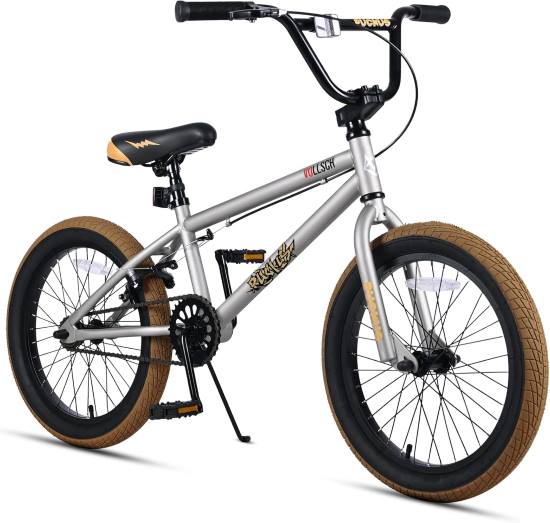
The vollsch Ruckus 18-inch is squarely aimed at younger riders in California who have grown out of a 16-inch but are not quite ready for a full 20-inch frame. That transition window is tricky, and the Ruckus fills it cleanly. The bike fits riders between 3’5″ and 4’3″, which generally covers the 6 to 12 age bracket depending on the child’s build.
The frame uses high-carbon steel with an 18.2-inch top tube, which is notably stiffer and more responsive than standard Hi-Ten constructions at this size. That makes a difference when a child is trying to steer confidently for the first time. The geometry is designed to feel quick and reactive without being twitchy, which is important for young riders still building coordination.
The 140mm one-piece crank and 32T chainring keep pedaling effort low enough that smaller legs do not fatigue quickly on longer neighborhood rides. California families living near parks or pathways will find this size particularly useful for weekend excursions.
Braking uses an aluminum rear U-brake with hand lever, and the 18×2.35-inch tires on 48H carbon steel single-wall rims provide decent traction on pavement and light dirt paths. The higher spoke count compared to standard 36H setups means a bit more lateral stiffness, which matters when kids are still developing their handling skills.
One practical note: the black-and-green colorway has been popular, and parents report it holds up well aesthetically through real daily use. Assembly arrives 85% complete, typically taking 20 to 30 minutes to finish.
User Review
“My daughter is 8 and this was her first real BMX-style bike. We live in Fresno so she rides mostly on neighborhood streets and a small park nearby. She took to it fast and I haven’t had to adjust or fix anything in months. The green tires are her favorite part, honestly.” — Jennifer R., Fresno, CA
Key Features
High-Carbon Steel Frame with 18.2-Inch Top Tube: High-carbon steel offers a slightly stiffer, more responsive feel compared to basic Hi-Ten, making steering input more predictable for young riders.
140mm One-Piece Crank with 32T Chainring: The shorter crank arm matches the leg reach of younger riders more accurately than 165mm units intended for teenagers.
18×2.35 Inch Tires on 48H Carbon Steel Rims: The 48-spoke pattern gives these wheels more lateral strength than a standard 36H build, helping them withstand the uneven weight distribution that comes from riders who are still developing smooth technique.
Aluminum Rear U-Brake with Hand Lever: Youth riders benefit from a hand brake they can operate with confidence. The aluminum construction keeps weight reasonable and avoids corrosion in outdoor storage conditions.
3/8-Inch Female Axle Front Hub with 16T Cog Sealed Bearing Cassette: The sealed bearing cassette extends drivetrain life by protecting internal components from dust and grit, which is especially relevant for California riders who encounter fine, dry dust on paths and parks year-round.
Beginner-Oriented Frame Geometry: The proportions are designed specifically for the 6-to-12 age group, not simply scaled down from a larger adult bike. This means the reach, standover height, and bar position feel natural for a small rider rather than cramped or stretched.
85% Pre-Assembly with Included Tools: A practical inclusion for parents who want to get their child riding quickly without needing extra hardware. The remaining assembly steps are straightforward and documented clearly.
Compact and Maneuverable Sizing: The 18-inch wheel diameter gives riders a bike that is easy to lift, lean, and redirect without the momentum penalty of a heavier 20-inch setup. This is especially useful for younger kids who are still building upper body strength.
Pros and Cons
| Pros | Cons |
|---|---|
| Right size for ages 6 to 12 | Limited to one wheel size option |
| Higher spoke count adds durability | Carbon steel rims heavier than aluminum |
| Sealed bearing cassette hub | Grows out of quickly for tall kids |
Mongoose Freestyle BMX Bike, 20 Inch Legion: Best for Beginner to Advanced Progression
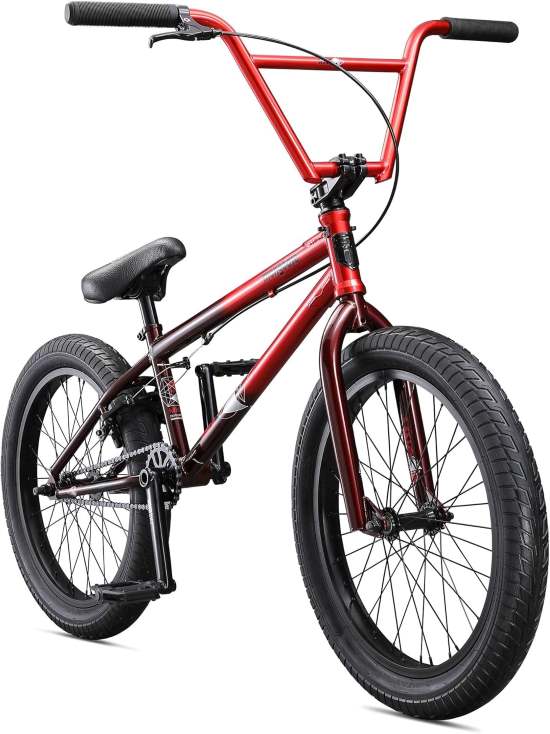
Mongoose has been part of BMX culture for decades, and the Legion line reflects a brand that genuinely understands what progressing riders need. The 20-inch Legion L20 is aimed at beginner to advanced riders, and the wider progression range is something you can actually feel in how the bike rides. For California riders who plan to spend time at a local skate park and want a bike that does not need replacing after six months, this is the model to look at.
The Hi-Ten steel frame carries a 20.25-inch top tube with a tapered headtube, which improves steering stiffness compared to straight tube designs. Removable brake mounts give riders the option to run brakeless later without unsightly hardware on the frame.
The 170mm one-piece forged steel cranks with a 25T alloy chainring and American loose ball bottom bracket provide a familiar, serviceable drivetrain that many California skate park riders maintain themselves with basic tools. The 20×2.3-inch tires on 36H aluminum single-wall rims provide good street traction, and the aluminum U-brake setup delivers consistent stopping power.
Where the Legion earns real points is in its long-term reputation. Riders in California who graduate to skate parks and want something that feels properly proportioned for street tricks and park sessions report consistent satisfaction with the build quality. The bike does not come fully assembled, and that extra setup effort is worth taking slowly to get correct alignment and brake tension dialed in.
User Review
“I ride a small park three times a week in Oakland and this bike has been a solid machine. I’ve replaced the tires after about a year of heavy use, but the frame and cranks have held up without any issues. My only note is to give the brakes a good adjustment on first assembly because they come a little loose out of the box.” — Devon A., Oakland, CA
Key Features
Hi-Ten Steel Frame with Tapered Headtube: The taper on the headtube adds steering column rigidity, which directly improves front-end responsiveness.
Removable Brake Mounts: A design choice that speaks directly to the BMX community’s culture of riding brakeless. Having the option built in from the factory means riders can remove hardware cleanly without drill marks on the frame later. .
170mm One-Piece Forged Steel Cranks with 25T Chainring: Forged steel is meaningfully stronger than standard cast cranks, and this shows over time in heavily used bikes.
20×2.3 Inch Tires on Aluminum Single-Wall 36H Rims: A well-proven tire width for all-around BMX use. The 2.3-inch width balances grip with rolling speed effectively.
Aluminum U-Brake with Alloy Brake Levers: Both components resist corrosion and stay light. For California riders who store bikes outdoors or near the coast, aluminum hardware requires much less upkeep than steel equivalents to maintain reliable performance.
Hi-Ten Steel Handlebar and Fork with 48mm Stem: The 8-inch rise handlebar gives beginner to intermediate riders a comfortable upright position for learning without straining the back or wrists.
Sealed Bearing Cassette Rear Hub with 9T Cog: A 9T cog rear hub provides fast and clean engagement, giving riders a more immediate pedal response. This feature, more common on pricier builds, appears here and makes a noticeable difference in how well the bike feels during trick setups.
45-Year Brand Legacy in BMX: Mongoose is not a new entrant to this space. Their reputation in California’s BMX community is established, which means parts, community knowledge, and mechanic familiarity are all easier to access locally.
Pros and Cons
| Pros | Cons |
|---|---|
| Tapered headtube improves steering | Requires careful initial assembly |
| Removable brake mounts for versatility | One-piece crank is a long-term limit |
| Well-known brand with parts support | Single-wall rims for moderate riding only |
Retrospec Sesh BMX Bike for Kids, 20 Inch Freestyle: Best for Kids Wanting Pro-Level Features
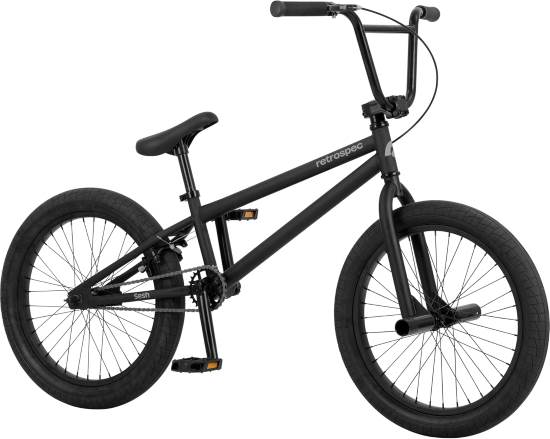
Retrospec built the Sesh around a clear insight: kids in California who watch BMX on social media want a bike that looks and performs like a real BMX setup, not a toy version of one. The Sesh 20-inch delivers that legitimacy through some genuinely pro-specification choices packed into a youth-sized package targeted at riders ages 6 to 11.
The durable steel frame features a 20.5-inch top tube with thick dropouts that are reinforced to handle stress from tricks and repeated impact landings. That dropout quality is a practical difference from cheaper builds where the axle retention slots wear out quickly. The 3-piece tubular chromoly crank paired with a 25T sprocket and 9T freewheel gives a performance feel well beyond the usual single-piece entry-level setups.
For California kids spending afternoons at local skate parks, this component choice makes pedaling smoother and gives the whole bike a more capable, honest feel. The wide 20×2.40-inch tires absorb bumps and cracks on California street surfaces well, and the rear U-brake is designed to sit compact against the frame to avoid snagging clothing or ankles.
The removable axle pegs are a big draw for younger riders who want to attempt grinding. They can be placed on either wheel and removed entirely when not needed. Threadless steering adds precision for a rider learning how their inputs translate to direction changes.
One limitation to be aware of: the seat is fixed in angle, which bothers some users. Also, this bike works well for ages 6 to 11, but taller or heavier youth riders may feel limited sooner than the stated range suggests.
User Review
“My 10-year-old nephew got this for his birthday and has been obsessed. We’re in the East Bay and he takes it to the local park regularly. He already upgraded to 4 matching pegs. The 3-piece cranks are the real deal for a kids’ bike and I’m honestly a bit jealous of what he’s riding at that age.” — Carlos M., Berkeley, CA
Key Features
Durable Steel Frame with Thick Reinforced Dropouts: Standard dropout thickness on entry-level bikes wears quickly under repeated peg loading and axle changes. Retrospec’s reinforced dropout design extends the life of the axle retention significantly.
3-Piece Tubular Chromoly Crank with 25T Sprocket: The move from a one-piece to a three-piece crank system is one of the more meaningful upgrades on this bike. Three-piece cranks allow for proper mid or Spanish BB bearing sizing, improving smoothness and longevity.
Removable Axle Pegs (Front or Rear Mounting): The included pegs make the Sesh genuinely useful for progressive freestyle riding without requiring an aftermarket purchase.
Wide 20×2.40 Inch Shock-Absorbing Tires: The extra width cushions the landing impact from jumps and drops that are common at California skate parks. For young riders whose technique is still developing, a more forgiving tire profile reduces the risk of wheel pinch flats and keeps rides more comfortable overall.
Compact Rear U-Brake System: The snag-free design means the brake hardware sits within the frame profile. This is a genuine safety consideration for youth riders who are still learning body positioning and do not always manage their limb placement cleanly during trick attempts.
Extra-Wide Handlebars with 9-Inch Rise: The wider bar gives younger riders more leverage over steering inputs, making the bike easier to maneuver. The high rise positions hands at a comfortable height for a standing riding posture common in freestyle BMX.
Threadless Steering System: Threadless headsets are standard in performance BMX because they are lighter, stiffer, and easier to maintain than threaded alternatives.
Lifetime Limited Warranty on Frame: Coverage through the frame’s life reduces financial risk for parents making a considered purchase. Retrospec’s customer support reputation for California buyers has been generally positive based on community feedback.
Pros and Cons
| Pros | Cons |
|---|---|
| 3-piece crank is a standout feature | Fixed seat angle limits adjustment |
| Reinforced dropouts handle pegs well | Heavier than aluminum alternatives |
| Pro-grade features at youth pricing | Age range ends at 11 for most riders |
Cubsala Freestyle BMX Bike, 20 Inch Crossea: Best First BMX for Kids Ages 7 to 13
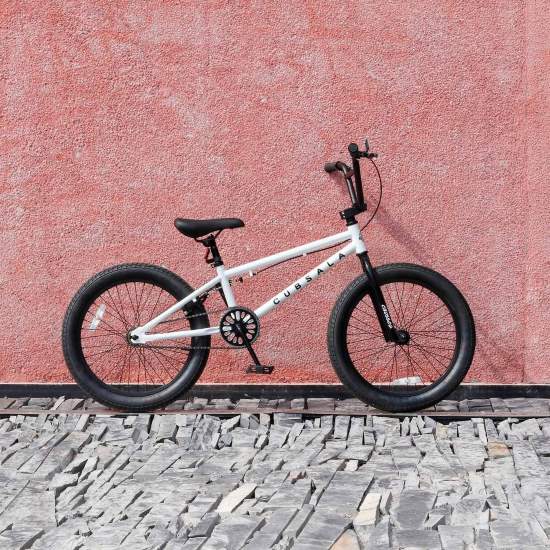
The cubsala Crossea 20 is the brand’s purpose-built starter bike for the 7-to-13 age group, fitting riders between 4’3″ and 5’4″. It is a different bike from the Yaphet reviewed earlier despite sharing the cubsala name. Where the Yaphet targets teens and adults, the Crossea is optimized for younger, lighter riders who need a correctly proportioned geometry rather than a scaled-down adult frame.
The Hi-Ten steel frame features a 19.5-inch top tube, a noticeably shorter setup than the Yaphet’s 20.5-inch tube, which keeps the bike from feeling stretched for smaller riders. The frame geometry is described by cubsala as quick and responsive, meaning it steers with less effort and follows input cues more directly. That characteristic matters during the early learning phase when kids are still connecting physical input to bike reaction.
The drivetrain features a 165mm one-piece crank with a 36T chainring on some variants, and front and rear aluminum brakes on certain builds, giving the bike dual braking which beginners tend to find more intuitive than a single rear-only setup. The 20×2.35-inch tires on 36H aluminum single-wall rims deliver reliable grip on most surfaces California kids ride.
Four BMX pegs are included on several versions, which gives kids a legitimate reason to experiment with grinding even at the beginner stage. Assembly is 85% complete, and the setup process is manageable for a parent with basic mechanical confidence. Where the Crossea does not excel is under the pressure of serious technical trick work. It is a learning platform rather than a performance tool, and that is exactly what it is designed to be.
User Review
“We bought this for our 9-year-old son who wanted a ‘real’ BMX bike after seeing older kids at the park. He has been riding it for about eight months and it has held up really well. We’re in San Jose and he rides it almost every day after school. The pegs came with it which was a big deal for him. No complaints so far.” — Priya N., San Jose, CA
Key Features
Hi-Ten Steel Frame with 19.5-Inch Top Tube: Compared to adult-sized BMX frames, this shorter top tube keeps the riding position compact and comfortable for riders in the 4’3″ to 5’4″ height range.
Quick and Responsive Beginner Geometry: cubsala has designed this frame to feel lively underfoot rather than sluggish. That quality encourages younger riders to experiment with steering inputs, which builds skill faster than a more stable, planted geometry would.
165mm One-Piece Crank with 36T Chainring: The 36T chainring option found on some Crossea variants provides a lower gear ratio compared to 25T setups, which means less pedaling force required at the same speed.
Front and Rear Aluminum Dual Brakes: Dual braking is more intuitive for young riders who have not yet developed a single brake operating habit. Front and rear coverage gives more stopping power and allows riders to experiment with weight transfer during braking.
20×2.35 Inch Tires on 36H Aluminum Single-Wall Rims: The 2.35-inch tire width sits between narrow racing rubber and the wide cushioned profiles found on heavier bikes.
Four Included BMX Pegs: Having four pegs from day one removes a common frustration for young riders who see other kids doing grinds at the local park and want to participate.
85% Pre-Assembled with Included Tools: A practical setup solution that reduces the time between unboxing and first ride. Final assembly steps are simple and well-documented, and the tools provided cover the required adjustments for most users.
Limited Lifetime Warranty Coverage: Frame warranty coverage gives parents confidence in the investment, particularly for a bike that will see daily use over multiple years as a child grows through the 7-to-13 age range.
Pros and Cons
| Pros | Cons |
|---|---|
| Correct geometry for smaller riders | Not suited for advanced trick riding |
| Four pegs included from the start | One-piece crank limits longevity |
| Dual front and rear brakes standard | Single-wall rims for light to moderate use |
Related post:
Upgrade Tires on a WEIZE Hardtail Mountain Bike 29 Inch
Ride Mongoose Argus Trail or ST Fat Tire Mountain Bike in Snow
BMX Bike Buying Guide
What Actually Matters Before Choosing a BMX Bike
Frame Material and Long-Term Durability
Most entry-level BMX bikes in 2026 use Hi-Ten steel, which is high-tensile steel. It is strong and impact-resistant, which matters for a bike being dropped, skidded, and generally abused by a young rider. What buyers often misunderstand is that Hi-Ten is heavier than chromoly steel, and that weight becomes noticeable over time, especially for smaller riders.
Chromoly, which is an alloy of chromium and molybdenum, is lighter and more vibration-absorbing, but appears mainly on more expensive builds. For a first bike in California, Hi-Ten is more than acceptable. But if a rider develops serious skill and wants to progress, frame material becomes one of the first upgrade considerations.
Wheel Size and Rider Fit
BMX bikes come primarily in 18-inch and 20-inch wheel sizes at the beginner level. The instinct to buy a 20-inch for a 9-year-old because they will grow into it is a common parenting decision, and it often backfires. A child riding a bike that is physically too big for them develops poor habits and loses confidence faster than they gain skill.
Matching wheel size and top tube length to the rider’s actual height today produces much better results. A properly sized 18-inch bike for a rider between 3’5″ and 4’3″ is more effective than a 20-inch that feels oversized for the next year.
Crank Type and Drivetrain Quality
One-piece cranks are the industry norm at entry-level pricing, and they work reliably for casual riding and basic skill development. What buyers often overlook is that one-piece cranks use an older American bottom bracket shell, which limits future upgrade options and can develop play sooner under heavy use.
Three-piece crank systems, like the ones on the Retrospec Sesh, offer better smoothness, longer service life, and upgrade compatibility. For a beginner, the difference is subtle. For a rider who will ride seriously for two or more years, it becomes meaningful.
Brake Systems and Safety Configuration
California riders spend a lot of time in skate parks and on street spots where stopping quickly and precisely matters. Single rear-brake setups are standard on most freestyle BMX bikes and preferred by riders learning to ride brakeless over time.
However, younger riders and true beginners benefit from dual braking because it gives more intuitive stopping control. Pay attention to whether the brakes are aluminum or steel, as aluminum resists California’s coastal salt air better and requires less frequent maintenance to stay functional.
Environmental and Surface Compatibility
California’s riding environments vary significantly. A wide 2.4-inch tire handles the cracked concrete paths of an older neighborhood park differently than a narrow 2.1-inch racing tire would. For general-purpose freestyle riding across California’s mix of street surfaces, skate parks, and light dirt sections, a 2.3 to 2.4-inch tire width is the most practical all-around choice.
Riders in coastal areas like Los Angeles or San Francisco should also pay attention to aluminum hardware content, as steel components corrode faster in salt-heavy air.
Maintenance Demands and Long-Term Ownership
A BMX bike with sealed bearing hubs requires less frequent maintenance than one with loose-ball bearing hubs. Sealed bearings stay cleaner in dusty environments, which matters in California’s inland areas and during dry summer months.
Riders or parents who want a bike that can go longer between tune-ups should prioritize sealed bearing cassette hubs and sealed bottom brackets when comparing builds. General chain maintenance, tire pressure checks, and brake pad inspection are the most common maintenance tasks regardless of the build level.
Common Buyer Mistakes
Buying Based on Appearance Alone: The visual appeal of a BMX bike is obvious and intentional. Brands know that color, graphic treatment, and overall visual boldness influence purchase decisions heavily, especially when kids are involved.
The problem is that appearance reveals nothing about frame geometry, component quality, or long-term durability. Two bikes that look nearly identical can perform very differently once ridden. Always cross-reference the top tube length, wheel size, and crank type against the rider’s measurements before finalizing a purchase.
Choosing a Size the Rider Will Grow Into: This mistake is particularly common in California families buying for growing children. A 20-inch BMX bike that fits a 5-foot rider does not adequately fit a 4’2″ rider just because they will eventually be taller.
BMX bikes lack the adjustable geometry of mountain bikes, and riding an oversized machine stalls skill development significantly. Size the bike to the rider right now.
Assuming Assembly Is Straightforward: Most of these bikes arrive 85% assembled, but the remaining 15% includes steering alignment, brake tension, and drivetrain adjustment. These steps have real consequences if done incorrectly.
Poorly adjusted brakes either rub constantly or fail to engage when needed. A misaligned front wheel creates unpredictable steering. Taking 20 extra minutes to check and correct assembly properly, or having a local bike shop do it, prevents a lot of frustration on the first ride.
Ignoring the Rider’s Actual Skill Level: Marketing language tends to describe bikes as suitable for a wide range of experience levels. A beginner would feel overwhelmed on a setup intended for advanced tricks, and an experienced rider would feel bored and under-served on a strictly beginner-oriented build.
Honestly assessing where the rider currently sits and where they realistically want to be in 12 months produces a much better match than aiming for the highest skill level suggested on the box.
Overlooking Local Riding Conditions: California is geographically diverse. A rider in Riverside will encounter different surfaces, temperatures, and riding cultures than one in Santa Cruz or Bakersfield. Riders near the coast should look for builds with more aluminum hardware to resist salt air.
Riders in dry inland areas want sealed bearings to manage fine dust. Also, Riders in urban CA who will be on concrete and asphalt need wider tires and stronger rims than someone riding primarily in a smooth concrete bowl.
Skipping Regular Maintenance After Purchase: Many riders in California buy a new BMX bike, ride it intensively for several months, and then do almost no maintenance until something breaks.
Chains stretch, brake pads wear, and spoke tension loosens gradually over time, all quietly degrading performance. Building a simple monthly check of these components into the routine extends both bike life and riding experience significantly.
Assuming Brand Recognition Equals Best Value for Every Rider: Mongoose carries significant name recognition in California’s BMX community, and that reputation is earned. But that does not automatically make it the right choice for every buyer.
A newer brand with better-specified components at a similar price may serve a particular rider better. Evaluate the actual build specs rather than defaulting to the most recognizable name.
How to Match Products to Specific Needs
Young Beginners Ages 6 to 10:
This group needs a properly sized bike more than anything else. The vollsch Ruckus 18-inch and cubsala Crossea 20-inch are both designed specifically for this demographic.
The 18-inch works best for smaller kids in the lower end of the age range, while the 20-inch Crossea suits taller kids approaching the upper end. Neither of these bikes is meant for serious technical riding, and expecting them to perform like high-end builds is unrealistic. They are learning tools and solid ones.
Teens Stepping Up From Casual Riding:
A teenager who has outgrown a basic first bike and wants to start spending real time at California skate parks is the ideal buyer for something like the Mongoose Legion L20 or the Retrospec Sesh. Both bikes offer build quality that does not collapse after the first month of real session riding.
The Retrospec stands out for the 3-piece crank and included pegs. The Mongoose earns its spot through the brand’s depth of experience in building beginner-to-progressive bikes.
Adults and Taller Teen Beginners:
The cubsala Yaphet is the clearest answer here. It fits riders up to 6’2″ and is built around a geometry that does not feel cramped for adult proportions.
Adult beginners in California looking for a street-capable BMX bike that will not need replacing after six months of casual riding will find the Yaphet to be a practical and honest option.
Budget-Conscious Families Focused on Longevity:
For buyers prioritizing value per year of use over initial cost, choose the build with sealed bearing hubs and the most aluminum hardware.
Both extend service intervals and resist California’s environmental conditions better than unsealed or steel alternatives. The Retrospec Sesh justifies its position here with the 3-piece crank and reinforced dropouts, components that genuinely outlast their cheaper counterparts.
Riders Who Want to Progress Into Tricks and Park Riding:
The Mongoose Legion and Retrospec Sesh both offer features that support skill progression beyond basic riding. Removable brake mounts on the Mongoose and peg compatibility on the Retrospec make these bikes grow with the rider rather than limiting them at a fixed skill ceiling.
California riders who plan to invest time in developing real BMX skills should consider which bike will stay relevant for two or more years of development.
Conclusion
California has long been one of the most active BMX markets in the country, from the professional scenes in Los Angeles and the Bay Area down to the neighborhood parks across the Central Valley and San Diego’s beach communities. That culture creates a well-informed buyer base, and it deserves honest, specific guidance rather than generic shopping advice.
Across these five bikes, the right choice comes down to three things: rider size, current skill level, and how seriously the rider plans to develop their riding. Young kids in the 6 to 12 range benefit most from the vollsch Ruckus 18-inch or cubsala Crossea 20-inch because proper sizing matters more than feature depth at that stage.
Teens wanting to grow into park and street riding will find the Mongoose Legion and Retrospec Sesh both rewarding choices, with the Retrospec offering a more pro-grade component package for the money. Adults and taller teen beginners should look at the cubsala Yaphet for its adult-compatible geometry and honest build quality.
No bike at this price tier is perfect, and setting realistic expectations for what each one can do is the most important step before buying. Take the time to measure the rider, think honestly about how often and where the bike will be ridden, and choose accordingly.
FAQs
What size BMX bike is right for a 10-year-old in California?
Most 10-year-olds in the average height range fit a 20-inch wheel BMX best, but if your child is shorter than 4’3″, an 18-inch model will be more comfortable and easier to control.
Is Hi-Ten steel strong enough for beginner trick riding?
Hi-Ten steel handles curb hops, minor drops, and skate park use well for beginner riders, though it is heavier and less resilient than chromoly under sustained heavy trick riding.
Can a beginner adult ride a BMX bike designed for teens?
Adults taller than 5’4″ should look for models specifically sized for teens and adults, such as the cubsala Yaphet, which accommodates riders up to 6’2″ comfortably.
Do beginner BMX bikes sold on Amazon come ready to ride?
Most arrive 85% pre-assembled and require only final adjustments to brakes, steering alignment, and seat height, usually taking between 20 and 40 minutes with included tools.
How often should a BMX bike be serviced for regular use?
Riders who use their bike multiple times per week in California should check chain tension, brake pad wear, and tire pressure at least once a month to maintain safe and reliable performance.
Welcome to outdoorxsports.com! I’m Russell, your guide to the awesome world of mountain biking. This blog is all about building a community of riders who love to share their passion for the sport. Expect inspiring stories, local trail recommendations, fun challenges, and tips for making the most of your time on two wheels.