
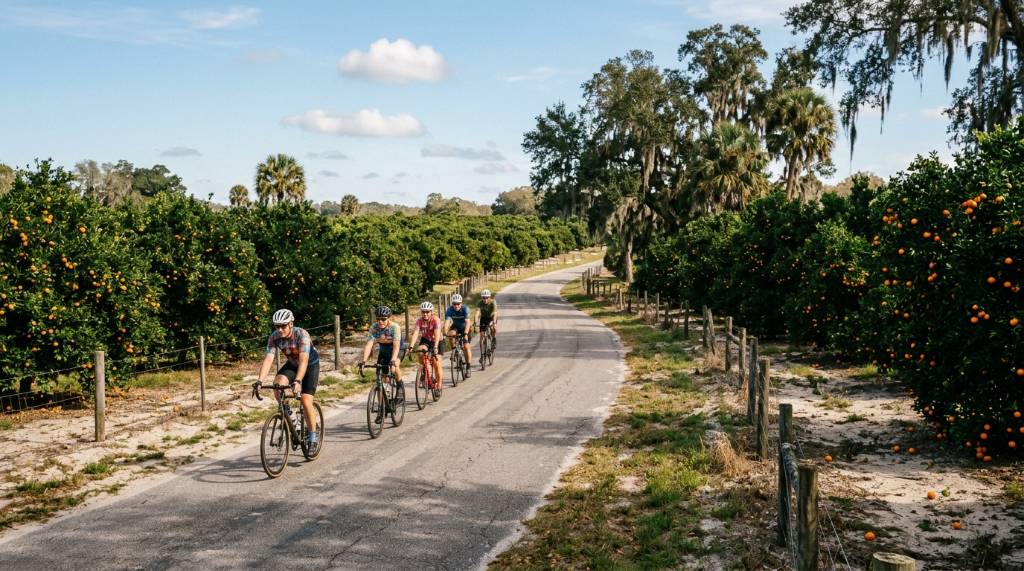
March in central Florida brings warm sun, light winds and rolling roads. Cyclists from across the country head to Dade City each year to enjoy it. In 2027, the Gran Fondo Florida takes place on Sunday, March 21. The event suits first-time century riders and seasoned racers alike. However, the course looks gentler on paper than it feels on the bike. Nonstop rollers add up quickly, and the late miles test every rider.
This guide covers everything you need. You will find the date, registration advice, route facts, distances, training plans, fueling tips and race-day strategy. Additionally, you will see simple tables that make planning easier. Read on, and arrive at the start line ready.
Event Overview at a Glance
Before you dive into the details, review the key facts below. The organizer may adjust some items, so always confirm them on the official event page.
| Detail | Information |
| Event date | Sunday, March 21, 2027 |
| Host area | Dade City, Pasco County, Florida |
| Organizer | Gran Fondo National Series |
| Main route (provisional) | About 101 miles with roughly 3,400 feet of climbing |
| Start format | Wave start with small groups |
| Timing | Four separate timed segments |
| Road type | Open public roads |
| Qualifying spots | Strong results can earn entry to the national championships |
Date and Schedule for March 21, 2027
The ride happens on a Sunday, which helps travelers. You can drive in on Friday, pick up your packet on Saturday and rest before the early start. Therefore, plan to arrive at least one full day ahead.
The organizer usually releases start times by wave. Riders leave in small groups at set intervals. This format reduces crowding on the road. It also keeps traffic flowing for local drivers. Check your assigned wave in the final rider email, and set your alarm early.
March weather in Pasco County often feels pleasant. Mornings can start cool, and afternoons warm up fast. Consequently, you should pack arm warmers that you can stash in a pocket.
Where the Ride Happens: Dade City and Pasco County
Dade City sits northeast of Tampa. The surrounding countryside offers horse farms, orange groves and clear springs. Quiet roads wind between them. The scenery keeps the miles enjoyable, even when your legs complain.
Florida is not flat everywhere. Pasco County has long, steady rollers that never let you coast for long. As a result, many riders call this one of the toughest events in the state. You will not face big mountain passes. Instead, you will face hundreds of short climbs that drain energy.
Registration Guide
Registration for the 2027 edition runs through the Gran Fondo National Series website. Dates and prices can change, so check the live page before you decide. Prior seasons followed a pattern worth knowing. Early sign-ups paid lower fees, and prices rose as the event approached. Some seasons also included a free event jersey for early registrants.
Follow these steps to register smoothly:
- Visit the official series website and find the Dade City event page.
- Choose your distance carefully.
- Enter accurate emergency contact details.
- Pick your jersey size if the organizer offers one.
- Save your confirmation email for packet pickup.
Additionally, sign up for the organizer’s email alerts. They tell you when fees change. Furthermore, they announce route updates and packet pickup times.
If you plan to compete for a qualifying spot, register early. Competitive categories fill with strong riders, and early planning gives you time to train with purpose.
Route and Distances
The organizer has shared a provisional main route of about 101 miles, with roughly 3,400 feet of climbing. In previous years, the event offered three choices. The shortest option covered about 35 miles. A middle option ran between 60 and 67 miles. The longest option reached 98 to 100 miles. The organizer often refreshes the course, so treat the numbers below as a guide.
| Option | Approximate distance | Approximate climbing | Best for |
| Short route | 35 miles | About 1,400 feet | Beginners and families |
| Medium route | 60 to 67 miles | About 2,200 to 2,700 feet | Regular weekend riders |
| Full route | 98 to 101 miles | About 3,000 to 3,400 feet | Experienced and competitive riders |
However, do not let the modest climbing totals fool you. Rolling terrain wears you down differently than one long mountain. You push, ease, push again and repeat. That rhythm burns energy even when the numbers look small.
Before you commit, ask yourself three questions. How long can I ride comfortably each week? Do I enjoy group riding? Can I fuel for five or more hours? If the answer to any question is no, start with a shorter route. You will still enjoy the roads, the food stops and the finish-line atmosphere.
Timed Segments and Wave Start Explained
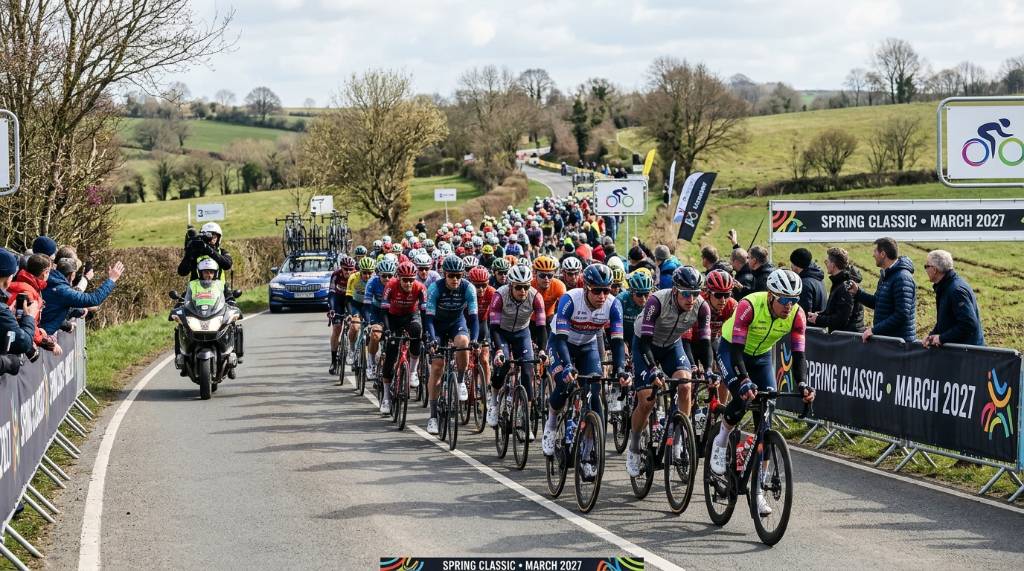
The 2027 competition does not rely on total elapsed time. Instead, the organizer uses four separated timed segments. Your result comes from how fast you ride those sections. Therefore, you can relax between segments and save energy for the efforts that count.
The wave start works like this:
- Small groups leave at regular intervals.
- Riders in each group share the early miles.
- Each rider rides at a personal pace after the first few miles.
This setup rewards smart pacing. Riders who burn too much energy early often struggle in the final segment. In contrast, patient riders finish strong.
How to Train for the Ride
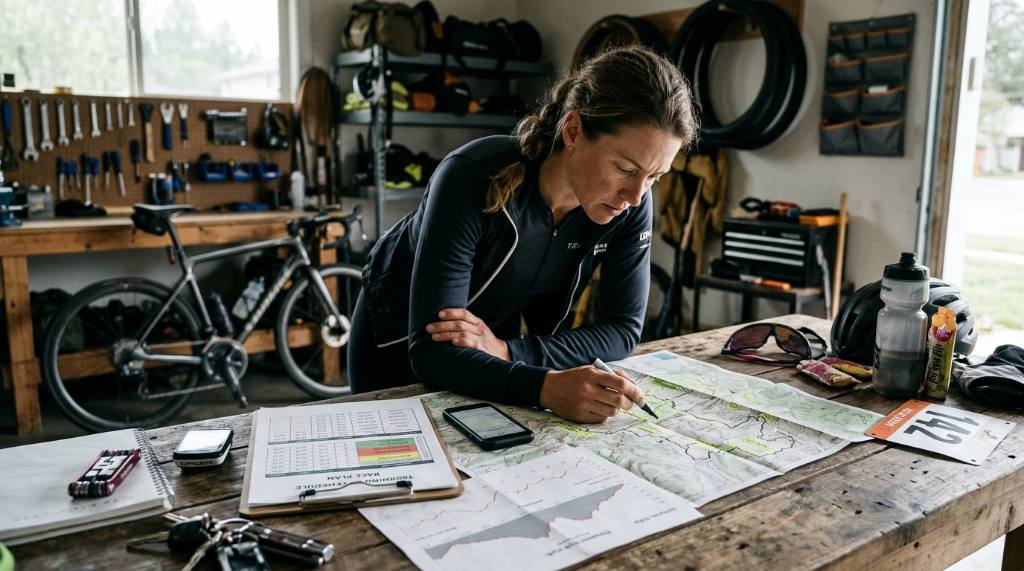
A good plan starts with honest goals. Do you want to finish comfortably? Do you want a fast time on the segments? Your answer shapes your weekly schedule.
Choose Your Timeline
Most riders benefit from eight to twelve weeks of focused work. Count back from March 21 to find your start date. A twelve-week plan begins in late December. An eight-week plan begins in late January. Additionally, riders who feel behind can still build a useful six-week plan by sharpening their current fitness instead of adding too much volume.
Sample Weekly Structure
The table below shows a simple week for a rider with six to eight hours available.
| Day | Workout | Purpose |
| Monday | Rest or easy spin | Recovery |
| Tuesday | Short intervals | Raise power |
| Wednesday | Easy ride with skills drills | Build bike handling |
| Thursday | Tempo or hill repeats | Build rolling-road strength |
| Friday | Rest | Recovery |
| Saturday | Long endurance ride | Build century durability |
| Sunday | Group ride or steady ride | Practice pacing and drafting |
Build Your Long Ride
Your weekend ride matters most. Add 15 to 30 minutes every week. Every fourth week, cut the length back to let your body adapt. Moreover, aim to ride at least four hours once before race day if you plan to attempt the full route.
Train for Rolling Roads
Florida has few big hills, so you must create challenge. Look for short rises and repeat them. Ride them at a steady effort, then spin down. Alternatively, use an indoor trainer and follow structured intervals. You can also lift weights twice a week. Squats, lunges and core work help you hold position late in the ride.
Rehearse the Timed Segments
Try two or three sessions that copy the segment format. Ride hard for the length of a segment. Then ease off for a long stretch. Repeat that pattern three or four times. This practice teaches your legs to recover and attack again.
Nutrition and Hydration
Fuel decides many century rides. Even strong riders slow down when they run low on energy. Therefore, build a plan and test it in training.
Use these simple targets as a starting point:
- Eat 40 to 60 grams of carbohydrate per hour.
- Drink one bottle per hour, and add more in the heat.
- Add electrolytes during warm weather.
- Eat real food at stops, such as bananas or sandwiches.
- Never try new products on race day.
Start eating within the first 30 minutes. Do not wait until you feel hungry. By then, you have already fallen behind. Additionally, sip fluids often instead of gulping large amounts at once.
For breakfast, choose familiar foods. Oatmeal, toast and a banana work well for many riders. Eat about two to three hours before your wave start.
Gear and Bike Setup
Good preparation prevents mechanical stress. Take your bike to a shop two weeks before the event. Ask for a full tune-up, fresh brake pads and new tape or tires if needed.
Pack this checklist for race morning:
- Helmet and cycling shoes
- Two water bottles
- Spare tube, tire levers and a mini pump
- A small multi-tool
- Sunscreen and chamois cream
- Arm warmers or a light vest
- Gels, chews or bars
- Cycling computer or phone with a charged battery
Choose tires with good puncture protection. Florida roads can carry debris, especially near the edges. Furthermore, ride with a modest tire pressure for comfort over long distances.
Group Riding Skills
Drafting saves energy. A rider who sits behind another rider can save a noticeable amount of effort. However, safe drafting requires practice. Hold a steady line, keep your hands near the brakes and avoid sudden moves.
Follow these habits:
- Call out hazards such as holes, glass and stopped cars.
- Point or signal before you turn or slow.
- Keep a gap that gives you time to react.
- Take short turns at the front if you feel strong.
- Look ahead of the wheel in front, not only at it.
With small waves, you will ride with people at a similar pace. Therefore, you can form a friendly group and share the work. That teamwork often saves several minutes over the day.
Race Week Checklist
The final week should feel calm. Cut training volume by about thirty to forty percent, but keep a few short, sharp efforts. This approach keeps your legs fresh without losing fitness.
Here is a quick plan:
- Monday and Tuesday: Short rides with two or three brief hard efforts.
- Wednesday: Easy spin and a final bike check.
- Thursday: Short opener ride, then pack your bag.
- Friday: Travel, hydrate and eat well.
- Saturday: Packet pickup, a 30-minute spin and an early dinner.
- Sunday: Race day.
Sleep matters more than any last workout. Try to rest well on Thursday and Friday, because nerves often disrupt Saturday night.
Race Day Pacing Strategy
Pacing separates happy finishers from tired ones. Follow this simple plan.
First, start easier than you think you should. The first hour should feel almost too comfortable. Second, hold a steady effort on the rollers. Do not surge on every rise. Third, save your hardest efforts for the timed segments. Finally, in the last 20 miles, use the energy you saved.
If you ride the full route, break it into chunks. Think of it as four sections instead of one long day. Each section has a goal. Eat at the start of each one, and check your effort at the end.
Travel and Lodging Tips
Dade City is easy to reach by car from Tampa, Orlando and the Gulf Coast. Tampa International Airport serves many travelers who fly in. Book your hotel early, because cycling events fill rooms quickly. Additionally, consider staying near the start area so you can roll to the line without a long drive.
If you travel with a bike, pack it carefully or ship it to a local shop. Arrive with a few days to spare when possible. Short shakeout rides help your body adjust to the warm air and your legs recover from travel.
Qualifying for the National Championships
The organizer links this event to the national championship series. Strong finishes in age-group categories can earn qualifying spots. The 2027 championship will take place in Asheville, North Carolina. Therefore, riders who want a larger challenge can use the Dade City ride as a stepping stone. Review the official qualification rules before race day, because the details can change each season.
Conclusion
The Gran Fondo Florida 2027 offers a perfect mix of warm weather, scenic roads and honest challenge. The date is Sunday, March 21, and the base is Dade City. Register early, choose a distance that matches your fitness and confirm every detail on the official page. Next, build your training around long rides, rolling-road strength and timed-segment practice. Fuel often, draft smartly and pace with patience. With a clear plan and steady effort, you will cross the finish line proud and ready for the next adventure.
Frequently Asked Questions
1. When does the 2027 ride take place?
It takes place on Sunday, March 21, 2027.
2. Where does the event start?
The event runs in Dade City, Pasco County, Florida. Confirm the exact start location on the official page.
3. How do I register?
Register online through the Gran Fondo National Series website. Pick your route, enter your details and pay the fee.
4. How much does registration cost?
Prices change by season and by date. Early sign-ups usually cost less, so check the live page.
5. What distances can I choose?
Past editions offered a short route near 35 miles, a middle route of 60 to 67 miles and a full route near 100 miles. The 2027 main route currently measures about 101 miles.
6. Is the course flat?
No. The roads roll constantly, and the climbing adds up even without a big mountain.
7. How is the event timed?
The organizer uses four separated timed segments instead of total elapsed time.
8. How long should I train?
Most riders do well with eight to twelve weeks of structured training. Riders with a solid base may need less.
9. What should I bring on race day?
Bring a helmet, two bottles, spare tube, tools, sunscreen, food and a light layer for the cool morning.
10. Can I qualify for the national championships?
Yes. Strong age-group performances can earn qualifying spots. Check the official rules for the current details.
Tap to Open in Google Maps:
Welcome to outdoorxsports.com! I’m Russell, your guide to the awesome world of mountain biking. This blog is all about building a community of riders who love to share their passion for the sport. Expect inspiring stories, local trail recommendations, fun challenges, and tips for making the most of your time on two wheels.