
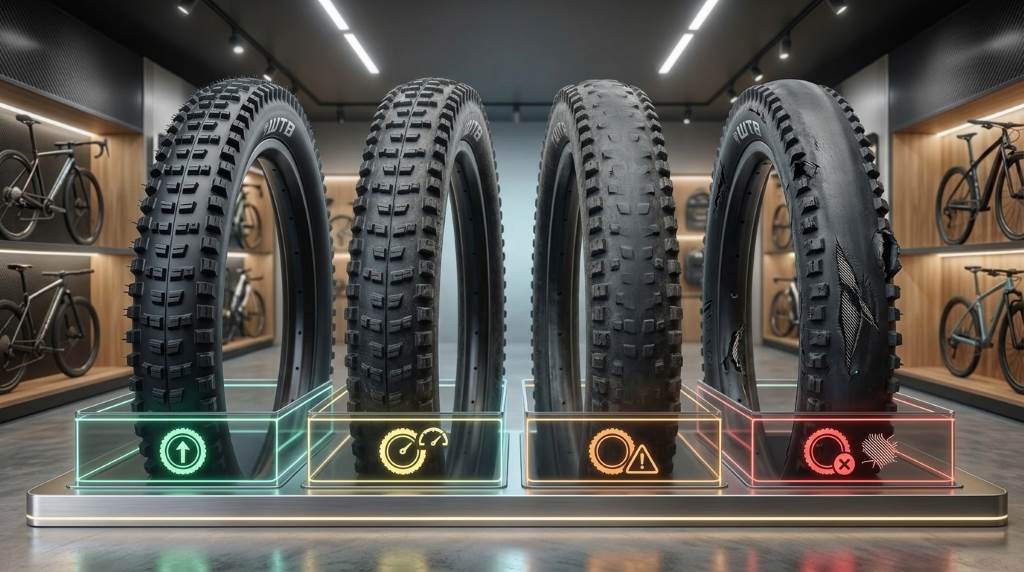
Replace mountain bike tires when tread loses meaningful grip, casing damage appears, or handling becomes unpredictable. Do not wait for a complete bald tire, because traction can decline well before total tread loss. Most tires need replacement based on condition rather than mileage alone. Some manufacturers also recommend removing tires from service around 10 years after manufacture.
Choosing the right Mountain bike tires matters, but maintaining them matters just as much. Rear tires usually wear faster because they handle more braking, pedaling force, and rider weight. Therefore, inspecting both tires before every demanding ride can prevent avoidable failures.
The Real Replacement Trigger Is Performance
Many riders search for a mileage number that tells them exactly when replacement becomes necessary. Unfortunately, mountain bike tire life varies too much for one universal mileage rule. Terrain, compound, tire pressure, riding style, rider weight, and braking habits all change wear rates.
Instead, treat mileage as a tracking tool rather than a replacement deadline. A tire with 800 miles on rocky trails may outperform another tire with 1,500 miles on pavement. Your tire’s condition and trail behavior provide stronger evidence than the odometer.
7 Signs Your Mountain Bike Tires Need Replacement
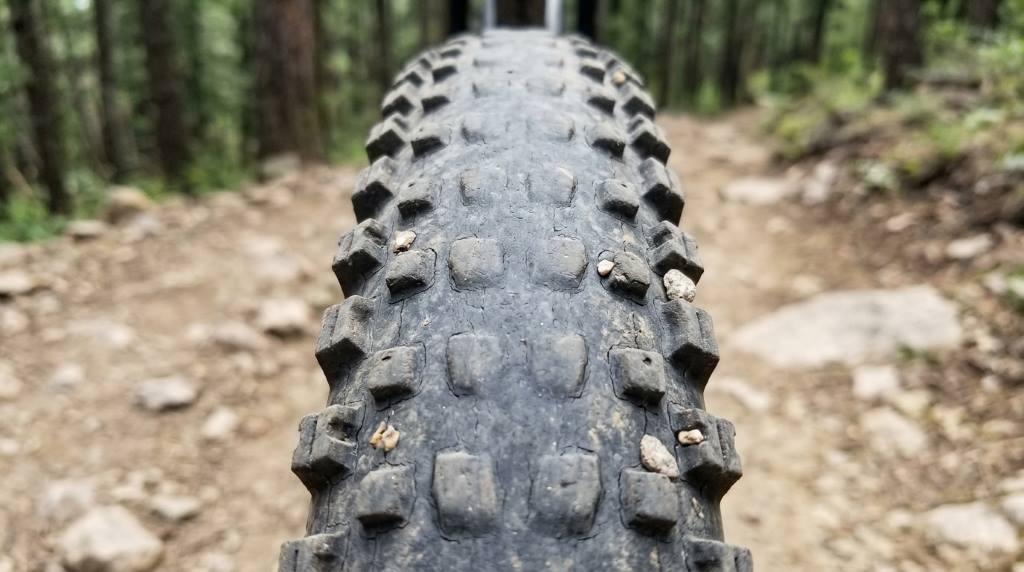
1. Center Knobs Look Rounded or Flattened
Center knobs gradually lose their sharp edges as the tire contacts hard surfaces. Rounded knobs cannot bite loose dirt as effectively during acceleration or braking. Consequently, your rear wheel may spin more easily on climbs or slippery sections.
Compare the worn tire with an unused tire of the same model whenever possible. That comparison makes gradual wear much easier to recognize. If the center tread looks significantly shorter and smoother, replacement deserves serious consideration.
2. Side Knobs Become Torn or Missing
Side knobs provide much of your cornering support when the bike leans. Aggressive cornering, rocks, roots, and low pressure can damage these knobs quickly. Missing or heavily torn shoulder knobs can make the front tire feel vague during turns.
Front-tire shoulder damage deserves particular attention because front-end grip affects steering confidence. Replace a damaged front tire rather than trying to maximize every remaining mile. A small amount of usable rubber cannot compensate for unreliable cornering traction.
3. You Can See the Casing
Visible casing threads indicate that the outer rubber has worn through too far. The casing provides structural support beneath the tread and cannot replace missing rubber. Once threads become visible, retire the tire rather than continuing to ride it.
This warning also applies when a deep cut exposes the casing. A tire can still hold air while its structure becomes compromised. Therefore, pressure retention alone does not prove that a damaged tire remains safe.
4. Cracks Appear Across the Rubber or Sidewall
Small surface marks deserve monitoring, while deep cracks deserve immediate attention. Cracking can indicate rubber aging, ultraviolet exposure, improper storage, or prolonged stress. Sidewall cracks become especially concerning when they widen as you flex the tire.
Run your fingers gently across the sidewall during inspection. If cracks open noticeably or reveal underlying material, replace the tire. Do not rely on tread depth when the casing shows signs of deterioration.
5. Bulges, Blisters, or Deformed Areas Develop
A bulge usually indicates internal casing damage or separation. The affected section may deform further when you inflate the tire. Because structural deformation can worsen suddenly, replacement should happen before the next serious ride.
Spin the wheel slowly and watch the tire from several angles. Look for unusual wobbling, lumps, or sections that sit differently against the rim. These symptoms require more attention than ordinary tread wear.
6. Flats and Air Loss Suddenly Increase
Frequent punctures can signal that the tire has lost too much protective rubber. One isolated flat does not automatically justify replacement. However, repeated flats on familiar trails deserve a closer inspection.
First, check your rim tape, valve, sealant, tube, and tire pressure. If those components remain healthy, inspect the tire for thinning tread or embedded debris. Persistent punctures can indicate that the tire has reached the end of its useful life.
7. Your Familiar Trails Suddenly Feel Less Secure
Your riding experience can reveal tire wear before your eyes notice obvious damage. You may experience unexpected rear-wheel spin, longer braking distances, or front-wheel sliding. Those changes matter because familiar terrain gives you a reliable performance baseline.
However, confirm tire condition before blaming the rubber. Wet conditions, incorrect pressure, suspension settings, and trail changes can also affect traction. If those factors remain consistent, declining grip becomes strong replacement evidence.
How Much Tread Loss Is Too Much?
Many riders use a 50 percent tread-loss rule as a simple replacement benchmark. That figure can provide a useful warning point, but it should not override visible casing damage. Different tread patterns also make percentage-based judgments difficult.
Instead, inspect the shape and function of the knobs. Replace the tire when the center knobs become substantially rounded or flattened. Also replace it when damaged shoulder knobs no longer provide dependable cornering support.
| Condition | What It Means | Recommended Action |
|---|---|---|
| Minor knob rounding | Normal wear with usable traction | Monitor regularly |
| Severely rounded center knobs | Reduced braking and climbing grip | Plan replacement |
| Missing shoulder knobs | Reduced cornering support | Replace soon |
| Visible casing threads | Structural layer exposed | Replace immediately |
| Deep sidewall cut | Casing may be compromised | Replace immediately |
| Bulge or blister | Possible internal casing failure | Stop riding and replace |
| Frequent unexplained flats | Possible protection-layer deterioration | Inspect and consider replacement |
Why Rear Tires Usually Need Replacement First
The rear tire normally experiences greater drivetrain and braking forces than the front. It also carries substantial rider weight during acceleration and climbing. As a result, rear tread often develops rounded center knobs much sooner.
That does not mean you should automatically replace only the rear. If the front tire has damaged shoulder knobs, cracked rubber, or casing problems, replace it first. Front-end traction deserves priority because a sudden front washout can produce a rapid loss of control.
Should You Replace Both Mountain Bike Tires Together?
No, you do not always need to replace both tires simultaneously. Replacing only the worn tire can reduce unnecessary expense when the other tire remains structurally sound. However, matching tires can improve handling consistency when both tires have substantial wear differences.
Many riders prefer a more aggressive front tire with a faster-rolling rear tire. Therefore, replacing one tire can also create an opportunity to improve your setup. Just maintain compatible sizing, casing requirements, rim specifications, and tubeless compatibility.
How Riding Conditions Change Tire Lifespan
Rocky trails can damage tread and sidewalls much faster than smooth hardpack. Aggressive braking also accelerates rear-tire wear, especially on steep descents. Meanwhile, soft rubber compounds generally prioritize traction over maximum mileage.
Low tire pressure can improve grip, but excessive pressure reduction can increase rim impacts and casing stress. Excessively high pressure can reduce contact with the trail and accelerate uneven wear. Therefore, use pressure settings appropriate for your weight, tires, rims, and terrain.
Terrain and Riding Style Matter
- Rocky trails can create cuts, pinch impacts, and rapid knob damage.
- Loose terrain can accelerate shoulder wear during repeated cornering.
- Hardpack riding can flatten center knobs faster.
- Frequent braking can accelerate rear-tire tread loss.
- Jumping can increase casing stress during hard landings.
- Wet conditions can expose weak tread patterns through reduced traction.
A Simple Five-Minute Tire Inspection
Inspect your tires before demanding rides rather than waiting for a problem. Begin by checking the entire tread while slowly rotating each wheel. Then examine both sidewalls for cuts, cracks, bulges, and abnormal deformation.
Next, inspect the center and shoulder knobs individually. Look for rounding, tearing, missing sections, and exposed casing. Finally, check the bead area and confirm that the tire sits evenly around the rim.
Use This Quick Inspection Checklist
- Check center-knob wear.
- Inspect shoulder knobs for tearing.
- Look for exposed casing threads.
- Search both sidewalls for cracks.
- Check for deep cuts or punctures.
- Look for bulges or unusual deformation.
- Check tubeless tires for damaged beads.
- Confirm normal air retention.
- Compare handling with previous rides.
What About Tubeless Mountain Bike Tires?
Tubeless technology does not eliminate the need for tire replacement. Sealant can close small punctures, but it cannot restore worn tread or damaged casing. A tubeless tire with structural damage remains a replacement candidate.
Pay special attention to the bead and sidewall when running tubeless equipment. Damage in those areas can affect air retention and tire seating. Also inspect the tire after significant rim strikes, even when the tire appears inflated normally.
Can You Keep Old Tires as Emergency Spares?
You can keep a lightly worn tire as an emergency spare if its structure remains completely sound. Do not store a tire with visible casing, deep cuts, serious cracks, or deformation. An emergency tire should provide predictable performance when you actually need it.
Store spare tires away from direct sunlight, excessive heat, chemicals, and prolonged compression. Good storage can slow rubber deterioration. Still, storage cannot reverse existing age-related cracking or structural damage.
When Mileage Becomes Useful
Mileage helps establish your personal replacement pattern after several tire changes. Record installation dates, approximate riding distance, terrain, tire model, and noticeable performance changes. Over time, this information can reveal how quickly your preferred tires actually wear.
A rider who frequently tackles rocky descents may replace tires far sooner than a casual hardpack rider. Therefore, generic mileage claims should never become rigid maintenance schedules. Condition-based inspection remains the more dependable approach.
How to Choose the Replacement Tire
Start with the terrain you ride most often rather than choosing based on appearance alone. Consider tread pattern, rubber compound, casing strength, puncture protection, width, and intended wheel size. Your riding style should determine which characteristics deserve the greatest priority.
For aggressive trail riding, prioritize predictable cornering and casing support. For cross-country riding, rolling efficiency may matter more than maximum rubber thickness. Always verify your rim and frame clearance before changing tire width.
When You Should Replace a Tire Immediately
Some conditions should end the tire’s service immediately rather than trigger gradual monitoring. These include exposed casing, major sidewall cuts, significant bulges, severe bead damage, and structural deformation. Continuing to ride such a tire can turn a manageable maintenance issue into a trail failure.
Do not attempt to extend a structurally damaged tire because the tread still looks usable. Tread appearance cannot compensate for compromised casing integrity. Replace the tire before your next serious ride whenever structural damage appears.
Frequently Asked Questions
How often should mountain bike tires be replaced?
Replace them when tread, casing, sidewalls, or riding performance show meaningful deterioration rather than following a fixed schedule.
How many miles do mountain bike tires last?
There is no universal mileage because terrain, compound, pressure, rider weight, and riding style strongly affect tire wear.
Should I replace the front or rear tire first?
Usually replace the rear first, unless the front tire has more serious tread or structural damage.
Are cracked mountain bike tires safe?
No, significant cracks indicate rubber deterioration and can signal compromised tire integrity.
Can I ride mountain bike tires with worn knobs?
You can ride mildly worn knobs, but replace the tire when traction, braking, or cornering performance noticeably declines.
Final Verdict
The best time to replace mountain bike tires is before worn rubber creates unpredictable handling or structural failure. Focus on tread shape, shoulder condition, casing visibility, sidewall health, air retention, and real trail performance.
Inspect both tires regularly, especially before long or technical rides. If you discover exposed casing, serious cracks, bulges, deep cuts, or major grip loss, replace the tire immediately. Make your next tire purchase based on your terrain and riding demands, then track wear to improve future decisions.
Welcome to outdoorxsports.com! I’m Russell, your guide to the awesome world of mountain biking. This blog is all about building a community of riders who love to share their passion for the sport. Expect inspiring stories, local trail recommendations, fun challenges, and tips for making the most of your time on two wheels.