

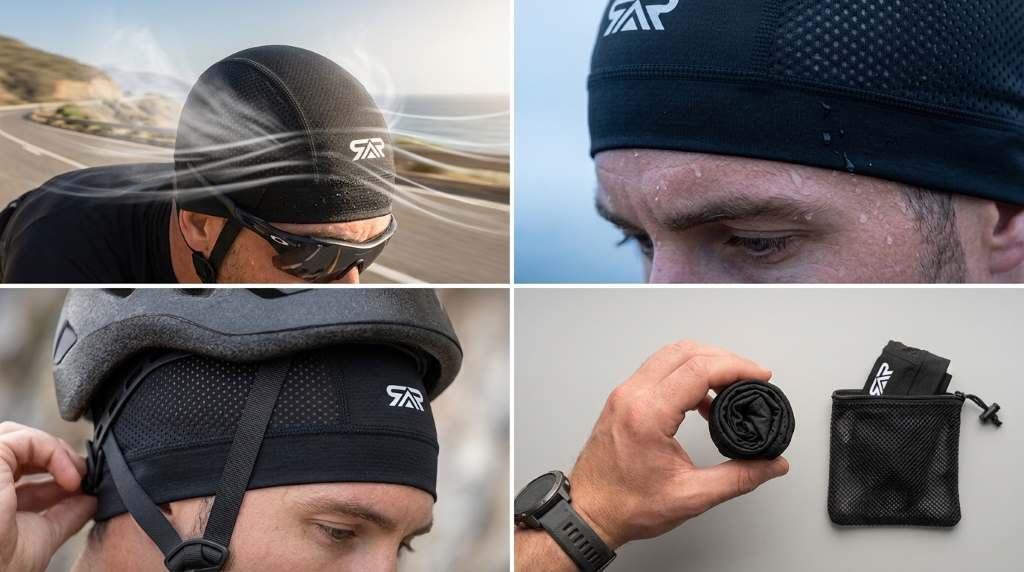
A Thindust mesh skull cap helps keep your head cooler, drier, and more comfortable during active wear. The Thindust mesh skull cap combines lightweight coverage with breathable mesh for demanding conditions. Research on heat exposure shows that sweat evaporation plays an important role in cooling the body. Some mesh skull caps also weigh under two ounces, reducing bulk beneath helmets and hats. Therefore, this simple headwear can improve comfort without feeling like another heavy layer.
Unlike traditional caps, mesh skull caps focus on airflow, moisture management, and low-profile comfort. They can also reduce sweat buildup between your scalp and helmet. Consequently, they suit cyclists, runners, motorcyclists, workers, hikers, and outdoor enthusiasts. The right design can make long periods outside noticeably more manageable.
Key Takeaways
- Mesh construction promotes airflow around the scalp during active use.
- Sweat-wicking fabric helps move moisture away from your skin.
- A low-profile design works comfortably beneath many helmets and hats.
- Stretch fabric can provide a secure fit without excessive pressure.
- Quick-drying materials simplify cleaning after sweaty activities.
- Different activities require different levels of coverage and ventilation.
How A Mesh Skull Cap Improves Everyday Comfort
The main reason to wear a mesh skull cap involves temperature and moisture control. Your scalp produces heat and sweat during exercise, physical work, and outdoor exposure. When fabric traps that moisture, your head can feel hot, heavy, and uncomfortable. Mesh construction allows more air movement while helping moisture escape.
Additionally, lightweight fabric creates less bulk than conventional beanies or thick liners. That difference matters when you wear another layer over the cap. A thinner profile also reduces pressure points under helmets and hard hats. Therefore, a well-designed skull cap can function as a practical base layer.
Better Airflow Around Your Scalp
Breathable mesh allows air to circulate through openings within the fabric. As air moves, moisture can evaporate more efficiently from the material. This process helps reduce the damp feeling that develops during strenuous activities. However, airflow depends heavily on mesh density, fabric construction, and surrounding weather conditions.
For warm-weather activities, ventilation becomes especially valuable during prolonged movement. Running, cycling, landscaping, and construction can generate substantial body heat. A breathable skull cap provides coverage without completely sealing your scalp. As a result, you can maintain head coverage while avoiding unnecessary insulation.
More Effective Sweat Management
Sweat becomes distracting when it travels toward your forehead, eyes, glasses, or face. A suitable skull cap can capture or redirect moisture before it becomes an irritation. Moisture-wicking materials move sweat across a larger surface for faster evaporation. Therefore, the fabric can help maintain a drier sensation during intense activity.
Still, moisture-wicking does not mean the fabric remains completely dry. Heavy sweating can eventually saturate almost any lightweight textile. For extended sessions, carry a spare cap or allow the first one to dry. This simple approach provides better comfort than relying on one saturated layer.
Why Wear One Under A Helmet?
Helmet users often face problems involving sweat, friction, pressure, and uncomfortable heat. A low-profile skull cap creates a soft barrier between your scalp and helmet liner. It can also help keep sweat from soaking directly into helmet padding. Consequently, riders and workers may find helmet use more comfortable during long sessions.
However, the cap should never interfere with the helmet’s proper fit. A bulky cap can create pressure or change how the helmet sits. Choose a thin design that follows your head without creating excessive material underneath. Always check that your helmet remains correctly positioned and securely fastened.
Cycling And Motorcycle Riding
Cyclists benefit from skull caps because helmets can become warm during sustained riding. Mesh ventilation helps manage heat while the cap absorbs or moves perspiration. The smooth layer can also reduce uncomfortable friction around the scalp. Additionally, a snug fit prevents loose fabric from becoming distracting during movement.
Motorcycle riders can gain similar benefits, especially during warm-weather commuting or touring. A skull cap can make helmet liners feel cleaner between washes. Nevertheless, riders should prioritize helmet compatibility over styling or extra coverage. Safety equipment must always fit according to its manufacturer’s requirements.
Construction And Outdoor Work
Outdoor workers often spend hours beneath hard hats while exposed to heat and physical exertion. A breathable liner can improve comfort without adding substantial weight. It can also help manage sweat before moisture reaches the eyes or face. Furthermore, washable fabric makes repeated daily use more practical.
Choose a design that remains comfortable throughout repetitive movements and long shifts. Flat seams can reduce rubbing around sensitive areas of the head. Stretch fabric can also help prevent the cap from sliding during work. However, workers should confirm compatibility with their required protective equipment.
Other Situations Where A Mesh Skull Cap Makes Sense
A mesh skull cap works beyond helmets and demanding outdoor jobs. Runners can use one during warm training sessions when ordinary hats feel too heavy. Hikers may appreciate lightweight coverage without sacrificing ventilation. Similarly, gym users can benefit from sweat management during high-intensity workouts.
- Running: Use a lightweight cap for ventilation and sweat control.
- Cycling: Wear a low-profile design beneath your helmet.
- Hiking: Choose breathable coverage for warm trails.
- Fishing: Consider coverage when spending extended periods outdoors.
- Gym workouts: Use moisture-managing fabric during intense sessions.
- Yard work: Select washable material for repeated sweaty use.
- Motorcycling: Choose a thin liner compatible with your helmet.
What Makes A Good Mesh Skull Cap?
Not every skull cap provides the same balance of comfort and performance. Look beyond the word “mesh” when comparing different designs. Fabric composition, stretch, seam placement, coverage, and drying speed all influence performance. Therefore, examine construction details instead of choosing solely by appearance.
| Feature | Why It Matters |
|---|---|
| Breathable mesh | Improves airflow around the scalp |
| Moisture management | Helps control sweat during activity |
| Stretch fabric | Supports a secure, comfortable fit |
| Low-profile construction | Reduces bulk beneath helmets |
| Flat seams | Can reduce friction and pressure points |
| Quick-drying material | Makes repeated use more convenient |
| Washable construction | Simplifies regular maintenance |
Prioritize Fit Before Extra Features
A skull cap should feel secure without creating uncomfortable pressure around your head. Excessive looseness can cause slipping, bunching, and distracting movement. Conversely, excessive tightness can create pressure during extended wear. Ideally, the fabric should conform smoothly without leaving painful compression marks.
Pay attention to the cap’s stretch and intended head-size range before purchasing. A flexible design can accommodate different head shapes more effectively. However, stretch alone cannot compensate for incorrect sizing. When possible, compare your measurements with the manufacturer’s sizing information.
Consider Seam Construction
Seams can become surprisingly important during long periods of wear. Thick or poorly positioned seams may rub against your forehead or scalp. Flat or smoother seams generally create a less intrusive feel beneath headgear. Therefore, inspect construction details if you regularly wear the cap for several hours.
This consideration becomes even more important beneath helmets. Pressure from the helmet can amplify minor fabric irregularities. A comfortable cap should disappear into your routine rather than demand constant adjustment. That quality separates useful performance headwear from merely attractive accessories.
How To Wear A Mesh Skull Cap Correctly
Start by placing the cap evenly across your scalp without twisting the fabric. Pull it gently into position until the material sits smoothly around your head. Keep excess fabric from folding into thick ridges beneath helmets. Finally, check your helmet fit before beginning your activity.
For solo wear, position the cap according to your preferred coverage and comfort. Avoid stretching the fabric excessively because that can increase pressure and reduce durability. During intense activity, occasionally adjust the cap if moisture or movement creates discomfort. Small adjustments can prevent irritation during longer sessions.
How To Wash And Maintain Your Skull Cap
Regular washing helps remove sweat, skin oils, dirt, and odors from the fabric. Follow the care instructions provided with your specific cap whenever possible. Gentle washing usually provides a safer approach than aggressive cleaning cycles. After washing, allow the material to dry thoroughly before storing it.
- Wash the cap after heavy sweating or prolonged outdoor use.
- Use mild detergent when the care label permits it.
- Avoid excessive heat unless the manufacturer specifically allows it.
- Air-dry lightweight mesh when practical.
- Store the cap completely dry to reduce unpleasant odors.
- Inspect seams and elastic areas periodically for wear.
Fabric softeners may affect the performance of some technical textiles. Therefore, follow the manufacturer’s cleaning instructions rather than assuming every fabric behaves identically. Proper care can also help preserve stretch and shape. A well-maintained cap remains more comfortable across repeated uses.
When A Mesh Skull Cap May Not Be The Best Choice
Mesh construction prioritizes ventilation, so it may provide limited warmth during cold conditions. You may need a thicker thermal layer when temperatures drop significantly. Likewise, lightweight mesh cannot replace protective equipment designed for specific hazards. Always match headwear with the demands of your activity.
Sun coverage also depends on the cap’s design and fabric properties. Do not assume every mesh skull cap provides a specific ultraviolet protection rating. If strong sun exposure concerns you, examine the manufacturer’s stated protection features. Combine appropriate headwear with other sun-protection practices when necessary.
Mesh Skull Cap Versus Traditional Headwear
Traditional caps often provide shade and casual styling but can trap more heat. Thick beanies provide warmth but may become uncomfortable during strenuous activity. Mesh skull caps occupy a different role by emphasizing ventilation and moisture control. Consequently, they work particularly well when heat management matters more than insulation.
| Headwear Type | Best Strength | Common Limitation |
|---|---|---|
| Mesh skull cap | Ventilation and sweat control | Limited cold-weather insulation |
| Traditional baseball cap | Shade and casual wear | Less scalp ventilation |
| Thermal beanie | Warmth | Can retain excessive heat |
| Heavy helmet liner | Cold-weather comfort | More bulk during warm conditions |
How To Decide If You Need One
Consider your typical activity, climate, helmet use, and sweating level before buying. If heat and moisture repeatedly distract you, a breathable skull cap deserves consideration. Frequent helmet users may gain additional value from a thin, washable barrier. Meanwhile, occasional users may prefer the simplest lightweight design.
Think about duration as well as activity intensity when making your decision. A cap that feels comfortable for twenty minutes may become irritating after several hours. Therefore, prioritize fit, seam comfort, drying performance, and fabric feel. Those practical factors often matter more than decorative details.
Frequently Asked Questions
Does a mesh skull cap keep your head cool?
Yes, breathable mesh can increase airflow and help sweat evaporate during active use.
Can I wear a mesh skull cap under a helmet?
Yes, a low-profile design can work beneath compatible helmets without unnecessary bulk.
Does a skull cap stop sweat from reaching my eyes?
It can help manage sweat, although heavy sweating may eventually overwhelm lightweight fabric.
Are mesh skull caps suitable for running?
Yes, their lightweight construction and ventilation make them suitable for many warm-weather runs.
How often should I wash a mesh skull cap?
Wash it after heavy sweating or whenever moisture, odor, or buildup becomes noticeable.
Final Verdict
Wearing a mesh skull cap makes practical sense when heat, sweat, friction, or helmet comfort affects your activity. Its lightweight construction can provide useful ventilation without adding unnecessary bulk. Moreover, proper fit and moisture management can make extended wear considerably more comfortable.
Choose a breathable design that matches your activity, headgear, and climate. Then maintain it properly so the fabric continues performing through repeated use. If you regularly exercise, ride, work outdoors, or wear helmets, consider adding a Thindust mesh skull cap to your gear.

Welcome to outdoorxsports.com! I’m Russell, your guide to the awesome world of mountain biking. This blog is all about building a community of riders who love to share their passion for the sport. Expect inspiring stories, local trail recommendations, fun challenges, and tips for making the most of your time on two wheels.