
A clean drivetrain and properly applied mountain bike chain lube can extend the life of your bike by up to 50 percent. Studies show that 70 percent of bike wear comes from dirt and grime buildup. Regular maintenance keeps your ride smooth and efficient. It also prevents costly repairs and ensures a better cycling experience. Neglecting this simple task can lead to poor performance and damage.
Cleaning your drivetrain removes abrasive particles that wear down components. Applying lube reduces friction and protects against rust. Together these steps keep your bike running like new. They also save you money in the long run. A well maintained bike is a happy bike.
Why Drivetrain Cleaning and Lubrication Matter
Dirt and grime accumulate on your chain and gears with every ride. These particles act like sandpaper and wear down metal parts. Over time this leads to poor shifting and reduced efficiency. A dirty drivetrain also makes pedaling harder and less enjoyable.
Lubrication reduces friction between moving parts. It also protects against moisture and rust. Without lube your chain can seize or break. Proper lubrication ensures smooth gear changes and a quieter ride. It also extends the lifespan of your drivetrain components.
Regular cleaning and lubrication improve performance and safety. They help you avoid costly replacements and repairs. A clean drivetrain also looks better and reflects well on the rider. It shows you care about your equipment and your ride.
Tools and Materials You Will Need
Gather a few essential tools before you start. You will need a chain cleaner tool or brushes. A degreaser is also necessary to remove built up grime. Old rags or towels help wipe down components. Gloves protect your hands from dirt and chemicals.
Choose a high quality bike chain lube for your bike. Wet lubes work best in wet or muddy conditions. Dry lubes are ideal for dry and dusty environments. Always pick a lube that matches your riding conditions. This ensures the best protection and performance.
A chain breaker tool can be useful for deep cleaning. A cassette cleaning tool helps clean hard to reach areas. A work stand makes the job easier but is not required. A hose or bucket of water can help rinse off degreaser and dirt.
Step by Step Guide to Cleaning Your Drivetrain
Prepare Your Bike and Workspace
Start by shifting your chain onto the smallest chainring and smallest cog. This makes it easier to access all parts of the drivetrain. Place your bike on a stand or turn it upside down. This allows the wheels to spin freely while you work.
Lay down a drop cloth or old towel to catch drips and dirt. Work in a well ventilated area to avoid inhaling fumes. Wear gloves to protect your hands from degreaser and grime. Keep a trash bag nearby for disposable materials.
Apply Degreaser to the Chain and Cassette
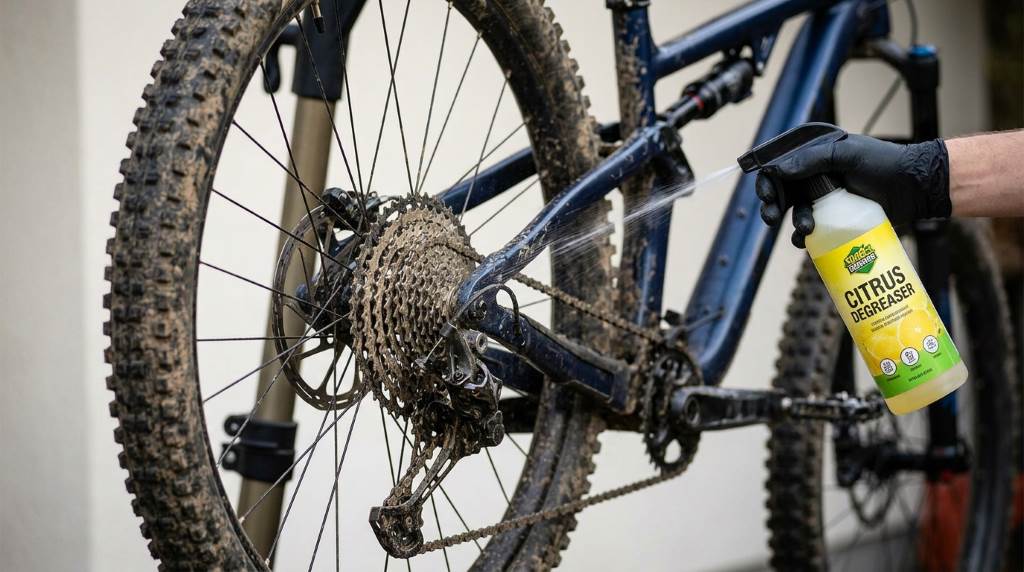
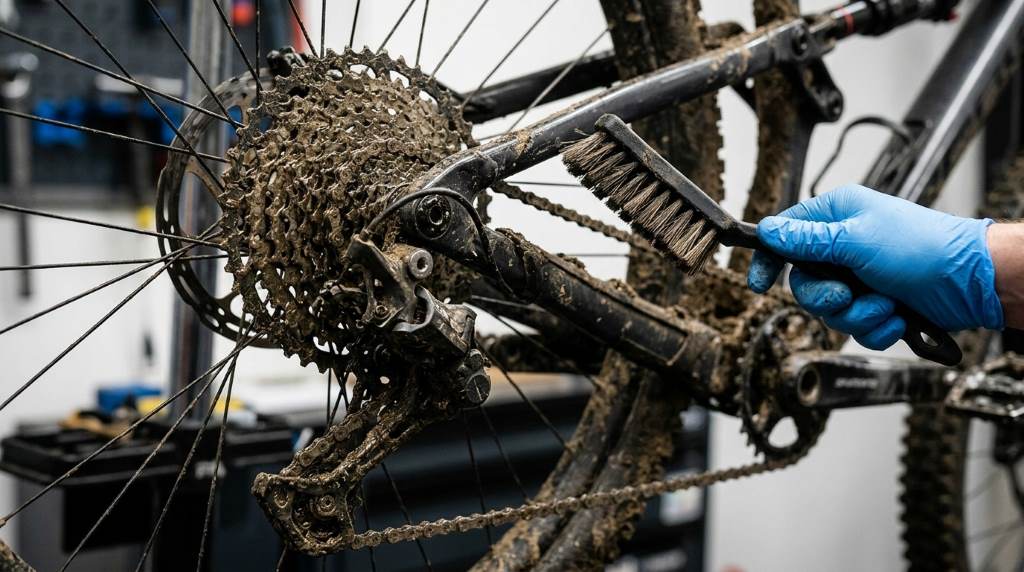
Spray or brush degreaser onto the chain cassette and derailleur pulleys. Let it sit for a few minutes to break down grime. Use a brush to scrub hard to reach areas. Pay special attention to the spaces between cogs and chain links.
For stubborn buildup use a plastic scraper or old toothbrush. Avoid using metal tools that can scratch surfaces. Rotate the pedals backward to run the chain through the degreaser. This helps loosen dirt from all sides of the chain.
Scrub the Chain and Drivetrain Components
Use a chain cleaning tool filled with degreaser for a deep clean. Run the chain through the tool several times. This removes dirt from inside the chain links. For a more thorough clean remove the chain using a chain breaker tool.
Scrub the cassette and chainrings with a brush and degreaser. Use a cassette cleaning tool to reach between the cogs. Wipe down the derailleur and derailleur pulleys with a rag. Remove as much dirt and old lube as possible.
Rinse and Dry the Drivetrain
Rinse the drivetrain with water to remove degreaser and dirt. Use a hose or bucket of water for this step. Avoid using high pressure water that can damage bearings. Spin the pedals to ensure all parts are rinsed thoroughly.
Dry the drivetrain with a clean rag or towel. Spin the pedals to help the chain dry evenly. Let the bike sit for a few minutes to air dry completely. Ensure no moisture remains before applying lube.
How to Apply Mountain Bike Chain Lube Properly
Choose the Right Lube for Your Conditions
Select a lube that matches your riding environment. Wet lubes are best for wet or muddy conditions. They resist water and last longer in harsh weather. Dry lubes are ideal for dry and dusty conditions. They attract less dirt and grime.
For mixed conditions consider a ceramic or wax based lube. These offer a balance of protection and cleanliness. Always check the manufacturer recommendations for your specific bike. This ensures compatibility and best performance.
Apply the Lube to the Chain
Shift the chain onto the smallest chainring and smallest cog. This makes it easier to apply lube to the entire chain. Hold the lube bottle close to the chain and apply one drop to each roller. Slowly spin the pedals backward to run the chain through.
Apply lube sparingly to avoid excess buildup. Too much lube attracts dirt and creates a messy drivetrain. Wipe off any excess lube with a clean rag. This prevents dirt from sticking to the chain.
Let the Lube Settle and Wipe Off Excess
Let the lube sit for a few minutes to penetrate the chain. This allows it to work into the rollers and pins. Spin the pedals to distribute the lube evenly. Check for any excess lube on the chain or drivetrain.
Wipe off any excess lube with a clean rag. This prevents dirt from sticking to the chain. A clean drivetrain ensures smooth operation and longer component life. Always check for proper lubrication before your next ride.
Unique Tips for Different Climates
Riding in Wet or Muddy Conditions
Wet conditions require more frequent cleaning and lubrication. Use a wet lube that resists water and lasts longer. Clean your drivetrain after every ride to prevent rust and wear. Apply lube more often to protect against moisture.
Consider using a chain cover or fender to protect your drivetrain. This reduces the amount of water and dirt that reaches the chain. Always dry your bike thoroughly after riding in the rain. This prevents rust and extends the life of your components.
Riding in Dry or Dusty Conditions
Dry conditions can cause dirt and dust to stick to your chain. Use a dry lube that attracts less grime. Clean your drivetrain regularly to remove abrasive particles. Apply lube sparingly to avoid excess buildup.
Consider using a ceramic or wax based lube for better performance. These lubes resist dirt and last longer in dry conditions. Always wipe off excess lube to keep your drivetrain clean. This ensures smooth operation and longer component life.
Common Mistakes to Avoid
One common mistake is using too much lube. Excess lube attracts dirt and creates a messy drivetrain. Always apply lube sparingly and wipe off any excess. This keeps your drivetrain clean and efficient.
Another mistake is not cleaning the drivetrain before applying lube. Dirt and old lube can prevent new lube from penetrating the chain. Always clean your drivetrain thoroughly before applying fresh lube. This ensures the best protection and performance.
Avoid using the wrong type of lube for your riding conditions. Wet lubes are not ideal for dry conditions and vice versa. Always choose a lube that matches your environment. This ensures the best protection and longevity for your drivetrain.
How Often Should You Clean and Lube Your Drivetrain
The frequency of cleaning and lubrication depends on your riding conditions. For casual riders cleaning and lubing every 100 to 200 miles is sufficient. For frequent riders or harsh conditions clean and lube every 50 to 100 miles. Always check your drivetrain for signs of wear or dirt buildup.
After riding in wet or muddy conditions clean and lube your drivetrain immediately. This prevents rust and wear. For dry and dusty conditions clean and lube more frequently. This keeps your drivetrain running smoothly and efficiently.
Maintenance Schedule for Optimal Performance
Create a maintenance schedule based on your riding habits. Clean and lube your drivetrain after every few rides. Check your chain for wear and replace it if necessary. Inspect your cassette and chainrings for signs of wear.
Keep a log of your maintenance tasks and dates. This helps you stay on top of your bike care. Replace worn components promptly to avoid damage to other parts. A well maintained bike performs better and lasts longer.
Conclusion
Cleaning your drivetrain and applying mountain bike chain lube are essential tasks for every cyclist. These simple steps extend the life of your bike and improve performance. They also save you money and ensure a better riding experience. Make drivetrain maintenance a regular part of your cycling routine.
Start by gathering the right tools and materials for the job. Follow the step by step guide to clean and lube your drivetrain properly. Choose the right lube for your riding conditions and apply it sparingly. Avoid common mistakes and maintain a regular schedule for optimal results.
Take action today and give your bike the care it deserves. A clean and well lubricated drivetrain will reward you with smooth and efficient rides. Share your tips and experiences with fellow cyclists. Together we can keep our bikes in top shape and enjoy the ride.
FAQ
How often should I clean my drivetrain?
Clean your drivetrain every 100 to 200 miles or after riding in wet or muddy conditions.
What type of lube should I use for wet conditions?
Use a wet lube that resists water and lasts longer in harsh weather.
Can I use household oil as chain lube?
No household oils are not designed for bike chains and can cause damage.
How do I know if my chain needs lubrication?
If your chain looks dry or makes noise it likely needs lube.
What is the best way to remove old lube and grime?
Use a degreaser and a chain cleaning tool to remove old lube and grime effectively.
Welcome to outdoorxsports.com! I’m Russell, your guide to the awesome world of mountain biking. This blog is all about building a community of riders who love to share their passion for the sport. Expect inspiring stories, local trail recommendations, fun challenges, and tips for making the most of your time on two wheels.