
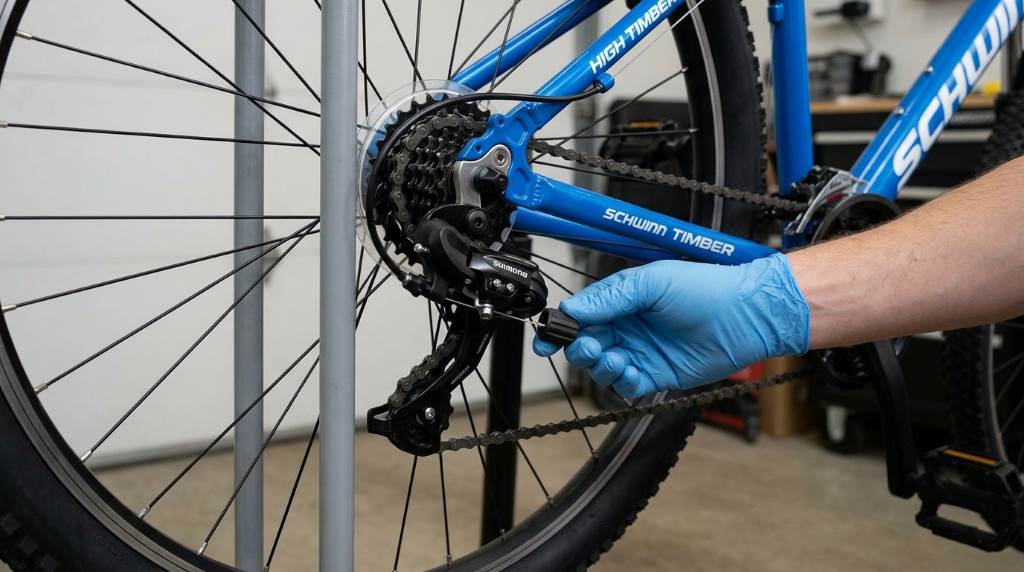
A well-tuned derailleur makes every ride on your Schwinn High Timber Mountain Bike smoother and more enjoyable. Studies show that over 60 percent of bike mechanical issues come from poor derailleur alignment. Riding in rough terrain or hilly areas can also speed up wear and tear. Learning to tune your derailleur saves time and money while keeping your bike in top shape.
This guide will walk you through the process step by step. You will need a few basic tools like a screwdriver and Allen wrenches. The process is simple but requires patience and attention to detail. By the end you will have a bike that shifts gears effortlessly.
Understanding the Derailleur System
The derailleur moves the chain between gears on your bike. It consists of a cage a pulley and a spring mechanism. The rear derailleur handles most of the shifting work on a mountain bike. The front derailleur if present manages the chain between the chainrings.
The Schwinn High Timber usually has a rear derailleur with a medium cage. This design balances weight and performance for trail riding. The derailleur is controlled by a shift cable connected to your shifters. When you shift gears the cable pulls or releases tension in the derailleur.
Common signs of a misaligned derailleur include noisy shifting and chain slipping. You may also notice the chain falling off the sprockets. These issues often start small but can worsen over time. Regular tuning prevents these problems from developing.
Tools and Materials Needed
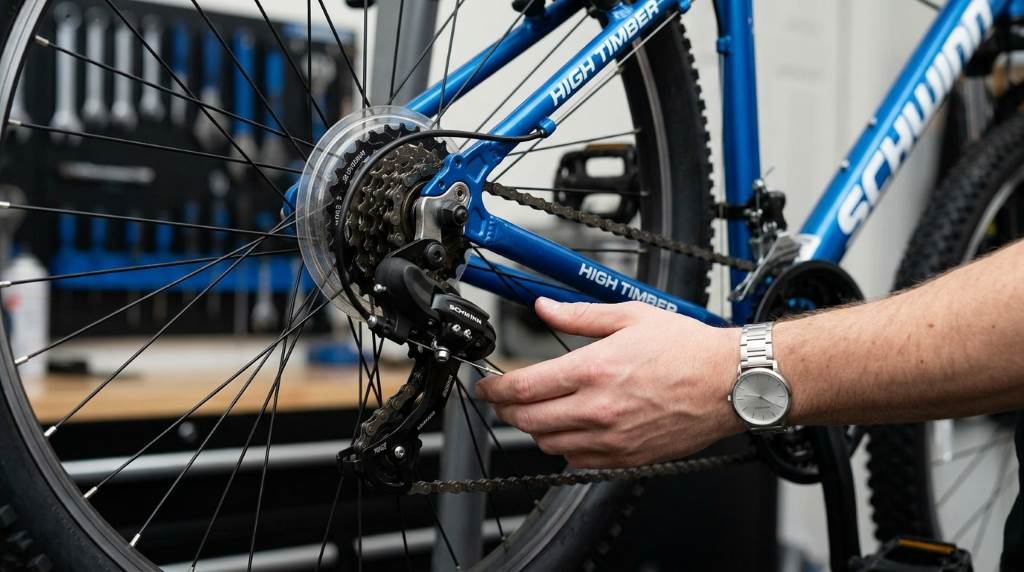
Gather your tools before you start working on the derailleur. A set of Allen wrenches is essential for most adjustments. You will also need a screwdriver for some models. A chain checker tool helps assess chain wear.
A bike stand makes the job easier but is not required. If you do not have a stand you can flip the bike upside down. Use a clean rag to wipe down the derailleur and chain. Grease and dirt can affect performance and make adjustments harder.
Optional tools include cable cutters and a torque wrench. These are useful for more advanced tuning or replacements. Always use the right size tool to avoid stripping screws. Keep a notebook handy to record your adjustments.
Pre-Tuning Preparation
Start by cleaning your bike thoroughly. Dirt and grime can interfere with the derailleur movement. Pay special attention to the chain and cassette. Use a degreaser for stubborn buildup.
Check the chain for wear and stretch. A stretched chain can cause shifting problems even with a well-tuned derailleur. Replace the chain if it shows significant wear. This is a good time to inspect the cassette and chainrings as well.
Shift through all the gears to identify any issues. Note where the chain hesitates or skips. This will help you focus your tuning efforts. Make sure the shifters are working smoothly and the cables are not frayed.
Step-by-Step Derailleur Tuning
Step 1: Check the Derailleur Alignment
Look at the derailleur from behind the bike. The pulleys should align vertically with the cogs. If they are angled the derailleur may be bent. A bent derailleur will not shift properly and may need replacement.
The derailleur hanger is a common point of misalignment. A slight bend here can throw off the entire system. Use a derailleur alignment tool if you have one. Otherwise a visual check is often enough for minor adjustments.
Step 2: Adjust the Limit Screws
The limit screws control how far the derailleur moves inward and outward. The H screw limits the outward movement. The L screw limits the inward movement. These screws prevent the chain from falling off the cassette.
Start with the H screw. Shift the chain to the smallest cog. Turn the H screw until the derailleur pulley aligns with the smallest cog. Test by shifting to the smallest cog again. The chain should move smoothly without noise.
Next adjust the L screw. Shift the chain to the largest cog. Turn the L screw until the derailleur pulley aligns with the largest cog. The chain should not fall off when you pedal. Fine-tune these screws as needed.
Step 3: Index the Gears
Indexing ensures the derailleur moves the correct distance for each shift. Shift the chain to the smallest cog. Turn the barrel adjuster on the derailleur or shifter until the chain aligns perfectly. This may take a few tries to get right.
Shift to the next cog and check the alignment. If the chain does not move smoothly turn the barrel adjuster a quarter turn at a time. Continue this process through all the gears. The goal is smooth and quiet shifting.
If the chain hesitates or skips the indexing may need further adjustment. Sometimes the cable tension is the issue. In that case you may need to tighten or loosen the cable. This is normal and part of the tuning process.
Step 4: Fine-Tune the Cable Tension
Cable tension affects how the derailleur responds to shifts. If the tension is too loose the derailleur will not move enough. If it is too tight the derailleur will overshift. The barrel adjuster is the easiest way to adjust tension.
Start with the chain on the smallest cog. Turn the barrel adjuster counterclockwise to increase tension. Turn it clockwise to decrease tension. Shift through the gears after each adjustment. The goal is crisp and immediate shifting.
If the barrel adjuster is not enough you may need to adjust the cable anchor. Loosen the anchor bolt and pull the cable tighter. Retighten the bolt and test the shifting. This step requires a bit more skill but is manageable with practice.
Step 5: Test and Refine
Take your bike for a test ride after making adjustments. Shift through all the gears under load to see how the derailleur performs. Listen for any unusual noises or hesitation. Note any issues and return to your workspace.
Make small adjustments as needed based on your test ride. Sometimes a quarter turn of the barrel adjuster is all it takes. Other times you may need to revisit the limit screws. Patience is key to getting it just right.
Repeat the test ride until the shifting is smooth and reliable. This process may take a few iterations but the results are worth it. A well-tuned derailleur makes riding more enjoyable and efficient.
Unique Considerations for the Schwinn High Timber
The Schwinn High Timber is designed for trail riding and light off-road use. Its derailleur system is built to handle a variety of terrains. However the stock components may not be as durable as higher-end models. Regular maintenance is especially important.
The bike often comes with a Shimano derailleur which is reliable but may need frequent tuning. The derailleur hanger on the High Timber is made of aluminum. This material is lightweight but can bend more easily than steel. Be gentle when handling the bike to avoid damage.
If you ride in wet or muddy conditions clean your derailleur more often. Water and dirt can cause corrosion and wear. Apply a light bike grease to the moving parts after cleaning. This will extend the life of your derailleur and improve performance.
Consider upgrading the derailleur if you frequently ride in tough conditions. A higher-quality derailleur can handle more abuse and last longer. However the stock derailleur is more than capable for most riders. Proper tuning will keep it working well for years.
Common Mistakes to Avoid
One common mistake is overtightening the limit screws. This can prevent the derailleur from moving freely. Always make small adjustments and test after each one. It is easier to add tension than to remove it.
Another mistake is ignoring the chain condition. A worn chain can cause shifting problems no matter how well the derailleur is tuned. Replace the chain if it is stretched or damaged. This will save you from more expensive repairs down the line.
Avoid using excessive force when shifting gears. This can damage the derailleur and cables. Shift smoothly and one gear at a time. This is especially important when climbing or under heavy load.
Finally do not forget to check the front derailleur if your bike has one. The rear derailleur gets most of the attention but the front derailleur also needs tuning. Misalignment here can cause the chain to rub or fall off.
Maintenance Tips for Longevity
Clean your derailleur and chain regularly to prevent buildup. Use a mild degreaser and a brush to remove dirt and grime. Avoid high-pressure water as it can force contaminants into the derailleur.
Lubricate the derailleur pivots and pulleys every few months. Use a bike-specific lubricant for best results. Wipe off any excess to avoid attracting dirt. This keeps the derailleur moving smoothly and quietly.
Inspect the cables and housing for wear and fraying. Replace them if they show signs of damage. Old cables can stretch and lose tension over time. This affects shifting performance and can lead to more serious issues.
Store your bike in a dry place to prevent rust and corrosion. If you ride in wet conditions dry the bike thoroughly afterward. A little care goes a long way in extending the life of your derailleur and other components.
Conclusion
Tuning the derailleur on your Schwinn High Timber Mountain Bike is a rewarding task. It improves your riding experience and helps you understand your bike better. With the right tools and a bit of patience anyone can do it.
Regular maintenance keeps your bike in top condition and prevents costly repairs. Do not wait for problems to arise before tuning your derailleur. A proactive approach ensures smooth and reliable shifting every time you ride.
Grab your tools and start tuning today. Your bike and your legs will thank you on the trail. Happy riding and enjoy the smooth shifts.
FAQ
How often should I tune my derailleur?
Tune your derailleur every 3 to 6 months or whenever you notice shifting issues.
Can I tune the derailleur without a bike stand?
Yes you can flip the bike upside down or use a workbench for stability.
What tools do I need to tune a derailleur?
You need Allen wrenches a screwdriver and possibly a chain checker tool.
Why does my chain keep falling off?
This is usually caused by misaligned limit screws or a bent derailleur hanger.
Is it hard to replace a derailleur?
Replacing a derailleur is moderate in difficulty but tuning is easier and often solves the issue.

Welcome to outdoorxsports.com! I’m Russell, your guide to the awesome world of mountain biking. This blog is all about building a community of riders who love to share their passion for the sport. Expect inspiring stories, local trail recommendations, fun challenges, and tips for making the most of your time on two wheels.