

To unlock an Ndakter 5 digit bike lock, align all five number wheels with your correct combination, then pull the lock apart. If the combination fails, check wheel alignment, tension, and the lock’s release mechanism before trying anything forceful.
Combination locks remain popular because they eliminate keys and simplify everyday bike security. Many modern bicycle locks use five digits, creating up to 100,000 possible combinations. A properly maintained Ndakter 5 digit bike lock can therefore offer convenient, keyless protection for regular rides.
However, forgotten combinations, stiff wheels, and incomplete alignment can make an otherwise functional lock seem broken. This guide explains safe unlocking, troubleshooting, combination management, and maintenance without recommending destructive bypass methods.
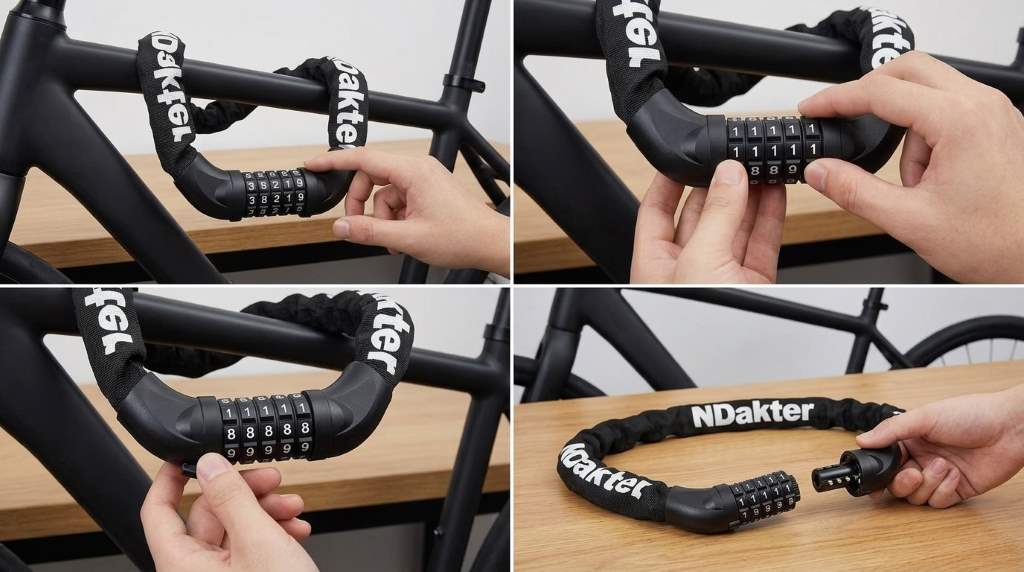
Start With the Correct Combination
The most reliable unlocking method always starts with the combination assigned to your lock. Enter each digit carefully and ensure every wheel sits directly on its center marker.
Next, hold the lock body steady while aligning the final number. Then pull the locking ends apart using normal hand pressure rather than twisting aggressively.
Check Every Number Wheel
Five-digit locks depend on precise wheel positioning, so even one slightly misaligned digit can prevent release. Rotate each wheel slowly until its intended number matches the indicator.
Also inspect the spaces between adjacent numbers. A wheel resting between positions can prevent the internal mechanism from engaging correctly.
- Confirm all five digits match your saved combination.
- Center every number against the lock’s indicator.
- Keep the lock straight while operating the release.
- Apply steady pressure instead of sudden force.
Why the Lock May Not Open
A correct combination does not always guarantee immediate release. Dirt, cable tension, wheel misalignment, and internal friction can interfere with normal operation.
Fortunately, most basic problems respond to simple troubleshooting. Work through the checks below before considering professional assistance.
Release Pressure From the Lock
Bike locks sometimes remain under tension when wrapped tightly around a frame or fixed object. That tension can make the locking mechanism harder to release.
First, reduce pressure on the lock without forcing its cable or shackle. Then enter the combination again and operate the release normally.
If the lock opens afterward, the problem likely involved tension rather than an incorrect combination. Avoid tightening the lock excessively around the bicycle during future use.
Recheck the Combination Slowly
People often remember a combination correctly but enter one digit incorrectly. Similar-looking numbers can also cause mistakes when you operate the wheels quickly.
Therefore, pause and compare each wheel with your stored combination. Enter the five digits from left to right, then try the release.
Inspect the Number Wheels
Examine each wheel for visible debris, damage, or unusual resistance. A wheel that feels significantly different from the others deserves closer attention.
Do not pry between the wheels or insert tools into the lock. Such actions can damage the mechanism and may permanently prevent normal operation.
What To Do If You Forgot the Combination
Forgetting the combination changes the problem from normal unlocking to legitimate combination recovery. The safest approach depends on whether you recorded the original combination.
Check your packaging, purchase records, product documentation, or personal notes first. You may have saved the combination when you installed or first used the lock.
Check Your Original Records
Search places where you normally store product information, including notes, password managers, receipts, and bike maintenance records. Avoid guessing repeatedly without a systematic plan.
If someone else purchased or configured the lock, ask that person for the combination. This simple step often solves the problem without risking damage.
Contact the Manufacturer or Seller
If you cannot recover the combination, contact Ndakter or the retailer using legitimate ownership information. Provide the model details and purchase information they request.
Do not expect every combination lock to offer a reset after the combination becomes unknown. Many mechanical locks require the existing combination before allowing a user to change it.
Can You Reset an Ndakter 5 Digit Bike Lock?
Some combination locks support user-selected combinations, while others require a specific setup procedure. You should follow the instructions supplied with your exact Ndakter lock model.
If your lock supports resetting, perform the procedure only while the lock remains open. Trying to reset a closed lock without the documented procedure can leave you unable to operate it.
When You Still Know the Current Combination
Begin with the lock in its normal unlocked position. Then follow the manufacturer’s documented reset sequence for your specific model.
After selecting a new combination, test it several times before attaching the lock to your bicycle. This confirms that the new setting works consistently.
- Keep the lock open during any supported reset procedure.
- Choose a combination you can reliably remember.
- Record the new combination somewhere secure.
- Test the new setting before securing your bicycle.
Common Mistakes That Prevent Unlocking
Most failed unlocking attempts result from simple operational mistakes rather than serious mechanical failure. Recognizing these mistakes can save time and prevent unnecessary damage.
| Problem | Likely Cause | Safe Response |
|---|---|---|
| Lock will not release | Incorrect digit | Recheck all five positions |
| Wheels feel stiff | Dirt or friction | Clean and lubricate appropriately |
| Release feels tight | Cable tension | Reduce tension and retry |
| Combination was forgotten | Missing record | Check records or contact support |
| One wheel behaves differently | Possible damage | Stop forcing and inspect the lock |
Changing Numbers While Pulling Hard
Pulling aggressively while rotating the wheels can increase mechanical stress. Instead, stabilize the lock and use controlled hand pressure.
Likewise, avoid repeatedly spinning the wheels at high speed. Slow, deliberate adjustments make alignment easier to verify.
Assuming a Stiff Lock Is Permanently Broken
Outdoor locks encounter dust, moisture, and road grime during regular bicycle use. Consequently, stiffness does not automatically indicate internal failure.
Clean accessible surfaces first and follow the manufacturer’s maintenance guidance. If the mechanism remains abnormal, seek support instead of forcing it.
How to Maintain the Lock After Unlocking
Regular maintenance helps preserve smooth wheel movement and reliable operation. A few simple habits can also reduce problems after wet or dusty rides.
Wipe away visible dirt from the lock after riding in poor conditions. Keep the combination wheels reasonably clean, especially around their edges and gaps.
Keep the Mechanism Clean
Use a suitable cleaning method recommended for combination bicycle locks. Avoid flooding the mechanism with household chemicals or unapproved lubricants.
After cleaning, operate each wheel several times while the lock remains accessible. This helps identify unusual resistance before your next ride.
Protect It From Unnecessary Stress
Route the lock around the bicycle without sharply bending or crushing the cable. Store excess cable neatly rather than forcing it into a tight space.
When transporting the bicycle, prevent the lock from repeatedly striking metal components. Reducing impacts helps protect both the cable and locking assembly.
A Better Way to Remember Your Combination
The best forgotten-combination solution happens before you forget the combination. Create a secure record immediately after choosing or receiving the lock code.
However, avoid placing the combination on a visible bicycle tag or directly on the lock. Anyone who finds that information could potentially use it to access your bicycle.
- Store the combination in a secure password manager.
- Keep a private backup in your personal records.
- Avoid labeling the lock with its combination.
- Test your stored combination periodically.
When You Should Stop Troubleshooting
Stop experimenting when the lock shows physical damage, severe binding, or abnormal wheel behavior. Continued force can transform a minor issue into a complete mechanical failure.
Similarly, do not attempt improvised bypass techniques on a locked bicycle. Contact the manufacturer, retailer, bicycle shop, or an appropriate locksmith when legitimate access remains impossible.
Signs of Possible Mechanical Failure
Watch for cracked components, bent locking parts, damaged wheels, or a release that no longer responds normally. These symptoms can indicate a problem beyond simple combination entry.
A professional can determine whether the lock needs repair or replacement. That approach also protects the bicycle from accidental damage during aggressive troubleshooting.
How to Prevent Future Lock Problems
Reliable lock operation starts with consistent habits rather than complicated maintenance. Store the combination securely and keep the mechanism clean throughout the riding season.
Before every longer ride, quickly confirm that the wheels rotate normally. Also test the lock’s opening and closing action before relying on it for bicycle security.
Use a Simple Pre-Ride Check
A short inspection can reveal problems while you still have access to alternatives. This matters particularly before commuting, traveling, or leaving your bicycle unattended.
- Verify the combination record remains accessible.
- Rotate every number wheel smoothly.
- Check the cable or locking body for damage.
- Confirm the release operates without excessive force.
Competitor Content Gaps Worth Understanding
Many basic lock guides focus only on entering numbers and pulling the mechanism open. A stronger guide should address forgotten combinations, tension, maintenance, and failure diagnosis together.
Another common gap involves explaining what users should avoid doing. Clear warnings about force, improvised tools, and unsupported resets make troubleshooting safer and more useful.
This guide also separates normal unlocking from combination recovery. That distinction helps readers understand when they can solve the issue themselves and when support makes more sense.
Quick Unlocking Checklist
Use this sequence whenever your lock refuses to open with the expected combination. Start with the least invasive check and progress only when necessary.
- Confirm the five-digit combination.
- Center every number on the indicator.
- Reduce tension around the lock.
- Try the release using steady pressure.
- Inspect the wheels for dirt or damage.
- Check your private combination records.
- Contact legitimate product support if necessary.
Frequently Asked Questions
How do I unlock an Ndakter 5 digit bike lock?
Align all five wheels with the correct combination, then operate the release using steady hand pressure.
What if my Ndakter lock will not open with the correct code?
Reduce cable tension, recheck wheel alignment, inspect for debris, and seek support if the mechanism remains stuck.
Can I reset the Ndakter five-digit combination?
You can reset it only if your specific model supports resetting and you follow its documented procedure.
What should I do if I forgot my Ndakter lock combination?
Check your saved records and contact the manufacturer or retailer rather than attempting an improvised bypass.
Why are the number wheels on my bike lock stiff?
Dirt, moisture, friction, or mechanical wear can make combination wheels stiff during normal outdoor use.
Final Thoughts
Unlocking an Ndakter five-digit bike lock should normally require only the correct combination and proper wheel alignment. When the lock resists, reduce tension, check each digit, and inspect the mechanism carefully.
If you forgot the combination, prioritize legitimate recovery rather than forcing the lock. Keep your code securely recorded and maintain the lock regularly to prevent the same problem later.
If your lock still refuses to open after these checks, contact Ndakter support or a qualified bicycle locksmith. Taking the safe route protects both your lock and your bicycle.

Welcome to outdoorxsports.com! I’m Russell, your guide to the awesome world of mountain biking. This blog is all about building a community of riders who love to share their passion for the sport. Expect inspiring stories, local trail recommendations, fun challenges, and tips for making the most of your time on two wheels.