
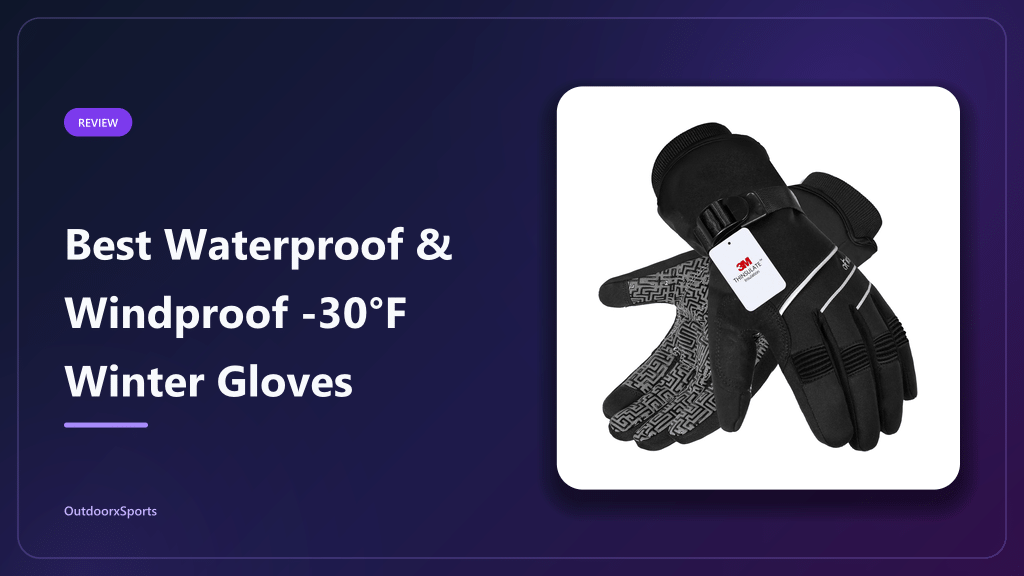
This Waterproof & Windproof -30°F Winter Gloves review covers a MOREOK pair that has become one of the most reviewed cold-weather gloves on Amazon, with 9,371 ratings averaging 4.3 out of 5 stars. On paper you get 200 g of 3M Thinsulate, a TPU waterproof membrane and touchscreen-friendly fingers for budget money.
That combination makes them worth buying if you want dry, warm hands for commuting, cycling or clearing snow without paying premium prices. Skip them if you need climbing-grade dexterity or a glove built for seasons of hard daily work. The cards below hold the current listing details and the fastest route to the specs that matter.

1. Waterproof & Windproof -30°F Winter Gloves
The MOREOK Waterproof & Windproof -30°F Winter Gloves are a budget insulated glove built around 200 g of 3M Thinsulate and a TPU waterproof membrane. They’re aimed at cyclists, commuters, skiers and anyone who wants touchscreen access without pulling a glove off in the cold. This review pulls together the listing specs and what buyers consistently report after a winter of use.
What it is
These are winter sports gloves in the classic insulated shell style: a synthetic insulation layer wrapped in a windproof outer with a waterproof membrane, plus a soft lining against the skin. For this MOREOK winter gloves review, the useful context is price tier. MOREOK sits in the budget bracket, well below technical ski gloves from The North Face, Outdoor Research or Hestra, and that gap shows up mostly in finishing and materials rather than in the headline idea.
Two technologies do the heavy lifting. 3M Thinsulate is a synthetic insulation made from fine microfibres that trap body heat in a thin layer, which is how 200 g of it can feel warm without the bulk of a mitten. A TPU membrane is a thin polyurethane film laminated behind the outer fabric that blocks wind and liquid water while letting some moisture vapour escape. The listing pairs both with touchscreen pads on the thumb and every finger, an elastic cuff and an adjustable nylon buckle strap.
The gloves are listed at 100 g, come in black with a pink option in some sizes, and run from XS to XXL. Amazon files them under cycling gloves, but the manufacturer pitches them at cycling, running, hiking, skiing, motorcycling and daily work, which is a wide net for one pair to cast.
Setup and first impressions
Buyers don’t report much of a setup ritual. The glove arrives ready to wear, and the first job is getting the size right, because fit is the single most common theme in the reviews. The listing calls the fit snug and then adds that the gloves are slightly loose and you should size down for a tight feel, which is contradictory advice. The dependable method is a tape measure: wrap it around the flat of your hand, thumb excluded, and match the number to the chart running from 6.7 inches in XS to 11.4 inches in XXL.
The second thing buyers mention is stiffness. New gloves feel a little board-like across the back of the hand and along the fingers, and the touchscreen pads seem less reliable until the glove softens and settles around your hand. Give them a few wears before you judge the screen response.
Fabric and finishing draw mixed early comments. Most buyers describe the outer as robust enough for a season of commuting, and the buckle strap and elastic cuff as the parts that make the glove feel pricier than it is. A minority flag loose thread ends and seams that need watching. Care matters from day one too: hand washing is recommended, and the listing suggests at least an hour of air drying for the palm and fingers if the inside stays damp.
| Brand | MOREOK |
| Model / ASIN | B07JDLJBNN (M–MK020F-B-L) |
| Insulation | 3M Thinsulate, 200 g |
| Waterproofing | TPU waterproof membrane laminated to windproof outer fabric |
| Claimed temperature rating | -30°F |
| Touchscreen support | Thumb and all fingers |
| Closure | Pull on, elastic cuff with adjustable nylon buckle strap |
| Sizes and hand circumference | XS to XXL, 6.7 in to 11.4 in |
| Listed weight | 100 g |
| Care | Hand wash recommended, air dry thoroughly |
| Amazon rating | 4.3 out of 5 from 9,371 reviews |
Day-to-day use
The specs only tell you so much, so here’s how the glove actually behaves once it’s on your hand in cold weather.
Warmth and insulation in practice
The 200 g Thinsulate layer is the reason most people buy these. In reviews covering winter commuting, dog walks, cycling above freezing and light skiing, warm hands come up again and again, and several buyers compare the heat retention favourably with gloves costing two or three times as much.
The -30°F claim needs a caveat. The listing doesn’t cite a testing standard behind that number, so treat it as an insulation ceiling rather than a comfort promise. Buyers who run cold, or who have circulation issues such as Raynaud’s, consistently report needing a thin liner glove underneath once temperatures drop into the low teens. That’s normal for a glove this thin, but it’s worth knowing before you plan a day on the mountain.
Wind is where the design earns its keep. The laminated outer is windproof, so the chill factor on a bike or a ski lift doesn’t cut through the way it does with knitted gloves. Warmth also holds up better than expected when the shell gets wet, which is the point of Thinsulate: it keeps insulating in damp conditions where a fleece liner would clump and quit.
Water, wind and slush
The TPU membrane is the waterproofing layer, and it does what a membrane is supposed to do: rain, sleet and wet snow bead off the shell instead of soaking through. Buyers describe hands staying dry through slushy commutes and wet snowball fights, and the elastic cuff plus buckle strap close the gap at the wrist that usually lets meltwater in.
What you shouldn’t expect is submersion. A membrane glove keeps rain and snow out, but plunging a hand into a bucket or gripping a soaked rope for an hour is a different test, and the listing makes no claim for that. Snow that packs above the short cuff will eventually work its way down, which is the trade-off for a neat wrist closure instead of a long ski gauntlet.
Breathability is the other side of the coin. A waterproof membrane traps some moisture, and buyers who run hot report clammy hands after hard cycling or a long climb. The fix is practical rather than technical: dry them properly. Turn the glove inside out, air it overnight, and follow the listing’s advice to give the palm and fingers extra drying time if the inside still feels damp. Hand washing protects the membrane, and machine washing isn’t recommended.
Touchscreen, grip and dexterity
Touchscreen support covers the thumb and every finger, not just the index finger, which matters more than it sounds. You can answer a call, skip a track or check a map with whichever digit is free, and buyers report the pads working reliably on phones and bike computers once the glove has softened.
Reliability drops in the cold and the wet. Several reviewers note that the screen responds on the second or third tap when the fabric is damp, and long messages are a chore with this much insulation between fingertip and glass. For quick taps and unlocking, it’s fine.
Dexterity is the honest weak point. These are 200 g insulated gloves, so picking up a coin, threading a zip or dealing with a helmet buckle takes concentration. The palm is a smooth TPU-backed material rather than a tacky silicone print, which is adequate on handlebars and ski poles but not the locked-in feel of a purpose-built cycling glove. Riders who mostly want grip in milder weather are better served by a dedicated pair such as these HTZPLOO bike gloves for men and women.
Fit, cuff and layering
The size chart is the weak link in an otherwise sensible design. Sizes run XS to XXL on hand circumference, but the listing’s own advice (snug, slightly loose, size down for tight) sends mixed signals, and reviews contain plenty of people who ordered their usual size and found it tight across the knuckles. If you’re between sizes, measure rather than guess, and remember that a snug glove is warmer until it’s tight enough to restrict blood flow.
Layering changes the equation. A silk or merino liner adds meaningful warmth and makes the touchscreen pads more precise, but it also takes up room, so a liner usually means going up a size rather than down.
The cuff is short and elastic with an adjustable buckle strap. It sits neatly under a jacket sleeve or over a thin one, and the strap lets you cinch the wrist without cutting off circulation. What you don’t get is a long gauntlet that seals over a ski jacket, so on deep powder days plan on wearing them under the sleeve. Winter kit is a system, and it’s worth reading up on the rest of it, including how to choose the best cycling shoe for comfort, performance, and durability if you commute by bike through the cold months.
- 200 g of 3M Thinsulate delivers genuine warmth for budget money
- The TPU membrane keeps rain, sleet and wet snow out
- Touchscreen pads on the thumb and all fingers, not just the index
- Adjustable buckle strap and elastic cuff seal the wrist properly
- 9,371 ratings at 4.3 out of 5 is strong evidence for a cheap glove
- Sizing advice contradicts itself and the fit runs snug for some hands
- The -30°F rating is optimistic for people who run cold
- Dexterity is limited by the insulation, so fine tasks suffer
- Hand wash only, and thorough drying takes planning
Who should buy it
Buy it if you…
Commuters, dog walkers and winter cyclists are the sweet spot for this glove. You get waterproofing, windproofing and enough insulation for a 30 to 60 minute trip outside in temperatures that hover around freezing and below, plus touchscreen access so you don’t have to bare a hand at every traffic light. Shovelling the drive, scraping the car windscreen or standing on a touchline watching someone else’s kids play football all suit this pair. If your winter needs are urban and moderate and you want spare pairs in the car and by the door, buying two budget gloves beats buying one premium one. It also helps that the buckle strap and elastic cuff hold up better than the price suggests.
Skip it if you…
Mountaineers, ice climbers and people who spend full days in the backcountry need warmth they can trust at the temperatures the listing advertises, and this isn’t that glove. Anyone whose job depends on fingerwork, whether that’s tying knots, handling small tools, splitting lines on a camera or working a touchscreen all day, will find the 200 g insulation frustrating. Skiers who want a gauntlet that seals over a jacket cuff should look elsewhere. And if you run genuinely cold, a budget mid-weight glove plus a budget liner is workable, but a purpose-built technical glove will be less faff.
Alternatives to consider
If you want a gauntlet cuff and a leather palm, the The North Face Montana Ski Glove is the obvious step up, and it’s priced accordingly. For a warmer technical option with a more generous cuff, the Outdoor Research Arete Gloves sit in the mid-range and get good feedback from skiers and mountaineers. At the premium end, Hestra leather gloves last for years and carry a price to match. All three trade the MOREOK’s value advantage for better materials, tighter quality control and, in most cases, more warmth per layer.
Buying guide: what to look for in winter gloves
Glove shopping is confusing because listings mix insulation weights, coatings and fit advice in the same paragraph. These are the things that actually decide whether a pair works for you.
What does 200 g of insulation actually mean?
The grams in a glove listing describe the weight of the insulation used, and higher numbers generally mean more loft and more warmth. A 40 g glove is a lightweight liner for cool mornings, a 100 g glove suits active winter cycling and running, 200 g is mid-weight territory for commuting and everyday cold, and 400 g mittens belong on expedition trips. 200 g is the sensible middle. It’s warm enough to replace a knitted glove outright and thin enough that you can still grip a handlebar or a ski pole.
Which waterproofing details matter?
A DWR coating is a surface treatment that makes water bead and roll off, and it wears off with abrasion. A membrane is a thin film bonded inside the glove that blocks water even when the outer fabric is soaked, which is what the TPU layer in these MOREOK gloves does. Seams are the other weak point, since every stitch line is a potential leak. Beyond that, the closure does quiet work: an elastic cuff with an adjustable strap, like the one here, beats a loose knit cuff in anything wet.
How should winter gloves fit?
Snug is the aim, but not tight. A winter glove should leave about a quarter inch of room past your fingertips and hold your hand without compressing it, because compression means restricted blood flow and colder fingers. Here’s the check to run before ordering:
- Measure the circumference of your flat hand, thumb excluded, and write the number down.
- Compare it to the size chart rather than your usual shirt or shoe size.
- If you plan to use liner gloves, factor in the extra thickness.
- Expect a couple of wears before the glove softens and moulds to your hand.
Sizing aside, a wide pair of polarized sunglasses can make low winter light easier to deal with on the bike, and our look at Foliful 3 pack polarized sports sunglasses for men in Florida covers the fishing, cycling and driving angle in more detail.
Frequently asked questions
Are MOREOK winter gloves truly waterproof?
They’re waterproof in the everyday sense. A TPU membrane sits behind the outer fabric and stops rain, sleet and wet snow from reaching your hand, and buyers report staying dry through slushy commutes. What they aren’t is submersion proof, and the listing makes no claim for soaking. The membrane also needs care to keep working: wash by hand, avoid machine cycles, and dry thoroughly inside and out so trapped moisture doesn’t sit against the film.
Do these gloves keep hands warm at -30°F?
Treat -30°F as the top end of what the insulation can theoretically handle, not a comfort guarantee. The listing doesn’t point to a published test standard behind the figure. Most buyers report warm hands well below freezing, but reviewers who run cold say they add a liner glove once temperatures drop into the low teens. If you need reliable warmth at genuinely extreme cold, a heavier expedition glove or a mitten is the safer buy.
How do I choose the right size for MOREOK gloves?
Measure your hand rather than guessing. Wrap a tape around the flat of your hand, excluding the thumb, and compare the result with the chart: XS starts at 6.7 in, S at 7.7 in, M at 8.5 in, L at 9.1 in, XL at 10 in and XXL at 10.6 in, up to 11.4 in. The listing calls the glove snug and then suggests sizing down for a tight feel, so if you’re between sizes and want room for a liner, go with the larger number.
Can I use my smartphone with these gloves?
Yes. The touchscreen pads cover the thumb and every finger, so any digit will register on a capacitive screen, which is the type used by most phones and bike computers. Buyers report reliable taps and unlocks once the glove has softened. Accuracy drops when the fabric is damp or very cold, and typing long messages is slow because of the insulation thickness. Quick replies, maps and call answering are the realistic uses.
Are these gloves suitable for skiing or snowboarding?
For lift-served, resort skiing in normal winter temperatures, they’re a reasonable budget choice, and the windproof shell helps on the chairlift. Snowboarders and skiers who fall often in deep powder should think about the cuff, though, because the short elastic design doesn’t seal over a jacket sleeve the way a gauntlet does. If you ski in genuinely cold conditions, pair them with a liner or choose a warmer glove from Outdoor Research or Hestra.
How should I care for and clean these gloves?
Hand wash in cool water with a mild detergent, then rinse thoroughly. Don’t wring them out, and don’t put them in the machine or the dryer, because heat and agitation damage the membrane and the insulation loft. Air dry them at room temperature, turning them inside out for part of the time, and follow the listing’s advice to leave the palm and fingers for at least an hour longer if the inside still feels damp. Store them dry and loose rather than crushed in a bag.
Final verdict
This MOREOK winter gloves review lands on a straightforward recommendation: 4.3 out of 5 for anyone shopping in the budget tier. The 200 g Thinsulate layer and TPU membrane deliver what most people actually need from a winter glove, which is warm, dry hands on a commute, a ride or a walk in wet, windy cold. Add touchscreen pads on the thumb and all fingers, a usable buckle strap and a price that lets you buy a spare pair, and the value case is strong in 2026.
The drawbacks are real but predictable at this price. Sizing advice contradicts itself, the -30°F number is optimistic for cold hands, dexterity is limited, and hand washing is a chore you’ll need to keep up with. None of that makes them a bad glove. It makes them a budget glove that does a mid-weight job well.
Buy these if you want an affordable, genuinely waterproof glove for everyday winter use and you’re willing to measure your hand first. Pay more if you need a gauntlet, expedition warmth or real finger dexterity. For everyone else, this is one of the better cheap winter buys around.
Rating: 4.3 out of 5 stars
Affiliate disclosure: This article contains affiliate links. If you buy through them we may earn a commission at no extra cost to you. It does not change which products we recommend.

Welcome to outdoorxsports.com! I’m Russell, your guide to the awesome world of mountain biking. This blog is all about building a community of riders who love to share their passion for the sport. Expect inspiring stories, local trail recommendations, fun challenges, and tips for making the most of your time on two wheels.