
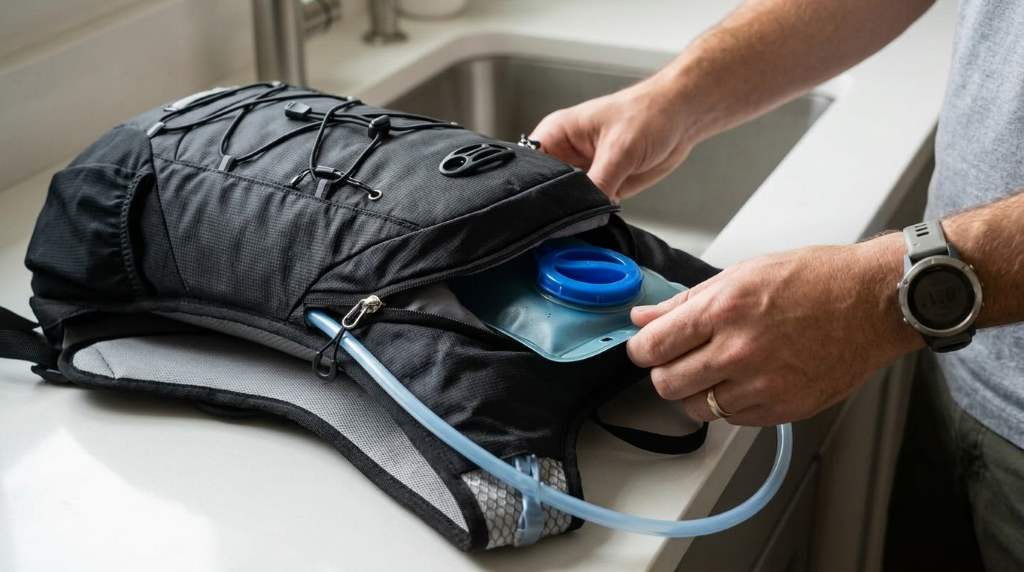
Yes, you can wash a Nevo Rhino hydration backpack safely by separating the reservoir, hose, bite valve, and pack before cleaning. Use mild dish soap, warm water, and thorough drying to remove sweat, residue, odors, and microbial buildup.
Regular cleaning matters because hydration systems stay damp after repeated use. A 2-liter reservoir holds roughly 68 fluid ounces, while a 3-liter reservoir holds about 102 fluid ounces.
If you use a Nevo Rhino hydration backpack, clean its water-contact components after regular use. This guide explains daily washing, deep cleaning, drying, odor removal, and long-term storage.
Start With The Parts That Actually Get Dirty
Do not treat the backpack and hydration reservoir as one cleaning job. Sweat affects the fabric, while water residue mainly affects the reservoir, tube, and mouthpiece.
Therefore, separate every removable component before washing. This approach lets you clean hidden areas that quick rinsing often misses.
- Hydration reservoir or bladder
- Drinking tube
- Bite valve or mouthpiece
- Reservoir cap or opening
- Backpack compartment
- Shoulder straps and waist straps
- Any removable clips or fittings
Check each component for visible damage before cleaning. Replace cracked, leaking, badly stained, or deteriorated hydration components rather than forcing them back into service.

What You Need Before Washing
You do not need an expensive cleaning kit for ordinary maintenance. A few household supplies can handle most residue and odor problems effectively.
- Clean sink or basin
- Lukewarm water
- Mild unscented dish soap
- Soft sponge or cloth
- Flexible bottle or tube brush
- Clean towel
- Drying rack or hanging space
A dedicated reservoir brush helps reach corners that a sponge cannot touch. Likewise, a narrow tube brush provides better access through the drinking hose.
Avoid aggressive detergents, bleach, solvents, abrasive pads, and strongly scented cleaners. These products can damage materials or leave undesirable residues inside drinking components.
The Best Everyday Washing Method
1. Empty The Reservoir Completely
Begin by removing every remaining drop of water from the reservoir. Do not leave old water sitting inside while you clean the backpack.
Next, open the reservoir and drain it upside down. Then inspect the interior for cloudy film, particles, discoloration, or unusual smells.
2. Separate The Drinking System
Disconnect the drinking tube from the reservoir when the design allows removal. Also separate the bite valve or mouthpiece whenever its construction permits safe removal.
Keep small components together in a clean container during washing. This simple step prevents misplaced fittings and makes reassembly easier.
3. Wash The Reservoir
Fill the reservoir with lukewarm water and add a small amount of mild dish soap. Close the opening and gently shake the reservoir for several seconds.
Afterward, open it and scrub the interior with a soft reservoir brush. Concentrate on corners, seams, the opening, and areas where moisture collects.
Rinse repeatedly with clean water until no soap remains. Continue rinsing if you notice bubbles, fragrance, or a slippery feeling.
4. Clean The Drinking Tube
Flush warm water through the drinking tube before adding a small amount of mild soap. Work the solution through the entire tube instead of cleaning only its ends.
Use a narrow tube brush when available. Push it gently through the hose without twisting aggressively or damaging the inner surface.
Finally, flush the tube several times with clean water. Hold both ends downward so trapped water can escape completely.
5. Wash The Bite Valve
The bite valve deserves special attention because your mouth contacts it directly. Wash its exterior and accessible interior surfaces with mild soap and warm water.
Gently manipulate the valve while rinsing to release trapped soap and residue. Never use a sharp object to pry open delicate valve components.
How To Wash The Backpack Fabric
The backpack itself needs different treatment because its fabric, padding, zippers, and stitching can retain moisture. Start by removing bottles, accessories, and loose debris from every compartment.
Shake the empty pack outdoors or over a suitable surface. Then wipe dirt from the exterior using a damp cloth.
Spot-Clean Sweat And Dirt
Mix a small amount of mild soap with lukewarm water. Dip a soft cloth into the solution and wring out excess moisture.
Gently wipe shoulder straps, back padding, waist sections, and visibly dirty areas. Give sweaty contact zones extra attention because they collect skin oils and salt.
After cleaning, wipe those areas again with a clean damp cloth. Avoid saturating thick padding unless the manufacturer’s care instructions specifically permit immersion.
Handle Zippers And Seams Carefully
Use a soft brush around zippers and seams when dirt becomes trapped. Work slowly because aggressive brushing can fray fabric or loosen stitching.
Keep excessive water away from pockets containing electronic accessories or non-removable components. Instead, clean those areas with a lightly damp cloth.
How To Remove A Bad Smell
Persistent odor usually means moisture or residue remains somewhere inside the hydration system. Simply adding more soap often fails because hidden damp areas continue producing the smell.
First, repeat the complete reservoir, tube, and bite-valve cleaning process. Then rinse everything thoroughly and allow every component to dry completely.
For stubborn hydration-system odors, consider a cleaning tablet specifically designed for reusable hydration reservoirs. Follow that product’s dilution, contact-time, rinsing, and compatibility instructions exactly.
Do not pour concentrated household chemicals into drinking components. Likewise, never mix different cleaning chemicals because their reactions can create dangerous fumes or unwanted residues.
Drying Matters More Than Most People Think
Cleaning removes residue, but drying prevents the damp environment that encourages unpleasant odors. Therefore, never pack a freshly washed reservoir while moisture remains inside.
Dry The Reservoir Completely
Keep the reservoir opening wide while it dries. Position the reservoir so air can circulate through its interior rather than collecting at the bottom.
Use a clean drying rack, clips, or another method that keeps the opening accessible. Avoid sealing the reservoir until the interior feels completely dry.
Dry The Drinking Tube
Hang the drinking tube vertically or position it so both ends remain open. Gravity helps remaining water drain while air moves through the tube.
Do not coil a wet tube tightly inside the backpack. Tight coils slow evaporation and can trap moisture along the inner wall.
Dry The Backpack
Leave every pocket and compartment open during drying. Hang the backpack in a well-ventilated area away from excessive heat.
Avoid placing the pack directly against a hot heater or other intense heat source. Excessive heat can affect fabrics, coatings, plastics, adhesives, or padding.
Should You Use A Dishwasher?
Do not assume every hydration component belongs in a dishwasher. Heat and mechanical washing can damage plastics, seals, valves, coatings, or other components.
Instead, check the specific care instructions supplied with your Nevo Rhino system. When manufacturer instructions do not permit dishwasher cleaning, hand washing remains the safer choice.
Even dishwasher-safe components still require proper drying afterward. Water can remain inside valves, channels, caps, and connection points after a wash cycle.
When To Deep-Clean The Hydration System
A quick wash works well after ordinary use, but occasional deep cleaning provides better maintenance. Increase cleaning attention after sugary drinks, flavored beverages, long trips, or extended storage.
| Situation | Recommended Action |
|---|---|
| Water-only daily use | Rinse and dry after use |
| Frequent outdoor use | Wash reservoir and tube regularly |
| Flavored or sugary drinks | Clean immediately after use |
| Noticeable odor | Perform a thorough deep clean |
| Long-term storage | Clean, rinse, and dry completely |
These intervals provide a practical maintenance framework rather than a substitute for manufacturer instructions. Your usage conditions should determine how frequently you clean each component.
Common Cleaning Mistakes To Avoid
Several habits can make a hydration backpack smell worse despite regular washing. Fortunately, most problems disappear when you change the cleaning sequence.
- Leaving water inside overnight
- Closing the reservoir while it remains damp
- Cleaning only the reservoir and ignoring the tube
- Ignoring the bite valve
- Using strongly scented detergent
- Scrubbing soft materials with abrasive tools
- Using excessive heat during drying
- Storing the backpack before it becomes completely dry
Another common mistake involves cleaning frequency without considering what you drink. Plain water generally leaves less residue than electrolyte mixes, juices, or sweetened beverages.
Therefore, sugary or flavored drinks justify faster cleaning after every outing. Residue becomes harder to remove when it dries inside narrow passages.
How To Store The Backpack Between Trips
Clean the hydration system before storing the backpack for several days or longer. More importantly, verify that the reservoir and tube contain no trapped moisture.
Store the reservoir open rather than tightly sealed. Keep the backpack itself in a cool, dry, well-ventilated location.
Do not store the pack compressed under heavy equipment for long periods. Give the fabric, padding, and compartments enough space to maintain their shape and ventilation.
A Faster Post-Adventure Cleaning Routine
Busy hikers often skip cleaning because a full wash feels inconvenient. A simple sequence makes post-adventure maintenance much easier.
- Empty the reservoir immediately.
- Separate the tube and mouthpiece.
- Rinse every water-contact component.
- Wash with mild soap when needed.
- Flush the tube thoroughly.
- Rinse until no soap remains.
- Hang every component open for drying.
- Wipe sweaty backpack surfaces.
- Leave compartments open until dry.
This routine takes far less effort when you perform it immediately after use. Delaying the process allows residue to dry and makes later cleaning more difficult.
Signs Your Hydration Components Need Replacement
Cleaning cannot restore components that have physically deteriorated. Inspect the reservoir, tube, valve, and connectors regularly for cracks, persistent leaks, or material damage.
Persistent odor after thorough cleaning can also signal a component that needs replacement. Likewise, unusual taste or repeated leakage deserves attention rather than another aggressive cleaning attempt.
Use compatible replacement parts whenever replacement becomes necessary. An incorrect connector or valve can compromise the hydration system’s fit and performance.
What To Do After Cleaning
Before your next outing, inspect the entire hydration system after it dries. Reconnect the tube and mouthpiece securely, then check for leaks before filling the backpack.
Fill the reservoir with clean water and test the drinking valve. This quick inspection can reveal loose connections before you depend on the system outdoors.
Finally, inspect the backpack’s straps, zippers, seams, and compartments. A clean hydration system works best when the carrying pack remains clean and structurally sound.
Frequently Asked Questions
Can I wash a Nevo Rhino hydration backpack with soap?
Yes, use a small amount of mild soap for washable components and rinse thoroughly afterward.
How often should I clean the hydration bladder?
Rinse it after every use and perform a thorough wash whenever residue, odor, or visible buildup appears.
How do I dry the hydration bladder?
Leave the opening wide, position it for airflow, and allow the interior to become completely dry before storage.
Can I put the hydration bladder in the dishwasher?
Only use a dishwasher when the specific component’s manufacturer instructions explicitly confirm dishwasher compatibility.
Why does my hydration backpack still smell after washing?
Persistent odor usually indicates trapped moisture or residue inside the reservoir, tube, valve, or another difficult-to-dry area.
Keep Your Hydration Backpack Cleaner For Longer
The best cleaning routine combines immediate rinsing, occasional thorough washing, and complete drying. Focus especially on the reservoir, drinking tube, bite valve, and sweaty contact areas.
Most importantly, avoid shortcuts that trap moisture after cleaning. Follow the manufacturer’s care instructions whenever they differ from general hand-washing practices.
Give your Nevo Rhino hydration backpack a proper cleaning after your next outing. A few minutes of maintenance can keep your hydration system fresher, cleaner, and ready for the next adventure.

Welcome to outdoorxsports.com! I’m Russell, your guide to the awesome world of mountain biking. This blog is all about building a community of riders who love to share their passion for the sport. Expect inspiring stories, local trail recommendations, fun challenges, and tips for making the most of your time on two wheels.