

Inflating bicycle tires with a BV pump requires matching the valve, securing the head, and watching pressure. The BV bicycle pump supports Presta and Schrader valves, while many full-size models reach 160 PSI. That pressure range covers most everyday road, hybrid, gravel, and mountain-bike needs. However, correct tire pressure matters more than reaching the pump’s maximum rating. This guide explains every step, common mistakes, valve differences, pressure checks, and troubleshooting. You will also learn how to remove the pump safely without losing useful air. With the right technique, tire inflation becomes faster, cleaner, and more predictable.
What You Need Before Inflating
Before pumping, place the bicycle on stable, level ground. Check the tire, valve, pump head, and pressure gauge for obvious damage.
Next, find the recommended pressure printed on the tire sidewall. Some bicycles also provide pressure guidance through frame labels, manuals, or manufacturer specifications.
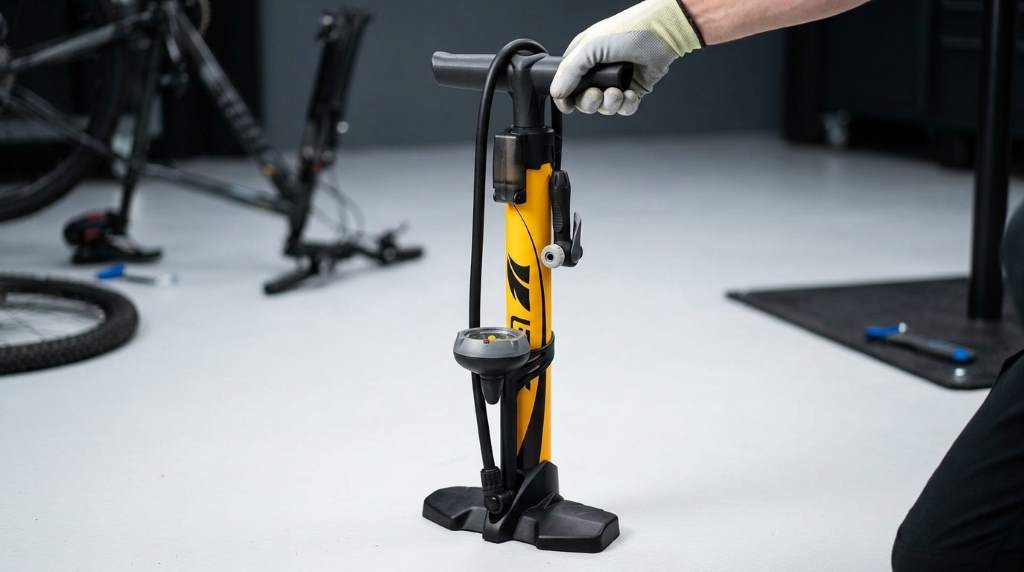
Do not automatically inflate both tires to identical pressure. Rider weight, tire width, wheel size, terrain, and riding style can change the ideal setting.
- BV bicycle floor pump with pressure gauge
- Bicycle with inflated or partially inflated tires
- Recommended tire pressure
- Clean valve stems
- Optional separate pressure gauge for verification
Identify Your Bicycle Valve
The BV pump handles the two valve types commonly found on bicycles. Identifying your valve first prevents unnecessary adjustments and accidental air loss.
Presta Valve
Presta valves are narrow and commonly appear on road, gravel, and performance bicycles. They include a small threaded tip that you must loosen before inflation.
To prepare a Presta valve, remove its cap and turn the small tip counterclockwise. Do not force the tip because excessive pressure can damage the delicate valve assembly.
Schrader Valve
Schrader valves are wider and resemble valves found on many automobile tires. They use a spring-loaded center pin inside the valve opening.
Remove the cap before attaching the pump head. Unlike Presta valves, Schrader valves do not require you to unscrew a locking tip.
How To Inflate Tires With A BV Pump
Start by removing the valve cap and checking the stem for dirt or visible damage. Then position the bicycle so the valve sits comfortably for pump attachment.
Step 1: Check The Starting Pressure
Attach the pump only after checking the tire’s current condition. A severely soft tire may require several strokes before the gauge responds noticeably.
If the tire looks uneven or severely collapsed, inspect it before adding substantial pressure. A puncture or damaged tube can make inflation ineffective.
Step 2: Prepare The Pump Head
BV models with twin or smart valve heads accommodate Presta and Schrader valves. Position the correct opening over your bicycle’s valve.
Some BV designs automatically accommodate the valve type, while other versions use a reversible head. Check your specific head before forcing anything into position.
Step 3: Attach The Head Securely
Push the pump head firmly onto the valve stem. Then engage the locking lever when your model includes one.
A secure connection should feel stable without excessive force. If air escapes around the head, stop pumping and reposition it.
Step 4: Stabilize The Pump
Place both feet firmly on the pump base. Grip the handle evenly with both hands to maintain a straight pumping motion.
Keep the hose reasonably aligned with the valve. A sharp hose angle can stress the valve stem during repeated pumping.
Step 5: Pump With Full Strokes
Push the handle downward smoothly, then pull it upward without jerking. Full strokes move more air efficiently than short, rushed movements.
As pressure increases, pumping naturally becomes harder. Maintain controlled strokes rather than forcing the handle beyond its normal range.
Step 6: Watch The Pressure Gauge
Monitor the gauge regularly instead of guessing tire pressure by hand. Stop when the tire reaches the recommended pressure for your setup.
Do not treat 160 PSI as your target simply because some BV models support that maximum. Maximum pump pressure and recommended tire pressure serve different purposes.
Step 7: Release The Pump Head
When the tire reaches the desired pressure, stop pumping and unlock the pump head. Pull the head straight from the valve without twisting aggressively.
For Presta valves, tighten the small valve tip clockwise after removing the pump. Replace the valve cap to protect the stem from dirt.
Step 8: Perform A Final Check
Spin the wheel and observe the tire as it rotates. Look for bulges, uneven seating, or obvious wobbling around the rim.
If everything looks normal, squeeze the tire lightly and compare its firmness with your expected pressure. Use a separate gauge when precise pressure matters.
How Much Air Should You Put In?
The correct pressure depends on your tire and riding conditions. Always start with the manufacturer’s recommended range rather than copying another cyclist’s setup.
| Bike Type | Typical Pressure Consideration | Best Approach |
|---|---|---|
| Road bike | Higher pressure often suits narrower tires | Follow tire and rim guidance |
| Hybrid bike | Moderate pressure supports comfort and efficiency | Use the recommended sidewall range |
| Mountain bike | Lower pressure can improve trail traction | Adjust for terrain and rider weight |
| Gravel bike | Pressure balances speed, grip, and comfort | Consider tire width and surface |
| Commuter bike | Moderate pressure supports everyday durability | Check pressure regularly |
These categories provide direction rather than universal pressure numbers. Your specific tire, wheel, rider weight, and riding conditions should determine the final setting.
How To Use The BV Gauge More Accurately
A built-in gauge makes routine inflation convenient, but every gauge can develop measurement differences. For important pressure settings, compare readings with a trusted standalone gauge.
Check pressure under consistent conditions whenever possible. Temperature and recent riding can affect tire pressure, so avoid comparing unrelated measurements.
Also, read the gauge straight on rather than from a sharp angle. Clear viewing reduces reading errors when the pressure increments sit close together.
Common BV Pump Problems And Fixes
The Pump Head Keeps Leaking Air
First, remove the head and inspect the valve for dirt or damage. Then reconnect the head squarely and engage its locking mechanism.
If air continues escaping, inspect the pump head seal for wear. A damaged seal may require replacement rather than stronger tightening.
The Gauge Does Not Move
A gauge may show little movement when the tire starts nearly empty. Pump several controlled strokes before assuming the gauge has failed.
If the needle remains completely inactive, inspect the hose, valve connection, and pump head. Persistent gauge problems may require professional inspection or replacement.
The Tire Remains Soft After Pumping
Check whether the tire loses pressure immediately after removing the pump. A rapid pressure drop usually indicates a valve, tube, or tire problem.
Inspect the tread for punctures and examine the valve area carefully. Tubeless setups also require attention to the bead and sealant condition.
The Pump Feels Extremely Hard
Increasing pressure naturally makes pumping harder. However, sudden resistance can indicate an incorrectly seated valve or mechanical issue.
Stop and check the connection before applying excessive force. Never force the handle through resistance that feels abnormal.
How To Avoid Damaging Your Valve
Valve damage often happens when riders pull the pump sideways during removal. Keep the pump head aligned with the valve whenever possible.
Presta valves deserve extra care because their narrow stems can bend under sideways pressure. Support the valve area when attaching or removing a tight pump head.
For long valve stems, avoid letting the hose hang heavily from the connection. A stable pump position reduces unnecessary stress during inflation.
Tips For Faster And Cleaner Inflation
- Check pressure before every longer ride.
- Keep the pump head and valve clean.
- Use smooth, complete pumping strokes.
- Stand directly over the pump base.
- Keep the hose away from spokes.
- Stop before reaching the tire’s maximum marked pressure.
- Verify pressure with another gauge when accuracy matters.
- Inspect the tire whenever pressure drops unexpectedly.
When A BV Floor Pump Makes Sense
A floor pump works especially well for home maintenance and regular pre-ride checks. Its stable base lets you generate pressure without balancing a handheld pump.
The longer barrel can also move substantial air with each stroke. Meanwhile, the hose keeps your hands away from the valve while you pump.
A BV pump with dual-valve compatibility becomes particularly convenient for households with different bicycles. You can service both Presta and Schrader-equipped tires without carrying separate pumps.
Floor Pump Versus Mini Pump
A floor pump generally suits routine inflation because its larger structure supports efficient pumping. A mini pump makes more sense as an emergency riding companion.
| Feature | Floor Pump | Mini Pump |
|---|---|---|
| Home inflation | Excellent | Good |
| Portable riding kit | Less convenient | Excellent |
| High-pressure inflation | Generally easier | Usually slower |
| Stable pumping | Excellent | Limited |
| Routine maintenance | Excellent | Acceptable |
For frequent home inflation, keep the floor pump accessible near your bicycle storage area. Carry a compact backup pump when riding far from repair facilities.
What Competitor Guides Often Miss
Many basic guides explain valve attachment but overlook pressure verification and valve protection. Those details matter because incorrect pressure can affect comfort, handling, traction, and tire wear.
Another overlooked issue involves gauge confidence. Comparing occasional readings with a trusted gauge helps identify measurement differences before they affect your riding setup.
Competitor content also tends to treat every BV pump as identical. Instead, check your model’s head design, pressure rating, hose arrangement, and operating instructions.
Finally, good inflation technique should include inspection afterward. A properly inflated tire still needs a quick check for punctures, bead problems, and abnormal deformation.
A Simple Pre-Ride Inflation Routine
Before each longer ride, inspect both tires and check their pressure. Next, top up each tire according to its recommended range.
After inflation, inspect the valve connection and rotate each wheel once. This routine takes little time and can prevent avoidable roadside problems.
- Check tire condition.
- Confirm recommended pressure.
- Identify the valve type.
- Attach and lock the pump head.
- Inflate using controlled strokes.
- Stop at the correct pressure.
- Remove the head carefully.
- Inspect the tire before riding.
Frequently Asked Questions
Can A BV Bicycle Pump Inflate Both Presta And Schrader Valves?
Yes, compatible BV pump models support both Presta and Schrader valves through their dual-valve head design.
How Much PSI Can A BV Bicycle Pump Handle?
Many full-size BV bicycle pumps have a maximum pressure rating of 160 PSI.
Should I Inflate My Tires To 160 PSI?
No, use the tire manufacturer’s recommended pressure instead of the pump’s maximum pressure rating.
Why Does My BV Pump Feel Hard To Push?
Higher tire pressure naturally increases resistance, but sudden abnormal resistance can indicate a connection or pump problem.
Can I Use A BV Bicycle Pump Without A Pressure Gauge?
Yes, but a reliable gauge provides much better control than judging pressure by tire firmness alone.
Final Thoughts
Inflating tires with a BV bicycle pump becomes straightforward once you control the valve, pressure, and pump head. The most important habit involves checking the recommended pressure instead of relying on guesswork.
Use smooth strokes, protect the valve stem, and inspect the tire after inflation. For demanding rides, verify important pressure settings with a trusted gauge before leaving.
Keep your BV pump ready before every ride and make tire pressure checks part of your regular maintenance routine. A few careful minutes can improve ride quality and reduce avoidable tire problems.
Welcome to outdoorxsports.com! I’m Russell, your guide to the awesome world of mountain biking. This blog is all about building a community of riders who love to share their passion for the sport. Expect inspiring stories, local trail recommendations, fun challenges, and tips for making the most of your time on two wheels.