
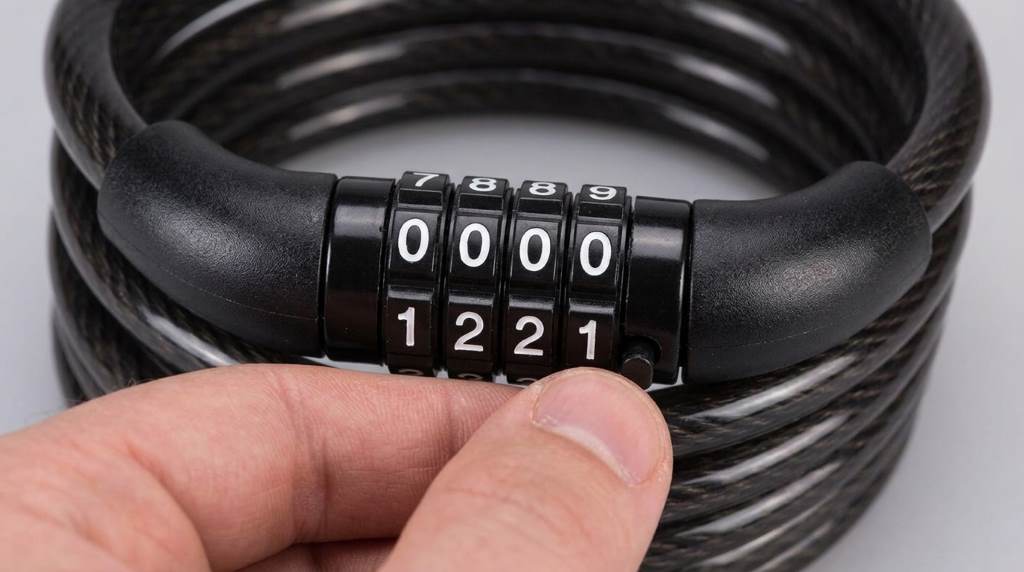
Setting a Master Lock combination cable is usually simple, but model differences matter. Resettable models typically start at 0-0-0-0, while preset models cannot accept a new code. A four-digit resettable lock offers 10,000 possible combinations, so choose a code that avoids obvious patterns. The Master Lock bike lock cable with combination gives riders convenient keyless access. However, identify your exact model before turning any reset control. This guide covers setup, testing, troubleshooting, locking technique, and security limits.
First, Check Whether Your Lock Can Be Reset
Before changing anything, inspect the lock body and locate its model number. Master Lock sells both resettable and preset combination cable locks, and their procedures differ significantly.
For example, the 8122D uses a set-your-own four-digit combination mechanism. By contrast, the 8143D uses a preset four-digit combination that cannot be changed.

That distinction prevents the most common setup mistake. If your lock lacks a reset knob, lever, or marked reset position, do not force the mechanism.
| Lock type | Combination | Can you reset it? | Typical setup |
|---|---|---|---|
| Resettable cable lock | Four digits | Yes | Open lock, activate reset control, choose digits |
| Preset cable lock | Four digits | No | Use the assigned combination from packaging |
What You Need Before Setting the Combination
You do not need special tools for most resettable Master Lock bike cable models. You only need the lock, its current combination, and a new four-digit code.
First, place the lock on a stable surface where you can clearly see every dial. Next, keep the cable completely disengaged before beginning the reset procedure.
- Master Lock combination cable
- Current or factory combination
- New four-digit combination
- Clean, well-lit workspace
- Secure place to record the new code
Choose your new combination before touching the reset mechanism. This reduces mistakes because you can move through the setup without stopping halfway.
How To Set a Resettable Master Lock Cable
The following procedure matches the common resettable Master Lock cable design. Always compare your lock’s controls with the model-specific instructions before proceeding.
Step 1: Open the Cable Lock
Set all four number wheels to the current combination. New resettable models commonly use 0-0-0-0 as their factory combination.
Once the digits align correctly, withdraw the cable from the lock housing. Keep the cable outside while you change the combination.
Step 2: Activate the Reset Position
Locate the reset knob or lever on the locking mechanism. On common resettable models, turn the knob about 90 degrees clockwise.
Some Master Lock cable designs use a small reset lever instead. Follow the markings on your specific lock rather than forcing the control.
Step 3: Choose Your New Four-Digit Code
Turn each number wheel until your chosen digits align with the indicator mark. Check every wheel carefully before leaving the reset position.
Avoid simple patterns such as 0000, 1111, 1234, or numbers printed publicly on your bicycle. Instead, choose a memorable combination that other people cannot easily associate with you.
Step 4: Return the Reset Control
After confirming your digits, return the reset knob or lever to its original position. Do not rotate the number wheels while you restore the reset control.
This step locks your selected combination into the mechanism. If the control feels unusually stiff, stop and check the dial alignment instead.
Step 5: Reinsert the Cable
Insert the cable end into the lock housing while your new combination remains visible. Make sure the cable seats fully before testing the lock.
Then scramble all four wheels away from your combination. The lock should now resist cable removal.
Test the New Combination Before Riding
Always test your new combination while the bicycle remains safely at home. This simple check prevents a frustrating lockout beside a bike rack.
- Scramble all four number wheels.
- Return each wheel to your new combination.
- Pull the cable gently without forcing it.
- Confirm that the cable releases normally.
- Reconnect the cable and scramble the wheels again.
Repeat the test at least twice. If the cable releases consistently, your combination change probably succeeded.
How To Lock Your Bike Correctly
Setting the combination solves only one part of bicycle security. You also need to route the cable through the right parts of the bicycle and anchor.
Place the bicycle beside a solid, immovable object. Then route the cable around the frame and through the wheels before returning it to the lock head.
Whenever possible, connect the frame and wheels to the same secure anchor. If the cable lacks enough length, remove the front wheel and position it beside the rear wheel.
- Choose a permanent, sturdy bike rack or fixed object.
- Pass the cable through the bicycle frame.
- Include the wheels when the cable length allows.
- Keep the lock head close to the bicycle frame.
- Scramble the combination after closing the lock.
Most importantly, avoid locking only the front wheel. A thief can remove an unsecured frame or wheel surprisingly quickly.
Why Cable Length and Diameter Matter
Different Master Lock cable models provide different lengths and cable diameters. For example, the 8122D uses a 6-foot cable with a 1/2-inch diameter.
A longer cable gives you more routing flexibility around larger racks and multiple components. However, extra length can also add bulk when you carry the lock.
Thicker cable generally provides more material against cutting attacks, but cable locks still offer basic security. Consider your location, parking duration, and bicycle value before relying on one.
Preset Master Lock Cable: What If You Cannot Reset It?
If your lock uses a preset combination, you cannot create a new personal combination. Master Lock identifies models such as the 8143D as preset combination cable locks.
Check the packaging or supplied documentation for the original combination. If the combination is missing from a new lock, contact the retailer or manufacturer for the appropriate solution.
Do not assume every four-dial Master Lock cable follows the reset procedure. Similar-looking locks can use completely different mechanisms.
What If You Forgot the Combination?
For security reasons, Master Lock does not provide a universal master combination for its set-your-own cable locks. If the lock remains attached to property, support generally cannot provide the lost combination.
If you still have the original packaging, inspect it for the factory combination or product information. Otherwise, identify the exact model before deciding what legitimate recovery option remains.
Do not force the reset control while the lock remains closed. Reset mechanisms normally require the lock to open with its existing combination first.
Common Problems When Setting the Lock
The Cable Will Not Pull Out
First, verify every dial against the current combination. Even one wheel sitting between numbers can prevent the release mechanism from moving.
Next, reduce tension on the cable and try again. Pulling aggressively can bind the internal components and make normal operation harder.
The New Combination Does Not Work
Return the wheels to the exact alignment marks on the lock body. Then confirm that you completed the reset sequence before scrambling the digits.
If the mechanism still rejects the new code, stop experimenting. Check the model number and follow its specific instructions instead.
The Reset Knob Will Not Turn
Make sure the cable has fully disengaged and the current combination matches the release position. Never use pliers or excessive force on the reset control.
A reset knob normally moves only after the lock reaches the correct open position. Incorrect dial alignment commonly prevents the knob from moving.
The Dials Feel Stiff
Dirt, moisture, and cable tension can affect smooth dial operation. Clean the exterior around the wheels and operate them gently several times.
Do not flood the lock with household oils. Use a lubricant only when the manufacturer specifically recommends one for that mechanism.
How To Choose a Better Combination
A strong combination should remain memorable without revealing personal information. Avoid birthdays, addresses, phone fragments, or numbers displayed on your bicycle.
Instead, create a random four-digit sequence and store it securely. A password manager can help if you frequently forget combinations.
Remember that four digits provide 10,000 theoretical combinations. That number does not make a cable lock suitable for every theft environment.
When a Cable Lock Should Not Be Your Only Lock
A cable lock provides flexibility and convenience, but it should not automatically serve as your primary high-security lock. Determined thieves can attack cable locks with appropriate cutting tools.
For expensive bicycles or lengthy unattended parking, pair the cable with a stronger U-lock or hardened chain. Use the cable primarily to secure wheels or add another locking point.
This layered approach also protects against a common weakness of single-point locking. A thief must defeat multiple security devices instead of one mechanism.
Master Lock Cable Setup: Quick Reference
| Task | Correct action |
|---|---|
| Identify model | Check the model number before resetting |
| Open resettable lock | Use the current combination first |
| Enter reset mode | Use the marked knob or lever |
| Set combination | Align four chosen digits with the indicator |
| Finish reset | Return the reset control to its original position |
| Verify operation | Scramble, enter the new code, and unlock |
| Secure bicycle | Route cable through frame, wheels, and fixed anchor |
Common Mistakes to Avoid
The biggest mistake involves assuming that every Master Lock cable accepts a custom combination. Always identify whether your model uses a preset or resettable mechanism.
Another mistake involves testing the new combination only after leaving home. Perform multiple tests before securing your bicycle outdoors.
- Do not force the reset knob.
- Do not change digits before opening the lock.
- Do not scramble wheels before confirming the new code.
- Do not rely on a cable lock alone for expensive bicycles.
- Do not store the combination where strangers can easily find it.
Finally, avoid wrapping the cable loosely around distant objects. Keep the locking system compact and reduce unnecessary slack whenever possible.
Frequently Asked Questions
What is the default combination for a resettable Master Lock bike cable?
Many resettable models use 0-0-0-0 initially, but always verify your specific model’s instructions.
Can I change the combination on every Master Lock bike cable?
No, some Master Lock bike cables use preset combinations that cannot be changed.
How many combinations does a four-digit cable lock have?
A four-digit lock has 10,000 possible combinations when each wheel uses digits from zero through nine.
What should I do if I forget my Master Lock bike cable combination?
Check your records and original packaging, then contact Master Lock support for model-specific recovery guidance.
Is a Master Lock cable enough to protect an expensive bicycle?
Usually not, because a cable works better as basic security or as a secondary locking device.
Final Takeaway
Setting a resettable Master Lock bike cable requires the correct existing combination, reset position, new digits, and careful testing. The exact procedure depends on the model, so never assume that a preset cable can accept a custom code.
Before your next ride, identify your lock model and test its combination at home. Then lock the frame and wheels to a secure anchor, and add a stronger lock when theft risk warrants it.
Take two minutes now to verify your combination and locking technique. That small habit can prevent an avoidable lockout and improve your bicycle’s everyday security.

Welcome to outdoorxsports.com! I’m Russell, your guide to the awesome world of mountain biking. This blog is all about building a community of riders who love to share their passion for the sport. Expect inspiring stories, local trail recommendations, fun challenges, and tips for making the most of your time on two wheels.