

Women should choose a mountain bike based on fit, terrain, suspension, and riding goals rather than gender alone. A well-fitted trail bike usually beats a women-specific bike that feels too long or poorly matched. In 2024, 112 million Americans rode a bicycle at least once, showing strong demand for better-fitting bikes. Women also represented 51.9% of outdoor recreation participants in 2023, making thoughtful bike selection increasingly important.
For riders comparing Mountain bike women options, the biggest mistake involves choosing by appearance first. Instead, start with your riding terrain, body measurements, experience, and preferred handling style.
Start With the Type of Riding You Actually Do
The best mountain bike depends heavily on where and how you ride. A bike designed for smooth cross-country trails can feel inadequate on aggressive downhill terrain.
Therefore, identify your typical trail conditions before comparing brands, suspension travel, wheel sizes, or component packages. Your riding category should narrow the market before your personal preferences finish the decision.
- Cross-country: Choose lightweight hardtails or efficient short-travel full-suspension bikes.
- Trail riding: Choose versatile bikes with moderate travel and balanced geometry.
- Technical riding: Choose stable trail bikes with stronger brakes and longer suspension.
- Enduro: Choose longer-travel full-suspension bikes for steep and demanding descents.
- Mixed recreational riding: Choose a comfortable hardtail with dependable components and simple maintenance.
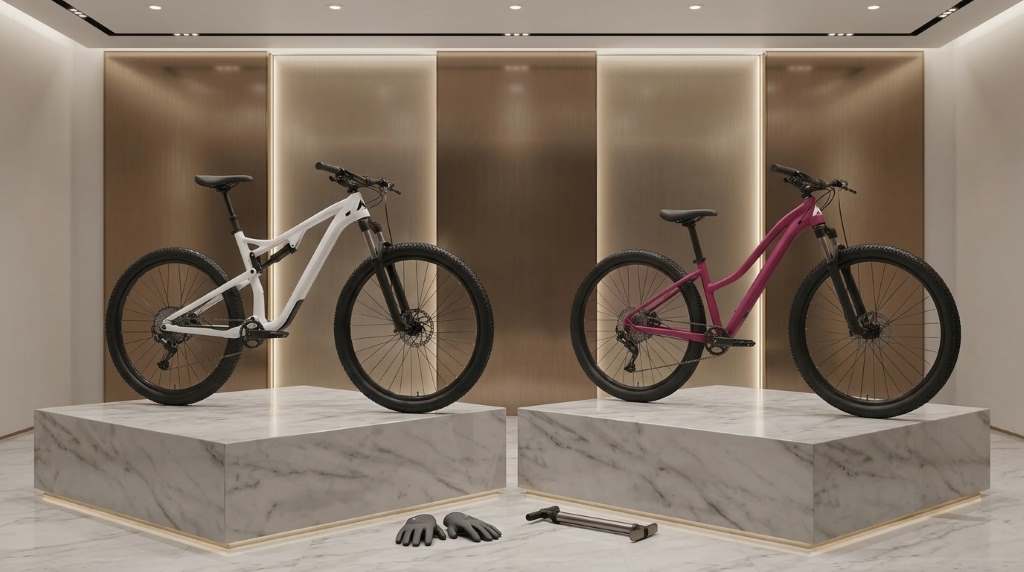
Hardtail or Full Suspension: Which Makes More Sense?
A hardtail has suspension at the front but uses a rigid rear triangle. Consequently, it usually weighs less, costs less, and requires less maintenance.
Hardtails work particularly well for beginners, cross-country riders, smoother trails, and riders developing fundamental handling skills. They also transfer pedaling effort efficiently when climbing firm surfaces.
Full-suspension bikes add a rear shock that absorbs impacts from roots, rocks, drops, and rough landings. However, the additional suspension increases weight, complexity, and purchase cost.
Choose full suspension when rough terrain regularly causes fatigue, traction problems, or loss of control. Otherwise, a quality hardtail can provide everything many recreational riders actually need.
Do Women Really Need a Women-Specific Mountain Bike?
No, women do not automatically need a women-specific mountain bike. Modern unisex bikes offer extensive sizing options, adjustable components, and geometry that can suit many women extremely well.
Still, women-specific models can simplify the fitting process for riders with shorter torsos, longer legs, narrower shoulders, or smaller hands. The important point involves measurable fit rather than a label printed on the frame.
Women-specific bikes may include narrower handlebars, different contact points, shorter reaches, specific saddles, or suspension configurations. Yet those features vary considerably between manufacturers and individual models.
Fit Matters More Than the Women’s Label
Frame size provides only a starting point because two medium bikes can feel completely different. Reach, stack, standover height, seat-tube angle, and wheel size influence the riding position.
Among those measurements, reach deserves special attention because it affects how stretched you feel while standing. Excessive reach can make steering feel slow and force your shoulders into an uncomfortable position.
Measure Your Height and Inseam First
Use your height and inseam to establish an initial frame-size range. Then compare that information against the exact manufacturer’s size chart for your chosen model.
Never assume every small, medium, or large frame follows identical dimensions. Manufacturers use different geometry philosophies, so size labels cannot replace actual measurements.
Check Reach Before Choosing Between Sizes
If you fall between sizes, consider how you prefer the bike to handle. A smaller frame can feel more agile, while a larger frame can provide greater stability.
However, never size down simply because the bike feels easier to reach. You still need adequate stability, proper saddle height, comfortable climbing posture, and controlled steering.
Use Standover as a Safety Check
Standover clearance matters when you need to dismount quickly or move your body over rough terrain. However, modern sloping top tubes make standover less useful as your only sizing measurement.
Instead, combine clearance with reach, saddle adjustment, cockpit position, and your ability to move freely. That approach gives you a more realistic picture of fit.
Wheel Size Can Change the Entire Riding Experience
Wheel size influences rollover ability, acceleration, maneuverability, and overall bike proportions. Most modern mountain bikes use 27.5-inch, 29-inch, or mixed wheel configurations.
Twenty-seven-point-five-inch wheels can suit shorter riders who prioritize maneuverability and easier bike handling. Meanwhile, 29-inch wheels generally roll efficiently over obstacles and maintain momentum on rough terrain.
Mixed-wheel bikes combine a larger front wheel with a smaller rear wheel. This setup can provide front-end rollover confidence while keeping the rear section compact and maneuverable.
Therefore, shorter riders should not automatically choose smaller wheels, and taller riders should not automatically choose 29ers. Frame geometry and personal handling preference still matter more.
Suspension Setup Matters More Than Suspension Travel
Suspension performance depends on proper setup, not simply the amount of travel printed in specifications. Incorrect spring pressure can make an expensive bike feel surprisingly harsh or unstable.
Lighter riders often need lower air pressure and carefully adjusted rebound settings. Always begin with the manufacturer’s recommended settings before making small adjustments during test rides.
How Much Travel Should You Choose?
| Riding style | Typical front travel | Best priority |
|---|---|---|
| Cross-country | 100 to 120 mm | Efficiency and climbing |
| Light trail | 120 to 140 mm | Balance and versatility |
| Trail | 130 to 150 mm | Control and comfort |
| Enduro | 160 to 180 mm | Descending capability |
These ranges provide useful starting points rather than strict buying rules. Geometry, suspension design, rider skill, and local terrain can change the ideal configuration.
Pay Close Attention to Handlebars and Brake Levers
Small hands can make oversized controls uncomfortable, especially during long descents. Fortunately, many modern brake levers provide reach adjustment that brings the lever closer to your fingers.
Handlebar width also affects steering leverage and shoulder comfort. A bar that feels excessively wide can make technical steering awkward for riders with narrower shoulders.
Do not cut a handlebar immediately after buying a bike. First test the stock width and discuss trimming options with an experienced mechanic.
Choose the Right Mountain Bike by Rider Profile
For a Beginner Woman
A beginner should prioritize predictable handling, manageable weight, reliable hydraulic brakes, and comfortable geometry. A quality hardtail often provides an excellent introduction without overwhelming the rider.
Choose a dropper-compatible frame if possible, even when the bike does not include a dropper post. That upgrade can become valuable as your descending skills improve.
For a Shorter Rider
Shorter riders should prioritize frame proportions rather than simply choosing the smallest available size. Look for appropriate reach, manageable standover, short seat-tube length, and suitable wheel proportions.
A 27.5-inch wheel may work especially well when a 29er creates awkward frame proportions. However, many modern 29ers now offer excellent small-frame designs.
For a Taller Rider
Taller riders should avoid assuming that every women’s model will provide sufficient reach and cockpit length. Compare actual geometry charts rather than relying on gender-specific marketing.
A correctly sized unisex trail bike may provide a better fit than a women’s model with limited size availability. Your body proportions should make the final decision.
For a Lightweight Rider
Lightweight riders should pay special attention to suspension tuning and braking feel. A suspension system designed around heavier default settings may feel excessively firm.
Ask the shop to set sag and rebound for your actual riding weight. That adjustment can improve traction, comfort, and confidence without changing the bike.
For an Aggressive Trail Rider
Aggressive riders should prioritize frame stability, suspension control, tire grip, dropper-post compatibility, and powerful brakes. Spending more on durable components often makes sense when trails become increasingly technical.
Do not buy an enduro bike simply because its specifications appear impressive. Excess travel and weight can reduce climbing efficiency when your trails rarely demand them.
Components Worth Paying More For
Not every expensive component delivers a meaningful benefit for recreational riders. Focus your budget on components that directly influence safety, control, reliability, and fit.
- Hydraulic disc brakes: Prioritize consistent braking power and controllable lever feel.
- Air suspension: Look for adjustable systems that accommodate your weight and riding style.
- Dropper post: Consider it essential for technical trail riding and steep descents.
- Quality tires: Choose tread and casing appropriate for your local terrain.
- Wide-range drivetrain: Prioritize climbing gears when your trails include sustained elevation.
- Strong wheels: Choose durable rims when you frequently encounter rocks, drops, or rough landings.
Where Competitor Buying Guides Often Fall Short
Many competing articles focus heavily on product lists, brand names, and generalized women’s sizing advice. They often explain what to buy without showing how terrain, body proportions, and riding progression change that decision.
Another common gap involves treating women-specific bikes as automatically superior. A better approach compares women-specific and unisex models using reach, controls, suspension setup, and actual riding requirements.
Budget guidance also deserves more attention because many riders cannot justify premium full-suspension bikes. A practical buying guide should explain where lower-priced bikes save money and where compromises become costly.
This approach also answers an overlooked question: what happens after purchase? A bike that allows suspension tuning, cockpit adjustment, and future upgrades can remain useful as your skills develop.
How to Test a Mountain Bike Before Buying
A short parking-lot ride cannot reveal everything about mountain-bike fit. Whenever possible, test several bikes with similar specifications and compare their handling directly.
During the test, pedal uphill, stand on the pedals, turn sharply, brake firmly, and shift your weight backward. Notice whether your shoulders remain relaxed and whether you can move freely behind the saddle.
- Check whether your knees maintain a comfortable pedal position.
- Check whether the handlebar forces excessive stretching.
- Check whether the brake levers feel natural under one-finger braking.
- Check whether the saddle lowers enough for descending.
- Check whether the front wheel feels controlled during slow climbs.
- Check whether the bike remains stable when you shift your hips backward.
Common Buying Mistakes Women Should Avoid
The first mistake involves buying according to color, brand reputation, or a women-specific label. Those factors can matter, but they should never outrank fit and intended use.
The second mistake involves buying too much bike. A heavy enduro bike may sound exciting, yet it can become frustrating when your regular rides involve moderate trails.
The third mistake involves ignoring future adjustments. A bike with adjustable suspension, dropper compatibility, suitable cockpit dimensions, and replaceable components can provide better long-term value.
Finally, avoid choosing a frame solely from height. Height starts the process, while inseam, reach, riding style, flexibility, and personal handling preference complete it.
A Simple Decision Framework
If you still feel uncertain, reduce the decision to five questions. Your answers will usually identify the appropriate bike category before you compare individual models.
- Where will I ride? Match suspension and geometry to your regular terrain.
- How aggressively will I ride? Choose durability and travel according to your actual pace.
- What size fits my proportions? Compare reach, inseam, standover, and manufacturer sizing.
- What can I comfortably maintain? Consider service requirements alongside purchase price.
- Can I adjust it later? Prioritize useful upgrade paths when your skills are developing.
This framework prevents specifications from driving the purchase. Instead, every component earns its place by solving a real riding requirement.
Best Overall Approach for Most Women
For many recreational riders, a lightweight trail hardtail or short-travel full-suspension bike offers the strongest balance. Such bikes provide manageable handling without adding unnecessary complexity or aggressive geometry.
More experienced riders should select according to terrain rather than gender. A properly fitted unisex trail or enduro bike can outperform a poorly fitted women’s model every time.
Most importantly, spend time getting the cockpit, saddle, suspension, and controls properly adjusted. Fit transforms a technically average bike into a confident trail companion.
Frequently Asked Questions
Should women buy women’s mountain bikes?
No, women should buy the bike that provides the best combination of fit, control, terrain suitability, and comfort.
Is a 27.5-inch mountain bike better for women?
Not necessarily, because wheel choice depends on rider height, frame geometry, terrain, and handling preference.
Are women’s mountain bikes easier to ride?
They can feel easier when their geometry and components match the rider’s proportions and riding style.
Is a hardtail good for women beginners?
Yes, a quality hardtail can provide an affordable, efficient, low-maintenance platform for learning mountain-bike skills.
What matters most when choosing a women’s mountain bike?
Correct frame fit matters most, followed by terrain suitability, suspension setup, braking performance, and component quality.
Final Takeaway
The right mountain bike for a woman is not necessarily the bike marketed specifically toward women. Instead, choose the model that matches your body proportions, terrain, experience, budget, and preferred handling.
Start with riding style, confirm frame fit, compare reach, evaluate suspension, and test the controls. Then choose the bike that feels natural when climbing, cornering, braking, and descending.
Before buying, test at least two comparable models whenever possible and ask a qualified bike technician to confirm your setup. A correctly fitted bike will help you ride farther, develop skills faster, and enjoy the trails with greater confidence.
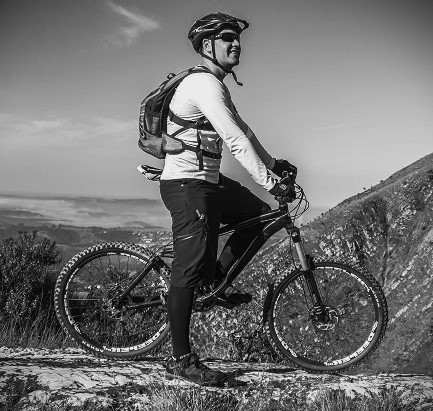
Welcome to outdoorxsports.com! I’m Russell, your guide to the awesome world of mountain biking. This blog is all about building a community of riders who love to share their passion for the sport. Expect inspiring stories, local trail recommendations, fun challenges, and tips for making the most of your time on two wheels.