
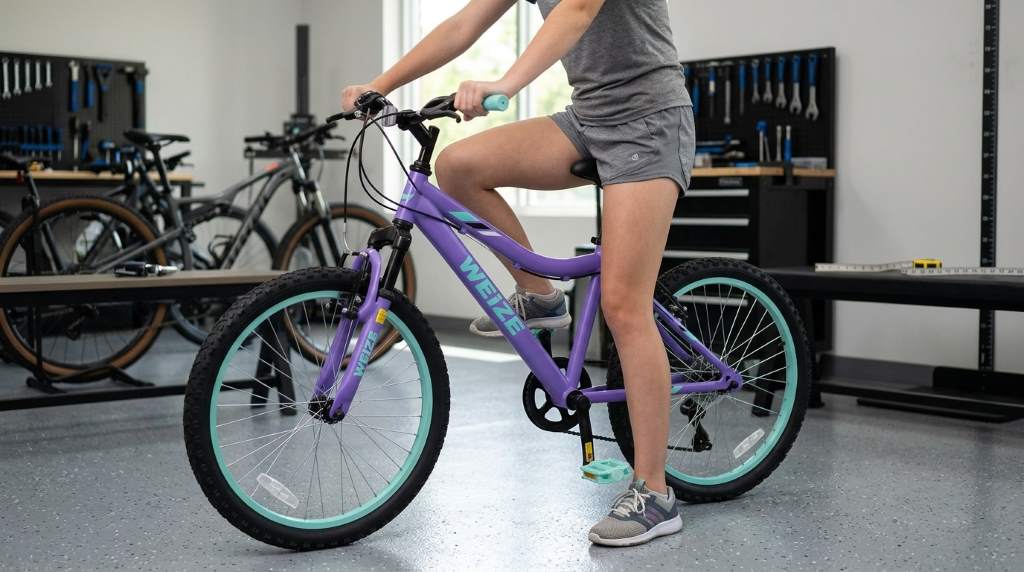
The right mountain bike size for teens depends mainly on height, inseam, reach, and wheel size. Start with measurements, then confirm standover clearance, saddle position, and comfortable handlebar reach. A Mountain bike for teens should fit the rider today rather than provide excessive room for growth.
Modern mountain bikes often use XS, S, M, and L frame sizing instead of simple age-based categories. Canyon reports that its sizing system uses height and inner-leg length, while its positioning system reaches 98% correct-size results. Therefore, teen sizing works best when you combine body measurements with actual bike geometry.
Why Teen Mountain Bike Sizing Requires More Than Age
Age provides context, but it cannot determine the correct mountain bike size. Two teenagers of the same age can differ significantly in height, inseam, torso length, and riding ability.
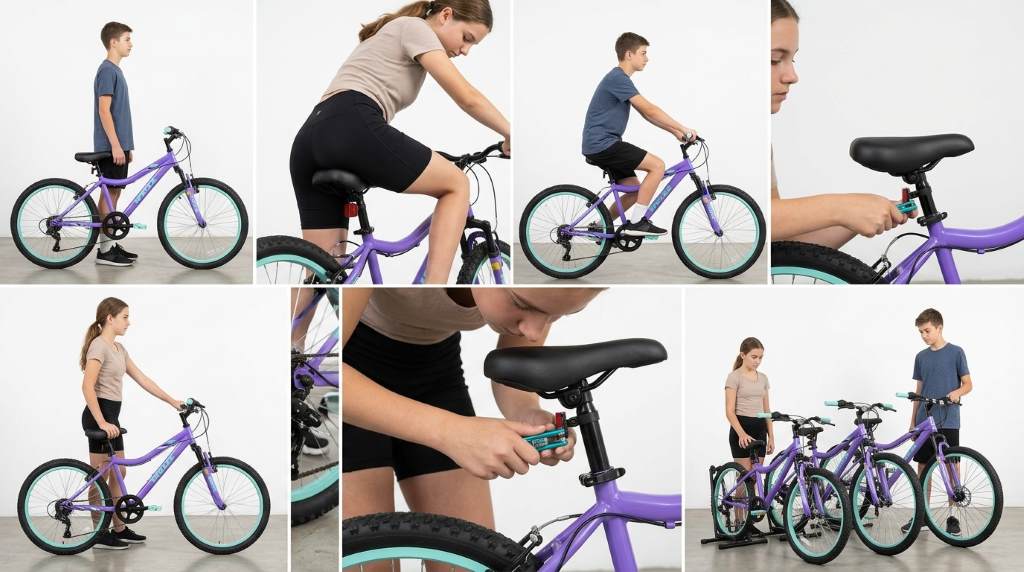
Moreover, teenagers often sit between youth and adult bike categories. A shorter rider might need a 26-inch wheel bike, while a taller teen may already fit an adult XS, S, or M frame.
That transition makes generic age charts less reliable than measurement-based sizing. Instead, treat age as a starting point and let body dimensions determine the final choice.
Why Buying Bigger Usually Backfires
Many parents buy larger bikes because they expect their teenagers to grow quickly. However, an oversized frame can reduce steering control, braking confidence, and trail handling.
A teen should control the bike without stretching toward the handlebars or struggling to mount. A slightly adjustable bike offers useful growth flexibility without sacrificing current handling.
Measure These Four Things Before Shopping
Take measurements before opening a manufacturer’s size chart. Accurate measurements make comparisons between different brands much easier.
- Height: Measure barefoot while standing straight against a wall.
- Inseam: Measure from the floor to the crotch with a firm book.
- Torso length: Measure from the crotch area to the top of the sternum.
- Arm length: Measure from the shoulder area to the middle fingertip.
Height helps identify the general frame range, while inseam helps evaluate standover and saddle position. Meanwhile, torso and arm measurements reveal whether the cockpit feels comfortably proportioned.
How To Measure Inseam Correctly
Have the teen stand barefoot with their back against a wall. Place a hardcover book firmly between the legs, keeping its upper edge level.
Measure from the floor to the book’s upper edge. Repeat the measurement twice, because even a small error can affect the recommended frame.
Use Height and Inseam Together
Height remains useful for narrowing the options, but inseam provides another critical fit check. Manufacturer charts should always receive priority because frame geometry varies between brands and models.
| Teen Height | Common Starting Point | Wheel Range |
|---|---|---|
| 4’8″ to 5’2″ | XXS or XS youth/adult frame | 24″ to 26″ |
| 5’2″ to 5’6″ | XS or S frame | 26″ to 27.5″ |
| 5’6″ to 5’10” | S or M frame | 27.5″ to 29″ |
| 5’10” and taller | M or larger frame | 27.5″ to 29″ |
This table provides a starting range rather than a universal sizing rule. Always compare the teen’s measurements with the specific manufacturer’s geometry chart before purchasing.
Choose the Wheel Size After Checking Frame Fit
Wheel diameter matters, but it should not decide the purchase by itself. A properly fitted 27.5-inch bike can outperform a poorly fitted 29-inch bike for many teen riders.
24-Inch Wheels
Twenty-four-inch wheels can suit smaller or younger riders transitioning toward serious trail riding. They offer manageable handling and usually pair well with compact youth frames.
However, many older teens will quickly outgrow this category. Check the rider’s height and inseam before choosing a 24-inch mountain bike.
26-Inch Wheels
Twenty-six-inch wheels remain useful for shorter teens who need compact handling. They can provide an easier transition between youth bikes and adult mountain bikes.
For riders near adult sizing, however, frame geometry becomes increasingly important. Do not select 26 inches simply because the teen falls within an age category.
27.5-Inch Wheels
Twenty-seven-point-five-inch wheels offer an excellent middle ground for many teenagers. They balance rollover ability, maneuverability, and fit across a broad range of rider heights.
Shorter adult frames commonly pair with 27.5-inch wheels to preserve handling. Consequently, they can work particularly well for teens moving into adult mountain bikes.
29-Inch Wheels
Twenty-nine-inch wheels can suit taller teenagers who already fit adult mountain bike frames. Their larger diameter can roll efficiently over roots, rocks, and rough terrain.
Still, bigger wheels require sufficient frame clearance and appropriate reach. Never choose 29 inches simply because the teenager wants the largest available wheels.
Check Standover Clearance Before Anything Else
Standover clearance tells you whether the teen can safely straddle the bike when stopped. This becomes especially important on technical trails where riders frequently dismount or shift their weight.
Have the teen stand over the top tube with both feet flat. The frame should provide noticeable clearance without forcing the rider into an awkward stance.
Also consider the bike’s actual frame shape, because sloping top tubes can create more clearance. Manufacturer geometry charts can clarify the effective standover height when visual inspection proves difficult.
Evaluate Reach and Riding Position
Reach determines how far the rider must extend toward the handlebars. A suitable reach lets the teen maintain relaxed elbows without feeling cramped or stretched.
During a test ride, watch the rider’s shoulders and elbows. If the teen locks their elbows or leans excessively forward, the frame may feel too long.
Conversely, an extremely short cockpit can make climbing uncomfortable and reduce front-wheel stability. Therefore, look for a balanced position rather than simply choosing the smallest frame.
Signs the Reach Fits Properly
- The teen reaches the brake levers without stretching.
- The elbows maintain a slight natural bend.
- The shoulders stay relaxed during normal riding.
- The rider can shift weight without fighting the handlebars.
- The hands remain comfortable during longer trail sections.
Set the Saddle for Efficient Pedaling
Correct saddle height allows the teen to pedal efficiently without locking the knees. At the bottom of the pedal stroke, the knee should retain a slight bend.
Start with a conservative saddle height and adjust gradually. A beginner may prefer slightly more accessible positioning, while an experienced rider can tolerate a higher saddle.
Do not lower the saddle excessively just because the rider wants both feet flat while seated. That position can compromise pedaling efficiency and create unnecessary knee movement.
Use Geometry Instead of Seat Tube Size Alone
Modern mountain bike sizing increasingly relies on measurements such as reach, stack, and effective top tube length. Seat tube length alone cannot describe how a bike will feel on a trail.
| Geometry Term | What It Tells You | Why It Matters |
|---|---|---|
| Reach | Horizontal cockpit length | Controls standing position and steering feel |
| Stack | Vertical front-end height | Influences posture and handlebar position |
| Standover | Clearance above the frame | Supports safer mounting and dismounting |
| Wheelbase | Distance between axles | Affects stability and maneuverability |
| Head angle | Fork steering angle | Influences handling and descending behavior |
These numbers help explain why two bikes with identical wheel sizes can feel completely different. They also reveal useful differences when a teen sits between two manufacturer sizes.
What To Do When a Teen Falls Between Sizes
Start by comparing the manufacturer’s recommended range for both sizes. Then consider experience level, trail style, and current body proportions.
For newer riders, the smaller compatible frame often provides easier handling. More experienced riders may prefer additional stability from a larger frame when geometry remains appropriate.
Do not automatically size up for growth. Instead, prioritize present control and choose a bike with useful saddle adjustment or compatible component changes.
When Sizing Down Makes Sense
- The teen sits near the lower edge of the manufacturer’s range.
- The larger frame creates excessive reach.
- The rider prefers quick, nimble handling.
- The teen has shorter arms or a shorter torso.
- The smaller frame still provides sufficient standover clearance.
When Sizing Up Makes Sense
- The teen sits near the upper edge of the smaller size.
- The rider has long arms or a long torso.
- The larger frame maintains comfortable reach.
- The teen rides aggressively and values stability.
- The bike still provides safe standover clearance.
Test the Bike Before Making the Final Decision
A test ride can expose problems that measurements cannot reveal. Ideally, have the teen ride both candidate sizes on a safe, controlled surface.
Ask the rider to brake, turn, climb, stand on the pedals, and shift gears. Watch for awkward movements rather than focusing only on whether the bike feels comfortable initially.
The rider should control the bike naturally without constantly adjusting their body position. If either size creates uncertainty, return to the geometry numbers and manufacturer recommendations.
Account for Growth Without Sacrificing Fit
Teenagers grow quickly, but that does not justify buying an oversized mountain bike. A poor fit can discourage riding and reduce confidence during technical sections.
Instead, look for adjustable saddle height and practical cockpit adjustment. Some bikes also accommodate different stems or handlebars, although compatibility depends on the frame and components.
Choose a model that offers reasonable adjustment within its intended size range. That approach provides growth flexibility while preserving safe handling today.
Common Teen Mountain Bike Sizing Mistakes
Several purchasing mistakes appear repeatedly when parents size bikes for growing riders. Most happen when buyers prioritize age, appearance, or future growth over actual fit.
- Using age alone: Age cannot account for different body proportions.
- Ignoring inseam: Height alone cannot confirm standover clearance.
- Buying oversized: Excess frame length can reduce control.
- Choosing wheels first: Wheel size should support the correct frame.
- Ignoring reach: An uncomfortable cockpit affects steering and braking.
- Skipping a test ride: Real movement can reveal fit problems quickly.
- Following one universal chart: Geometry varies substantially between manufacturers.
A Simple Five-Minute Teen MTB Fit Check
Once you have a candidate bike, perform this quick inspection before buying. It can identify many obvious sizing problems without specialized equipment.
- Confirm the teen’s height against the manufacturer’s chart.
- Compare inseam against the recommended frame range.
- Check comfortable standover clearance while standing over the frame.
- Set the saddle so the knee retains a slight bend.
- Check reach with both hands resting naturally on the grips.
- Confirm the teen can comfortably operate every brake and shifter.
- Perform a controlled test ride before committing to the purchase.
If every check feels natural, the bike likely sits within a useful fit range. If several checks fail, choose another size before changing components.
How Fit Changes With Trail Experience
A beginner usually benefits from predictable handling and easy control. Therefore, avoid choosing an aggressive, oversized frame simply because it appears more capable.
As riding skills improve, a teen may appreciate longer reach, increased stability, or more aggressive geometry. Nevertheless, those changes should follow rider development rather than force the rider into an unsuitable frame.
Quick Teen Mountain Bike Sizing Checklist
| Fit Question | Good Sign | Warning Sign |
|---|---|---|
| Does the frame fit the height chart? | Yes, within the recommended range | Outside the published range |
| Does the teen clear the frame? | Comfortable standover clearance | Top tube feels intrusive |
| Does reach feel natural? | Relaxed elbows and shoulders | Locked elbows or excessive stretch |
| Does saddle height work? | Slight knee bend while pedaling | Locked or excessively bent knee |
| Can the teen operate controls? | Easy braking and shifting | Hands struggle to reach controls |
| Does handling feel predictable? | Confident steering and braking | Bike feels difficult to control |
Frequently Asked Questions
What size mountain bike is best for a 13-year-old?
The correct size depends on height, inseam, and frame geometry rather than age alone.
Should a teen get a 26 or 27.5 mountain bike?
Choose 26 inches for shorter riders and 27.5 inches when the rider fits its larger frame comfortably.
Can a teenager ride an adult mountain bike?
Yes, many teenagers can ride adult bikes when their height, inseam, reach, and frame fit correctly.
Should I buy a larger mountain bike for growth?
No, choose the largest size that fits properly now without creating excessive reach or standover problems.
Is inseam more important than height for mountain bike sizing?
Neither measurement works alone, because height establishes range while inseam helps confirm practical frame fit.
Final Takeaway
Sizing a mountain bike for teens starts with accurate measurements and ends with a real-world fit check. Prioritize height, inseam, standover, reach, saddle position, and manufacturer geometry instead of age alone.
Most importantly, do not buy a bike that feels oversized simply to extend its useful life. Measure the rider, compare compatible frame sizes, test the bike, and choose the model that inspires confident control today.
Ready to choose the right teen mountain bike? Use the measurements above, compare the manufacturer’s chart, and test the final size before purchasing.
Welcome to outdoorxsports.com! I’m Russell, your guide to the awesome world of mountain biking. This blog is all about building a community of riders who love to share their passion for the sport. Expect inspiring stories, local trail recommendations, fun challenges, and tips for making the most of your time on two wheels.