
In the world of electric bikes, wattage is often treated like a status symbol. But moving from the standard 250W or 750W motor into the 1000W category isn’t just a minor upgrade—it’s a leap into a different class of machinery.
Whether you’re looking to haul 500 lbs of gear through the backcountry or simply want to stop “ghost pedaling” on steep hills, here is the breakdown of what a 1,000-watt electric bike actually brings to the table.
1. Raw Performance: Speed and Torque
The most immediate difference you’ll feel on a 1000W e-bike is the acceleration. While a 750W motor might take 12 seconds to hit top speed, a 1000W motor often gets there in under 8 seconds.
- Top Speeds: Most 1000W bikes can easily hit 28–35 mph (45–56 km/h) on flat pavement.
- Torque (The “Climbing” Factor): 1000W motors typically deliver 100–160 Nm of torque. For context, that’s enough power to maintain a steady 20 mph on a 15% grade hill where a standard e-bike would struggle to hit 8 mph.
2. Best Use Cases
A 1000W bike is often “overkill” for a flat city commute, but it’s the undisputed king of these three scenarios:
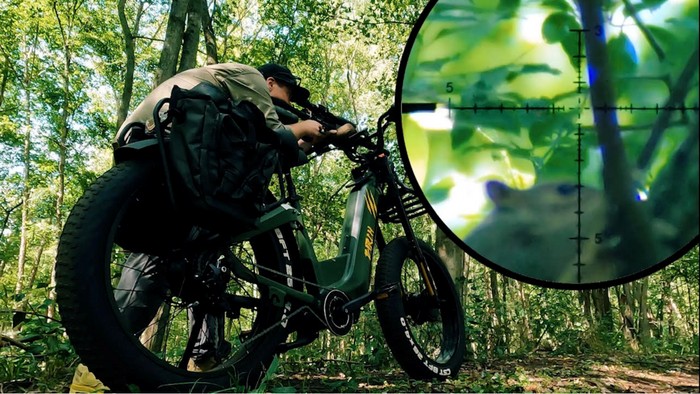
- Heavy Cargo & Hunting: If you are hauling a trailer, a week’s worth of camping gear, or—as we see with hunters like Grant Hardy—hundreds of pounds of game, the 1000W motor ensures the bike doesn’t overheat under the strain.
- Off-Road & Deep Soft Ground: Plowing through deep snow, sand, or thick mud creates massive rolling resistance. 1000W of power provides the “grunt” needed to keep the wheels turning when the terrain wants to stop you.
- The “Plus-Sized” Rider: For riders over 220 lbs, 1000W provides a riding experience that feels as nimble and responsive as a 250W bike feels for a much lighter rider.
3. The Battery Reality Check
Power comes at a price: energy consumption. A 1000W motor can drain a standard battery in record time if you’re heavy on the throttle.
| Battery Spec | Expected Range (High Assist/Throttle) | Expected Range (Eco/Pedal Assist) |
| 48V 15Ah (720Wh) | 15–20 Miles | 30–40 Miles |
| 48V 20Ah (960Wh) | 25–30 Miles | 45–60 Miles |
| Dual Battery (1500Wh+) | 45+ Miles | 80–100+ Miles |
Pro Tip: Look for 52V systems instead of 48V. A 52V battery paired with a 1000W motor provides better “top-end” performance and experiences less “voltage sag” (power drop-off) as the battery gets low.
4. Legality: Know Before You Grow
This is the most critical part of the 1000W conversation.
- USA: Federal law generally caps “e-bikes” at 750W. Anything 1000W and above often falls into a legal gray area. Some states classify them as Class 4 or “Out of Class,” meaning they are technically for private land use only or require moped registration.
- UK/EU: The limit is a strict 250W for public roads. A 1000W bike in London or Paris is legally a motor vehicle, requiring a license, insurance, and registration.
5. Maintenance: The “Wear and Tear” Factor
1000 watts is a lot of force to put through a bicycle chain and cassette.
- Brakes: Never buy a 1000W bike with mechanical rim or disc brakes. At 30 mph, you need hydraulic disc brakes to stop safely.
- Drivetrain: If you have a 1000W mid-drive motor, expect to replace your chain and rear cogs more frequently. The motor’s torque can literally stretch chains over time.
Is a 1000W E-Bike Right for You?
If you live in a hilly area, carry heavy loads, or want a legitimate off-road vehicle that can handle snow and mud, the answer is a resounding yes. Just be prepared for a heavier bike and the need for a larger battery to keep the fun going.

Taylor is an outdoors & sports equipment specialist, sports author, bike traveler, bicycling and skating expert, and smoke-free ride activist. He is also a regular reviewer of outdoor sports gadgets and accessories. About safety gear and biking facts he analyzes and gives his feedback to outdoorxsports. Writes and tests to help him, you, and us.